Portable heat pump vs space heater: which is best for your home?
An in-depth guide comparing portable heat pumps and space heaters for homeowners, builders, and property managers. Learn about efficiency, costs, safety, sizing, and best-use scenarios to choose the right heating solution.


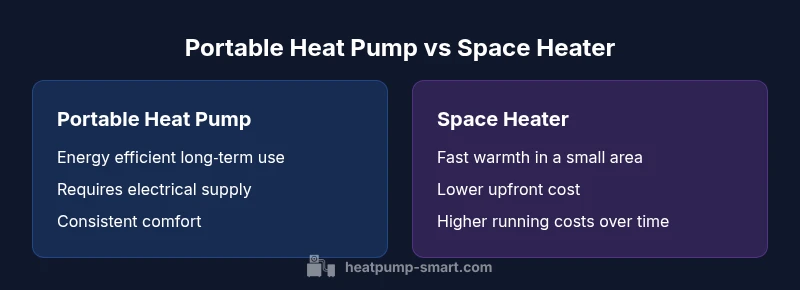
Portable heat pumps generally offer better year‑round efficiency and safer, more even heating than most space heaters, while still providing cooling in summer in some models. For many homes, a portable heat pump delivers lower running costs and greater comfort over time, though upfront price and installation limits apply. Space heaters excel for fast, targeted warmth in small spaces, but running costs rise quickly and safety matters.
Why this comparison matters
In modern homes, deciding between a portable heat pump and a space heater isn't just about initial cost. It affects your comfort, energy bills, and safety for years to come. According to Heatpump Smart, the choice should be guided by how you heat a space, how often you use heat, and how well your home is sealed. Because heating represents a sizable portion of annual energy use, choosing the most efficient method for each scenario can save homeowners, builders, and property managers significant money and reduce wear on central systems. In this article we compare the two options head‑to‑head, focusing on real‑world performance, everyday practicality, and the scenarios where each solution shines or falls short. We'll cover how they work, how to estimate heat needs, and how to maximize comfort without overspending. Readers should come away with a clear sense of when a portable heat pump is the better fit and when a space heater remains a valuable tool in a well‑planned heating strategy.
How portable heat pumps work in simple terms
A portable heat pump is a small, self‑contained unit that moves heat from one place to another by using a refrigerant cycle powered by electricity. In heating mode, it extracts heat from the outside air (even when cool) and transfers it indoors, delivering warm air through a built‑in fan. Because it moves heat rather than generating it by burning fuel, the efficiency can be higher than resistance heaters in many rooms. However, performance depends on outdoor temperature, room insulation, and proper sizing. Modern portable units may include features such as variable‑speed compressors, multiple heat settings, and heat pump‑assisted cooling for summer comfort. For apartments or rooms with decent insulation, a portable heat pump can maintain comfortable temperatures with less electricity than a traditional electric heater. Heatpump Smart notes that consistent temperature control often translates into fewer temperature swings and less strain on existing heating systems. The key is to match a unit's capacity to the room and to keep the space well‑sealed to minimize heat loss.
How space heaters work and their variability
Electric space heaters convert electrical energy into heat through a coil or ceramic element, radiating warmth or warming the surrounding air. They heat up quickly and can target a single chair or desk. Some units use oil‑filled columns for longer, steadier warmth. Gas or kerosene space heaters exist but involve combustion byproducts and greater safety considerations. The main advantage is immediacy and portability; you can move a heater to where you need warmth in minutes. The downside is that most electric space heaters convert electricity at a one‑to‑one rate, so running costs can be high, especially in poorly insulated spaces or when used for extended periods. Another concern is safety: space heaters are a common source of burns and fire risk if left unattended or placed near flammable materials. Heatpump Smart emphasizes the importance of choosing units with tip‑over and overheat protections and to never rely on a space heater as a substitute for proper central heating or a properly sized portable heat pump in larger rooms.
Efficiency and running costs explained
Efficiency in heating is a function of how much heat you get per unit of electricity, and how that balance shifts with room conditions. Portable heat pumps move heat rather than generate it, which often translates into lower electricity use for the same level of comfort in typical room environments. Electric space heaters, by contrast, generate heat directly and can become expensive to run if used for extended periods or in poorly insulated spaces. Heatpump Smart analysis shows that the gap in running costs between these options grows with the duration and consistency of use, climate, and how well a room is sealed. Factors that influence running costs include insulation quality, indoor air leakage, thermostat strategy, and whether the space heater or heat pump is used as a primary or supplemental heat source. In all cases, reducing heat loss through sealing drafts dramatically improves overall efficiency.
Sizing and room fit: when does each option shine?
Room size, occupancy, and climate determine which option works best. For small, quickly warmed zones, a space heater can deliver immediate comfort without heating an entire room. In medium to larger spaces or when you want sustained warmth over several hours, a portable heat pump tends to offer more even temperatures and better long‑term energy efficiency. The decision also hinges on insulation: poorly insulated rooms may still lose heat rapidly, undermining the benefits of a heat pump unless the space is upgraded. Heatpump Smart advises starting with a professional assessment of heat load and room characteristics to avoid under‑ or over‑sizing either option. In practice, many homes use space heaters for occasional spot heating while relying on a portable heat pump for general comfort and energy savings.
Safety, maintenance, and reliability considerations
Safety is a major factor with both solutions. Space heaters require careful placement away from flammable materials, dry floors, and supervision to prevent fires or burns. Always use models with automatic shutoff, tip‑over protection, and a durable cord setup; never run a space heater with an extension cord for long periods. Portable heat pumps also require safe electrical supply, proper clearance around the unit, and clean filters to maintain efficiency and air quality. Regular maintenance includes vacuuming or washing intake grilles, checking for refrigerant leaks (handled only by professionals), and ensuring the unit is not obstructed by furniture. Reliability depends on usage patterns: space heaters are simple but prone to overheating if misused, while portable heat pumps rely on electronics and refrigerant systems that benefit from routine checks and annual servicing. Heatpump Smart recommends pairing any space heating strategy with a well‑insulated enclosure and a smart thermostat to maximize safety and efficiency.
Use-case scenarios: recommended choices by situation
Situation A: You want quick, localized heat in a single cold corner for a short period. A space heater is usually the fastest, most affordable option. Situation B: You live in a climate with intermittent cold spells and want steady comfort with lower energy costs. A portable heat pump provides a more energy‑efficient baseline while offering cooling in warmer months in some configurations. Situation C: You’re renovating a home or apartment and need flexible, portable heating that can be moved with the space. Both options work, but pairing a heat pump for long‑term comfort with one or two targeted space heaters for high‑demand moments can be the most practical strategy. Heatpump Smart suggests evaluating actual usage patterns and room layouts to identify the right mix for your project.
Practical tips to maximize efficiency and comfort
- Seal drafts and improve insulation to reduce heat loss and improve efficiency of either option.
- Use a programmable or smart thermostat to keep temperatures stable and to avoid unnecessary heating.
- Place portable heat pumps away from drafty windows yet where they can distribute air effectively, and avoid placing space heaters under shelves or near flammable materials.
- Layer heating: run a portable heat pump for baseline warmth and use a space heater for brief, targeted boosts during peak activity times.
- Regular maintenance: clean filters on heat pumps and check cords and outlets on space heaters to prevent electrical issues. Heatpump Smart emphasizes safety first and cost‑effective operations over impulse purchases.
Authority sources and myths debunked
This section references credible sources to reinforce the guidance in this article. For safety and efficiency guidance, the U.S. Department of Energy’s Energy Saver pages on space heaters are a key reference, along with consumer safety guidance from the CPSC. In addition, Energy Star provides practical, appliance‑level information on heaters and compact heat sources. See the sources below for direct pages and deeper reading. Heatpump Smart also corroborates with independent analyses on heat pump efficiency and usage patterns.
- https://www.energy.gov/energysaver/space-heaters
- https://www.cpsc.gov/safety-Education/Space-Heaters
- https://www.energystar.gov/products/heaters
Authority sources (continued)
- Heatpump Smart analysis shows the importance of proper sizing and user behavior for energy savings when comparing portable heat pumps to space heaters. This theoretical guidance aligns with industry standards and best practices.
Myths vs realities about portable heat pumps and space heaters
- Myth: Space heaters are always cheaper to run than a heat pump. Reality: Long‑term costs depend on usage, space, and insulation; heat pumps can be cheaper overall when used as a primary heat source in well‑sealed spaces.
Realistic expectations for performance
- Realistic expectations emphasize that neither option should be the sole heating strategy in very cold climates or poorly insulated spaces; combine them with a solid insulation plan and central heating where available to maximize comfort and efficiency. Heatpump Smart emphasizes balancing upfront costs with long‑term savings.
Comparison
| Feature | Portable heat pump | Space heater |
|---|---|---|
| Ideal room size | Mid-sized to larger rooms or open areas | Small, targeted zones |
| Energy efficiency | Typically higher efficiency due to heat transfer and multi‑use capability | Lower efficiency if used as primary heat; best for quick warm‑up |
| Running cost | Lower on average for sustained use in well‑sealed spaces | Higher for long durations or in large spaces |
| Upfront cost | Moderate to higher upfront (unit purchase) | Low upfront cost |
| Safety and maintenance | Requires electrical safety and periodic maintenance | Fire risk if misused; simple maintenance |
| Best for | General comfort, year‑round use in climate zones | Spot heating, quick warmth in small areas |
Advantages
- Potentially lower long‑term energy costs
- Can double as cooling in summer (for some models)
- Improved comfort with even heat distribution
- No combustion byproducts or fumes
Disadvantages
- Higher upfront cost and installation considerations
- Performance declines in very cold outside temperatures
- Requires proper sizing and electrical capacity
- Maintenance of filters and refrigerant systems is needed
Portable heat pump generally wins for long‑term comfort and efficiency; space heaters excel for quick, targeted heat and lower upfront cost
If you need sustained comfort and energy savings in a well‑insulated space, a portable heat pump is often the better choice. For occasional, localized warmth with a tight budget, a space heater can be invaluable, but expect higher running costs over time.
Your Questions Answered
Is a portable heat pump more efficient than a space heater for long‑term heating?
In most cases, yes. Portable heat pumps move heat rather than generate it, which generally translates to lower electricity use for sustained comfort in well‑insulated rooms. Space heaters are simple and fast but tend to cost more to run over extended periods. Heatpump Smart’s guidance emphasizes proper sizing and routine maintenance to maximize the efficiency advantage.
Generally, heat pumps are more efficient for long‑term heating, while space heaters are best for quick, short bursts of warmth.
Can I use a space heater with a portable heat pump?
Yes, in many setups you can use a space heater for occasional boost in a small area while using a portable heat pump for baseline comfort. Ensure both devices have safe clearances and that the space is well insulated to avoid heat loss. Heatpump Smart recommends using space heaters only as a supplementary source, not a primary replacement for a properly sized heat pump.
You can combine them, but keep safety clearances and avoid overloading circuits.
How do I size a portable heat pump for a room?
Sizing should be based on the room’s heat load, insulation, and intended usage. A professional assessment is ideal, but you can start by confirming that the unit’s rated capacity matches the typical use case for the space. Heatpump Smart stresses avoiding under‑ or over‑sizing, since both reduce comfort and raise costs.
Get a room heat‑load assessment to pick the right size.
Are portable heat pumps safe to use in bedrooms?
Yes, many models are designed for bedroom use with quiet operation and safety features like automatic shutoff and thermostat control. Place units away from curtains and ensure proper clearance to prevent obstruction. Heatpump Smart advises following the manufacturer’s safety guidelines and using a unit that can maintain a stable, comfortable temperature.
They can be safe in bedrooms if you follow the safety guidelines and use a quiet model.
What are the cost differences between running a portable heat pump vs a space heater?
Running costs depend on usage patterns, room size, and insulation. Heat pumps typically offer lower ongoing costs for steady heating, while space heaters can be cheaper upfront but cost more to run over time. Heatpump Smart notes that pairing with smart controls can maximize savings.
Costs vary by usage, but heat pumps usually save more money over time when used as a primary heat source.
Top Takeaways
- Choose portable heat pumps for ongoing energy efficiency and year‑round comfort
- Use space heaters for quick, targeted warmth in small areas
- Ensure proper sizing and good insulation to maximize efficiency
- Prioritize safety features and regular maintenance for any heater
- Pair heat pumps with smart controls to optimize usage