Recommended Heat Pump Temperature: Comfort and Efficiency
Discover the recommended heat pump temperature ranges for comfort and energy savings, with seasonal adjustments, zoning tips, and practical guidance for homeowners, builders, and property managers.


What the recommended heat pump temperature means for daily living
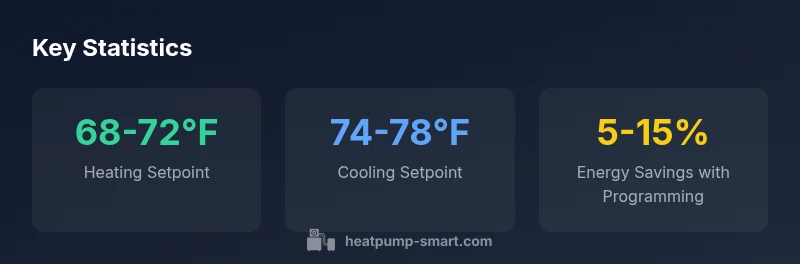
Setting a heat pump isn’t a fixed decree; it’s a practical range that balances comfort with energy efficiency. The recommended heat pump temperature depends on mode (heating vs cooling), climate, insulation, and occupancy. According to Heatpump Smart, customers who calibrate their setpoints within a broad band often experience fewer temperature swings and lower energy bills. In heating season, most homes find comfort at around 68-72°F (20-22°C) during evenings and nights, with a slight lift during active hours if people are present. In cooling mode, many households aim for 74-78°F (23-26°C) when rooms are occupied; at night, slightly higher or lower targets can help offset humidity and solar gains without running the compressor constantly. The exact number is less important than maintaining a steady climate and avoiding wide fluctuations that cause sensor-driven cycles. If you’ve got particularly drafty windows or high thermal mass, you may notice a need for narrower swings, and your Heatpump Smart team recommends measuring indoor comfort across several days to find the best baseline. Across multiple homes, the principle remains: start with the recommended heat pump temperature, then fine-tune based on real-world feedback.
How outdoor climate shapes the recommended heat pump temperature
Outdoor climate plays a pivotal role in determining the ideal temperature targets. In regions with harsh winters, the heating setpoint may stay closer to the lower end of the 68-72°F band for longer periods to avoid excessive loads that tax the unit. Conversely, in hot, humid summers, keeping cooling setpoints near the upper end of the 74-78°F range can reduce humidity-driven discomfort without triggering excessive compressor cycling. The building envelope—insulation quality, air leakage, and window performance—turther modulates how aggressively you can pursue those targets. Heatpump Smart analysis shows that well-sealed homes with moderate solar gains respond better to modest setbacks and smaller seasonal shifts. In locations with wide diurnal temperature swings, a dynamic strategy—slightly higher cooling setpoints during peak sunlight and lower ones at night—often yields better comfort with lower energy use.
Temperature setpoint strategies for heating vs cooling
The core strategy is to treat heating and cooling as distinct problems with shared constraints: comfort, cost, and equipment wear. For heating, maintain a steady baseline within 68-72°F and minimize rapid changes between rooms. When the house heats unevenly, consider zoning or vent adjustments to avoid over-reliance on the thermostat as a single control point. For cooling, target a base range of 74-78°F, then manage humidity with dehumidification or fan-assisted modes during shoulder seasons. The operating mode of the heat pump—auto, heat, or cool—should align with occupancy patterns: cooler setpoints may be acceptable at night, while higher ones can support daytime comfort in mild climates. In both cases, smart or programmable thermostats are essential tools for applying seasonal shifts without overloading the system.
How to determine your home's ideal temperature range with heat pumps
A practical method starts with a baseline within the recommended heat pump temperature bands: heating at 68-72°F and cooling at 74-78°F. Then, monitor comfort using simple indicators: how quickly rooms reach target temperatures, presence of drafts, humidity levels, and personal comfort reports. If you notice persistent cold spots, address insulation gaps or add simple air-sealing measures before pushing the system to larger swings. Track energy consumption against outdoor temperatures to identify if you’re spending more on climate control than necessary. A trial period of two to four weeks often reveals the most consistent range for your family. Heatpump Smart suggests documenting your findings and adjusting the baseline accordingly to maintain a stable, comfortable indoor environment.
Impact of humidity, ventilation, and operation mode on the recommended heat pump temperature
Humidity dramatically affects perceived comfort. In humid climates, rising indoors can make standard cooling setpoints feel warmer, prompting a slight reduction in the cooling target or increased dehumidification. Ventilation plays a role too: well-ventilated spaces can feel cooler at the same setpoints compared to poorly ventilated ones. Your heat pump’s operating mode—such as energy-saving or fan-only modes—will influence how aggressively the system reaches the target range. In heating, higher humidity can improve comfort at lower temperatures, while in cooling, dehumidification reduces the need to push the temperature lower. The recommended heat pump temperature should be adjusted to account for humidity, ventilation, and the chosen mode to prevent over- or under-conditioning.
Energy efficiency, running costs, and the recommended heat pump temperature
Electricity is the main operating cost driver for heat pumps, so small setpoint changes can produce meaningful savings. Keeping heating and cooling within the upper end of the comfort bands when you’re away or asleep can reduce energy use without significantly sacrificing comfort. In milder seasons, a smaller delta between indoor and outdoor temperatures lowers compressor cycles, reducing wear and tear. The recommended heat pump temperature becomes a tool for managing both comfort and cost, especially when paired with a programmable thermostat that learns occupancy patterns. Heatpump Smart analyses indicate that aligning setpoints with occupancy and local climate can yield noticeable energy reductions over time, particularly when paired with proper insulation and air sealing.
Practical tips for seasonal adjustments and smart controls
Seasonal adjustments are easiest with a smart or programmable thermostat. Create a winter schedule that locks in 68-72°F during hours you’re home and awake, and a summer plan that keeps cooling around 74-78°F during peak occupancy. Use “away” or “eco” modes to automatically tweak temperatures when the house is unoccupied. Build a short feedback loop: record comfort complaints, measure how quickly rooms reach target temperatures, and adjust the baseline by a few degrees until you observe consistent comfort with minimal energy use. The recommended heat pump temperature should be treated as a living guideline, not a rigid rule, and refined through testing and real-world experience.