RV Heat Pump vs Furnace: A Comprehensive Comparison
Compare rv heat pump vs furnace to choose the most efficient heating option for your mobile home. Learn climate, power, space, and installation trade-offs to maximize comfort and savings.


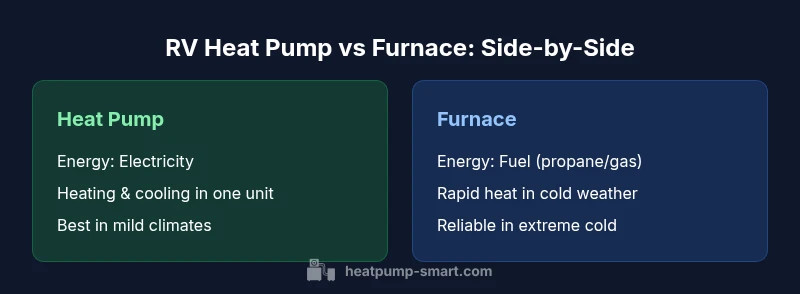
RV heat pump vs furnace: The heat pump generally wins on efficiency in milder climates by moving heat rather than generating it, while furnaces excel in very cold conditions with rapid heat output. For RVs, assess climate, electrical capacity, space, and usage patterns before deciding. Heatpump Smart offers an objective, practical comparison to help you choose.
Why RV heating choice matters
For RVs, the heating system isn't just about comfort—it affects daily living in tight quarters, energy budgets, and seasonal travel plans. The choice between an rv heat pump vs furnace determines energy use, space for equipment, and how reliably you stay warm as you move between climates. According to Heatpump Smart, the optimal option hinges on climate, electrical capacity, and the overall insulation of the RV envelope. In milder seasons, a properly sized heat pump can deliver comfortable warmth and even provide cooling, often with lower operating costs than a fuel-fired alternative. In harsher winter environments, a furnace or hybrid system may be preferred for its higher heat output and less reliance on outdoor temperatures. This analysis compares the two options with practical RV scenarios and provides a framework to assess your electrical service, available space, and maintenance expectations. By the end, you should feel prepared to judge the fit of rv heat pump vs furnace for your travel patterns and energy budget.
How a heat pump works in an RV
A heat pump moves heat rather than creating it. In an RV, the outdoor unit extracts heat from ambient air and transfers it inside through a closed refrigerant loop, using a compressor and expansion device. In heating mode, the cycle runs in reverse compared with cooling mode; heat is pumped from outside to inside, even when temperatures are cooler than inside air. Efficiency depends on outdoor temperature, insulation, and the system’s properly sized capacity for the RV’s living area. In milder climates, this mechanism can deliver comfortable warmth with electricity consumption lower than that of a comparable electric resistance heater. An auxiliary heat source, like a small electric strip or a backup heater, is commonly recommended for very cold nights or high-demand periods. For the comparison rv heat pump vs furnace, this is the core advantage: a single unit can provide heating and cooling, but proper sizing and control strategy are essential for reliable performance in the mobile context.
How a furnace works in an RV
A furnace burns fuel—usually propane or natural gas—to produce heat, which is then distributed by a blower through the RV’s ductwork or air channels. Combustion creates exhaust gases that must be vented outdoors; properly installed venting and CO detectors are essential for safety. The heat output is immediate as the burner heats the air and the blower circulates it. Furnaces are generally robust in very cold conditions and can deliver rapid warmth when you need it, which is appealing for short trips in subfreezing weather. However, fuel price volatility, venting requirements, and the need for a reliable gas supply add complexity. In an rv heat pump vs furnace comparison, the furnace wins on raw heating power in extreme cold but sacrifices the dual cooling capability and can raise operational costs if gas prices rise or if the RV has limited ventilation options.
rv heat pump vs furnace: climate and power considerations
Climate is the primary driver in choosing between a heat pump and a furnace for an RV. Heat pumps excel when outdoor temperatures are above freezing most of the year or when you value cooling as well as heating. In regions with frequent sub-freezing nights, a furnace or hybrid system can be more dependable because it doesn’t drop efficiency as temperatures plummet. Power availability also matters: heat pumps need a steady electricity source—shore power, an onboard generator, or solar with adequate storage—whereas furnaces rely on a fuel supply and still require electricity for the blower. When planning, assess expected usage patterns—the more you rely on heating during long trips, the more critical the balance between energy cost and conversion efficiency becomes.
Space, weight, and installation constraints in RVs
RVs have tight real estate for heating equipment. Heat pumps introduce outdoor components, refrigerant lines, condensate management, and sometimes ducting or localized wall units. This can add weight and require careful placement to avoid obstructing storage areas or fuel lines. Furnaces often have a smaller interior footprint because they mount in a cabinet and vent directly outside; however, they demand a gas line connection, proper vent routing, and space for the air intake and exhaust. If you prefer a ducted, unified system, a ducted heat pump or a compact mini-split might be sized to fit within an RV’s chassis, but installation complexity increases. Your choice between rv heat pump vs furnace will hinge on available space, mounting options, and access to professional service in the travel regions you frequent.
Operating costs and efficiency metrics
Understanding operating costs requires looking at energy sources and usage patterns in an RV context. A heat pump’s efficiency is influenced by outdoor temperatures and insulation; in temperate climates, monthly electricity use may be noticeably lower than running electric resistance heaters. In contrast, a furnace consumes fuel—propane or natural gas—with running costs tied to fuel prices and how frequently you heat. The overall life-cycle cost of each option depends on climate, electricity pricing, and maintenance needs. In RVs, the ability to use shore power or solar reduces the effective cost of a heat pump by lowering marginal electricity expenses. Conversely, if your trips occur where fuel is cheap or electricity is scarce, the furnace may present a more predictable cost profile. Use a simple calculator to estimate yearly costs based on your typical travel season and local rates to compare rv heat pump vs furnace more accurately.
Noise, comfort, and control
Noise can be a deciding factor in small living spaces. Heat pumps tend to produce less interior noise because the compressor is outdoors, but the outdoor unit may generate more sound in certain conditions. Furnaces generate combustion noise and a blower that runs inside or near living spaces, which can be more noticeable in tight trailers. Comfort control is also a factor: heat pumps provide even heating and often integrate with thermostats that manage both heating and cooling, whereas furnaces rely on separate cooling systems for year-round comfort. For RV use, consider models with quiet operation ratings and compatibility with portable RV electrical systems and smart thermostats to optimize performance in rv heat pump vs furnace scenarios.
Maintenance, safety, and serviceability
Maintenance for either system is essential in an RV where space, power, and access are limited. Heat pumps require periodic refrigerant checks, outdoor unit cleaning, and airflow verification. Ensure proper condensation drainage and insulation around any exposed lines in the RV. Furnaces require regular inspection of venting, gas lines, CO detectors, and temperature controls; keep a spare CO detector and test battery annually. In both cases, use a qualified RV technician for service, especially when dealing with refrigerant charges or gas connections. Your maintenance schedule should align with your travel plans and the local climate, as this affects reliability in rv heat pump vs furnace comparisons.
Real-world scenarios: when to choose heat pump vs furnace
Scenario A: You frequently travel in a dry, mild climate with reliable shore power and you want cooling in summer. A rv heat pump vs furnace option is appealing for year-round comfort and efficiency. Scenario B: You winter in cold regions and require rapid heating with a robust heat output. A furnace or hybrid system is often preferable. Scenario C: Your RV has limited space and you want a compact, integrated solution; a wall-mounted heat pump or mini-split can fit, but you must assess ventilation and the included electrical load before committing to rv heat pump vs furnace.
rv heat pump vs furnace: decision framework
Use this framework to guide your decision: (1) define your climate range and travel season, (2) verify electrical capacity, shore power availability, and generator options, (3) measure space, weight, and mounting constraints, (4) estimate operating costs under local energy prices, (5) confirm service accessibility and maintenance requirements. Answer these questions with your typical travel pattern to determine which option best balances comfort, reliability, and total cost in rv heat pump vs furnace contexts.
Authority sources
To ground this comparison in established guidance, consult government and academic resources on heat pumps, efficiency, and heating system safety. The U.S. Department of Energy provides background on heat pump efficiency and climate suitability, while ENERGY STAR offers practical tips for selecting efficient heating equipment. National Renewable Energy Laboratory (NREL) and the EIA provide context on how electricity pricing and climate influence operating costs. For detailed standards and performance metrics, refer to these sources and verify any RV-specific installation constraints with a licensed technician. Selected sources: https://energy.gov, https://www.energystar.gov, https://www.nrel.gov, https://www.eia.gov
Comparison
| Feature | Heat pump | Furnace |
|---|---|---|
| Energy source | Electricity (refrigerant cycle) | Gas/Propane (fuel combustion) |
| Heating method | Heat transfer via refrigerant loop; cooling mode available | Direct heat from combustion via heat exchanger |
| Best climate use | Mild to moderate climates; cooling available | Very cold climates; strong heat output |
| Electrical demand | Moderate to high draw; requires shore power/gen | Lower continuous draw; relies on fuel source |
| Installation footprint | Typically larger footprint; outdoor unit | Compact interior footprint; venting and fuel line routing required |
| Running costs context | Lower operating costs in favorable electricity pricing; heat/cool efficiency | Fuel costs vary; potentially higher operating cost depending on fuel price |
| Cooling capability | Yes (cooling mode) | No (unless paired with AC) |
| Maintenance & safety | Regular refrigerant checks and outdoor coil care | Gas system checks and vent safety; CO monitoring |
Advantages
- Higher efficiency in temperate climates with cooling capability
- Dual heating and cooling from a single system when sized correctly
- Lower emissions than fossil-only systems when using clean electricity
- Can be quieter inside living space due to outdoor compressor
- Good compatibility with shore power and modern RV electrical setups
Disadvantages
- Less effective in extreme cold environments without auxiliary heat
- Higher upfront cost and more complex installation
- Requires reliable electrical supply or generator during operation
- Potential refrigerant leaks require professional service
Heat pump is generally the better all-around choice for most RVs in temperate climates, while the furnace remains superior in extreme cold or when fuel availability is preferred.
In typical RV use, a heat pump offers comfort and efficiency with cooling capability, provided you have reliable shore power or solar support. A furnace is the safer choice in very cold climates or where electrical infrastructure is limited. The right decision depends on climate, power availability, and install constraints.
Your Questions Answered
What is the primary difference between an RV heat pump and a furnace?
The primary difference is energy source and heating method: heat pumps use electricity to move heat and can also cool, while furnaces burn fuel (propane or gas) to generate heat. In milder climates, heat pumps are typically more efficient; furnaces perform better in very cold conditions.
Heat pumps move heat using electricity, and furnaces burn fuel to create heat.
Is a heat pump suitable for cold-weather RV use?
Heat pumps can work in cold weather but their efficiency drops as temperatures fall. Many RV users pair a heat pump with auxiliary heat or opt for a furnace in regions with harsh winters.
Heat pumps work best in milder weather, often with backup heat in cold climates.
Can I run a heat pump on shore power in an RV?
Yes. A heat pump in an RV typically requires a stable 120V–240V shore power supply or a capable generator. Check your RV’s electrical capacity and ensure the unit’s startup surge is within limits.
Yes, with reliable shore power or generator access.
What maintenance does an RV heating system need?
Regular inspections of venting, filters, and electrical connections are essential. Refrigerant checks are needed for heat pumps, while gas lines, CO detectors, and venting require attention for furnaces.
Keep up with filters, vents, and safety detectors; service refrigerant or gas lines as needed.
Which is cheaper to run over a year in an RV?
Costs depend on climate and energy prices. Heat pumps usually cost less to operate in temperate climates with good electricity pricing; furnaces may be cheaper where gas is inexpensive and electricity is costly.
Costs vary by climate and energy prices; check local rates.
Is installation easier for a heat pump or a furnace in an RV?
Furnace installations can be simpler in spaces with existing gas lines and vent routing, while heat pumps may require outdoor mounting and refrigerant piping. Both should be installed by a qualified technician.
Installation depends on space and existing systems; hire a pro.
Top Takeaways
- Assess climate first to determine rv heat pump viability
- Ensure adequate electrical capacity for a heat pump
- Furnace excels in extreme cold and when fuel is readily available
- Consider installation space and maintenance access before buying
- Use a simple cost-estimator to compare annual operating costs