Tumble Dryer Heat Pump vs Condenser: Pros and Cons
A detailed, objective comparison of heat pump and condenser tumble dryers, focusing on energy efficiency, running costs, performance, and installation considerations for homeowners, builders, and property managers.


In brief, heat-pump tumble dryers are more energy-efficient than condenser models, but they cost more upfront and may take longer to dry heavy loads. This comparison shows how the two approaches differ in performance, running costs, and long-term value for homes with varying laundry needs, for today’s households seeking reliability, energy savings, and flexible installation options.
Understanding the Core Difference between Heat Pump Dryers and Condenser Dryers
In the world of home laundry, two common paths exist for energy-efficient drying: heat pump dryers and condenser dryers. When people weigh tumble dryer heat pump vs condenser pros and cons, they want clarity on energy use, cost over time, and how each technology handles regular loads. According to Heatpump Smart, heat pump models typically deliver superior energy efficiency and gentler drying at the same time, but they carry higher upfront prices. This section explains what sets these two families apart, and why those differences matter for homeowners, builders, and property managers weighing long-term value against initial investment. You will learn how each type processes moisture, how they interact with your electricity tariff, and what that means for weekly laundry routines. Throughout this guide, we refer to the keyword naturally to help readers surface the topic in search results and for accessibility: tumble dryer heat pump vs condenser pros and cons. The choice depends on your priorities: energy savings, drying speed, upfront cost, and how you balance installation practicality with ongoing running costs.
How a Heat Pump Dryer Works
A heat pump dryer uses a closed-loop refrigerant circuit to capture heat from inside the dryer, extract moisture from clothes, and reuse that heat for subsequent cycles. This recycling of energy is the core driver of efficiency gains. In practice, heat-pump models typically run at lower internal temperatures and use sophisticated sensors to adjust heat based on load size and fabric moisture. Benefits include reduced energy consumption over time and gentler treatment for fabrics, which helps maintain garment life. On the downside, heat pumps usually carry a higher upfront price and may have longer dry times for dense or bulky loads. For households with frequent daily laundry and long operation hours, the energy savings can be meaningful, especially when paired with time-of-use electricity rates. In our analysis, Heatpump Smart highlights that the long-term cost balance often favors heat pumps, even if the initial investment is steeper.
How a Condenser Dryer Works
Condenser dryers vent air that has been heated and circulated through the drum, then condense the moisture into a tank or drain it away. They tend to heat up more quickly than heat-pump models and can dry bulky items faster in some cycles. Because they do not rely on a closed-loop refrigerant cycle, condenser dryers are often cheaper to buy upfront and offer a wider range of models in many markets. They can be a practical option when upfront cost is a critical factor or when you need a dryer that performs well on occasional large loads. However, their higher energy use per cycle means higher running costs over the appliance’s life. In short, condenser dryers suit buyers prioritizing upfront affordability and faster cycle times, while heat pumps prioritize energy efficiency and long-term savings.
Efficiency and Running Costs: Real-World Impacts
From a cost perspective, energy efficiency is the most important factor in long-term operating expenses. Heat-pump dryers typically consume less electricity per cycle than condenser models, translating to lower energy bills over the life of the appliance. Heatpump Smart Analysis, 2026, notes that the efficiency gains from heat pump technology become more pronounced with frequent use and larger households, especially where electricity rates are stable or rising. Of course, price signals at purchase time can counterbalance these savings, so the break-even point depends on usage patterns, local tariffs, and the cost of replacement cycles. For renters and small households, a condenser dryer may still be viable if upfront budget constraints are tight and drying speed is a priority. Overall, the choice should reflect annual laundry volume, energy costs, and how you value upfront versus long-term spend.
Drying Performance and Load Handling
Drying speed is a common concern when comparing these two technologies. Condenser dryers often outperform heat pumps on heavy or bulky loads due to higher peak heat and shorter cycle times. Heat pump models may take longer for bulky towels or dense fabrics, but they compensate with gentler handling and less wear on garments. For light to medium loads, heat pumps provide excellent energy efficiency with reliable finish quality. The decision hinges on your typical laundry profile: if you wash small loads several times a week, heat pumps can deliver meaningful savings; if you run large, heavy loads infrequently, condensers may offer time-saving convenience. A balanced view recognizes that both systems deliver acceptable results under typical domestic use, with heat pumps leaning toward energy efficiency and condensers toward upfront practicality.
Maintenance, Durability, and Reliability
Maintenance needs differ between the two technologies. Condenser dryers require periodic drainage management for condensate and cleaning of filters to prevent moisture buildup. Heat pump dryers demand less frequent moisture management but may require service for refrigerant components is less common but more involved when needed. Both types benefit from regular lint filter cleaning, proper venting where applicable, and adherence to manufacturer maintenance schedules. In terms of durability, models designed for frequent use with robust components tend to outperform cheaper options, regardless of technology. Heat pump systems, when well-maintained, can showcase extended service life due to lower operating temperatures and reduced wear on heating elements. Readers should plan routine checks for lint, airflow, and drainage to preserve efficiency and safety.
Space, Installation, and Practical Considerations
Space constraints influence the practicality of heat pump versus condenser models. Heat pumps often come in compact footprints suitable for narrow laundry alcoves, but installation might require electrical upgrades or dedicated outlets. Condenser dryers are frequently available in a broader range of configurations and may fit in tighter or more irregular spaces due to flexible venting and drain options. For homes with limited installation flexibility, condenser dryers can be easier to deploy, while heat pumps shine in spaces designed for energy efficiency and long-term running cost reduction. Consider ceiling height, door clearance, and access to drainage or condensate tanks when choosing between these technologies. Proximity to living areas and noise levels also matter; heat pumps generally operate more quietly because of the optimized heat exchange cycle, though model variability exists.
Making the Choice: Scenarios and Recommendations
To help decision-makers, we outline practical scenarios. If your priority is minimizing ongoing energy costs and you have stable electricity pricing, a heat pump model is typically the better long-term investment. If your budget is tight, or you need a dryer with quick cycle times for large, infrequent loads, a condenser model may be more suitable. For developers or property managers with mixed households, a mixed fleet approach can offer flexibility, with heat pumps installed in units with high energy targets and condensers used where speed and upfront cost constraints dominate. The final choice should balance upfront price, expected yearly laundry volume, and the local cost of electricity, water, or drain considerations. Real-world testing with a cost-per-cycle framework can help quantify which option reduces total cost of ownership over 5–10 years.
Comparison
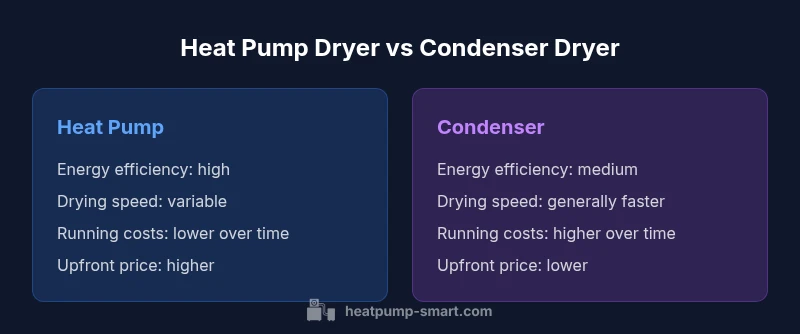
| Feature | heat pump dryer | condenser dryer |
|---|---|---|
| Energy efficiency | high | medium |
| Drying speed | slower on average | faster on average |
| Running costs | lower long-term costs | higher running costs |
| Upfront price | higher upfront cost | lower upfront cost |
| Maintenance needs | lower maintenance | moderate maintenance |
| Best for | homes prioritizing energy savings | budget-conscious setups |
Advantages
- Higher energy efficiency and lower running costs over time
- Gentle drying action with moisture sensing and fabric care
- Compact form factors for small spaces
- Lower heat emission in daily operation compared with some electric dryers
Disadvantages
- Higher upfront purchase price
- Drying times can be longer for bulky loads
- Model variety may be less in some markets
- Potential need for condensate drainage management in certain setups
Heat pump dryers generally offer the best overall value for energy-conscious households, while condenser dryers may be preferable for tighter upfront budgets or when rapid drying of bulky loads is a priority.
Choose heat pumps for long-term energy savings and fabric care. Choose condensers when upfront cost and quick cycle times matter more, especially for large, infrequent loads.
Your Questions Answered
What is the main difference between heat pump and condenser tumble dryers?
Heat pump dryers recycle heat within a closed system, boosting energy efficiency and reducing running costs. Condenser dryers vent or drain moisture and tend to dry faster but use more energy per cycle.
The main difference is energy use: heat pumps reuse heat to save energy, while condensers vent heat and typically use more energy per cycle.
Are heat pump dryers worth the extra upfront cost?
In most homes, yes over the long term due to lower energy bills, especially with frequent drying. The payoff depends on usage patterns and local electricity prices.
For many households, heat pumps pay back the extra cost through lower energy bills over time.
Which is better for small spaces?
Both types come in compact sizes, but heat pumps may require careful placement to optimize airflow. Condenser models are often easier to fit where space is tight and plumbing/ drainage options exist.
Both can fit small spaces, but heat pumps may need more careful placement for airflow while condensers offer flexible installation in tight spots.
Do heat pump dryers work well in humid climates?
Yes, heat pumps can be advantageous in humid climates due to their energy-efficient heat reuse, which lowers overall moisture load in a home. Ensure proper ventilation and drainage for any dryer.
Yes. Heat pumps tend to be efficient in humid climates since they reuse heat, but proper installation matters.
What maintenance do these dryers require?
Clean lint filters regularly, monitor condensate drainage in condensers, and schedule periodic service for refrigerant or mechanical components. Both types benefit from routine checks and adherence to manufacturer guidelines.
Keep lint filters clean and check drainage for condensers; follow the model’s maintenance schedule for best results.
Top Takeaways
- Assess typical laundry load size and frequency to map to efficiency vs speed.
- Prioritize long-term running costs when electricity prices are rising.
- Consider installation space and drainage requirements before buying.
- Expect heat pumps to excel in energy efficiency, condensers in upfront affordability.
- Balance upfront cost against expected device lifecycle and usage pattern.