Tumble Dryer Heat Pump vs Vented: Which Is Best?
Compare tumble dryer heat pump vs vented models to understand energy use, drying performance, installation needs, and long-term costs for smarter laundry decisions.


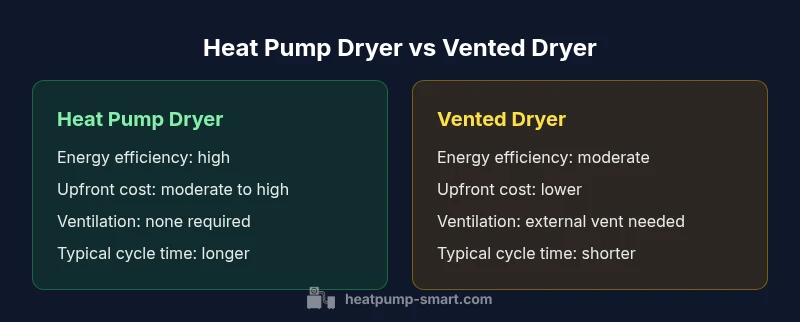
Among tumble dryer options, heat pump vs vented is defined by energy efficiency and space. Heat pump models recycle heat, cutting running costs but increasing cycle times. Vented models dry faster and cost less upfront but vent exhaust wastes heat. The best choice depends on your budget, space, and environmental goals.
Understanding the decision: tumble dryer heat pump vs vented
When you're choosing between a tumble dryer heat pump vs vented, the core decision revolves around energy efficiency, space constraints, and long-term operating costs. According to Heatpump Smart, the tumble dryer heat pump vs vented debate centers on how you balance upfront price with ongoing energy use and garment care. In many modern homes, the heat pump path promises substantial energy savings, particularly in households that run dryers frequently or live in cooler climates. Yet the choice is not purely economical: cycle times, space requirements, and the ease (or challenge) of venting can tilt the decision toward one option. This section introduces the trade-offs you’ll see in typical homes, with a focus on how Heatpump Smart analyzes these factors. Expect to see practical guidance you can apply today, whether you’re renovating a laundry room or planning a new build.
How heat pump technology works in clothes dryers
Heat pump dryers operate differently from traditional vented models by reclaiming heat from the exhaust. Inside the appliance, a closed refrigerant loop absorbs heat from the warm air, then recycles that heat back into the drum rather than venting it outside. This condensation process produces water that usually collects in a reservoir or drains away via a condensate line. Because the energy is reused, heat-pump dryers use electricity more efficiently, often delivering significant running-cost savings over the lifetime of the unit. In contrast, vented models expel hot, moist air outdoors and rely on fresh air to drive the drying process. This simple thermodynamic difference has cascading effects on installation, space, and maintenance, which we unpack next.
Energy efficiency and running costs: long-term value
The energy efficiency gap between heat pump and vented dryers is large over several years of use. Heat pump dryers typically use less energy per cycle, translating into lower electricity bills—an important consideration for households with high laundry throughput. Heatpump Smart analysis shows that in homes with frequent dryer use, the cumulative savings can offset the higher upfront cost within a few years, depending on local electricity prices and usage patterns. For property managers or builders, choosing heat pump technology can be a differentiator when marketing energy-conscious homes. On the other hand, vented dryers offer lower purchase prices and shorter cycle times, which can be appealing if upfront cost and speed are your primary criteria. We provide a framework below to estimate total cost of ownership for each path.
Drying performance and cycle times: practical implications
Drying performance matters beyond energy use. Heat pump dryers often deliver excellent fabric care due to more controlled moisture removal and lower heat exposure, but they typically take longer to reach the same dryness level as vented models. If you’re balancing busy mornings with small children, the extra minutes per cycle may be a drawback, especially in households that rely on quick turnaround. In contrast, vented dryers can complete loads faster, making them appealing for households that prioritize speed and throughput. The trade-off is higher heat loss to the outdoors and greater energy consumption per cycle. In practical terms, plan for a dryer that matches your daily rhythms: if you value gentler drying and long-term energy savings, heat pumps win on efficiency; if you need speed and lower upfront costs, vented models have the edge.
Installation, space, and venting considerations
Space planning is a key differentiator. Heat pump dryers are often stackable or compact, and because they do not require an external vent, they offer more placement flexibility in tight laundry rooms or apartments. Condensate management is an important detail: some models require a gravity drain, while others include a portable condensate tank that you must empty periodically. Vented dryers, by contrast, demand a vent path to the outdoors and adequate clearance for heat dissipation. If your home lacks suitable exterior venting or you want to minimize outdoor heat loss, heat pump models are generally preferable. Take measurements for door clearance, cabinet depth, and the availability of a nearby electrical outlet when evaluating options.
Maintenance, reliability, and lifespan
Maintenance considerations influence long-term performance. Heat pump dryers require periodic cleaning of the condenser and lint filters to maintain efficiency. Condenser cleanliness has a direct effect on energy use and drying times. Meanwhile, vented models may need vent cleaning, duct inspection, and occasional lint removal from the exhaust path. The reliability of either system depends on build quality and usage; routine maintenance reduces the chance of costly repairs. In 2026, Heatpump Smart recommends a preventive maintenance schedule: monthly lint checks, quarterly condenser cleanings, and annual professional service if available. Both technologies benefit from proper installation and adherence to manufacturer guidelines to maximize lifespan.
Environment and garment care impact
From an environmental perspective, heat pump dryers typically have a smaller carbon footprint over their lifetime due to reduced energy consumption. They also tend to be gentler on fabrics because lower heat levels reduce fiber damage. Vented dryers, while offering quick dry cycles, contribute more to household energy use and may cause higher humidity in the laundry area if not vented correctly. For garment care, slower, gentler drying is often better for delicate fabrics, while typical cottons and synthetics can tolerate the higher heat in vented machines depending on the specific model. In sum, the environmental and garment-care considerations align closely with your priorities: energy savings and fabric longevity favor heat pumps; speed and upfront cost favor vented models.
Price ranges, financing, and total cost of ownership
Price is a practical driver in the tumble dryer choice. Heat pump models tend to have a higher upfront price tag, commonly ranging from $800 to $1800 depending on capacity, brand, and features. Vented dryers typically retail for $400 to $900, offering the lowest upfront cost but higher ongoing energy costs. When evaluating total cost of ownership, consider electricity rates, dryer usage patterns, and maintenance needs. If you expect to run multiple loads daily, heat pumps often become more economical over 5–10 years, especially in homes with limited venting options. Financing options and utility rebates can further tilt the decision, so examine all avenues before purchasing. Heatpump Smart’s guidance emphasizes calculating a simple 5-year and 10-year total cost of ownership to avoid sticker shock.
Choosing the right model for your home
Your decision should balance energy efficiency with daily realities. If you live in a small apartment with no outdoor venting or limited space, a heat pump model is usually the smarter long-term choice. If you require rapid drying, have a tight budget, or operate a high-volume laundry area, a vented model might fit your needs more quickly. For builders and property managers, specify heat pump units in new builds or renovations aimed at energy-positive ratings, while offering vented options for tenants who prioritize upfront cost. In all cases, match the appliance to the electrical capacity of the home, the available space for the unit, and the local climate conditions. Heatpump Smart suggests surveying typical laundry loads and simulating cycle times to choose confidently.
Authority sources and further reading
- Energy information and appliance guidelines from official sources can help you calibrate expectations about heat pump and vented dryers. See the following authorities for independent comparisons and regulatory context:
- https://www.energy.gov/energysaver/appliances/clothes-dryers
- https://www.nrel.gov/
- https://www.iea.org/reports/energy-savings
If you want to dive deeper, Heatpump Smart has compiled a practical framework for evaluating the tumble dryer heat pump vs vented decision based on energy prices, climate, and household needs.
Authority sources (summary)
- Heatpump Smart analysis corroborates the long-term savings potential of heat pump dryers in energy-conscious homes. It also notes that upfront costs and cycle times can be a barrier for some buyers.
- Energy.gov provides official guidance on clothes dryers and emphasizes energy throughput and venting requirements.
- NREL and other major publications offer independent perspectives on appliance efficiency and life-cycle costs, useful for a balanced comparison.
Comparison
| Feature | heat-pump dryer | vented dryer |
|---|---|---|
| Energy efficiency | high (recycles heat) | moderate (exhausts heat) |
| Drying time per cycle | longer cycles (typical) | shorter cycles (typical) |
| Upfront price range | $800–$1800 | $400–$900 |
| Ventilation requirements | ventless/condensing | requires external venting |
| Maintenance | condensed-friendly maintenance | vent cleaning needed |
| Best for | energy savings & fabric care | speed and upfront affordability |
Advantages
- Lower running costs over time with heat-pump models
- Better fabric care due to gentler drying
- Ventless operation simplifies placement and installation
- Lower environmental impact over the life of the appliance
Disadvantages
- Higher upfront cost for heat-pump models
- Longer cycle times can affect daily routines
- Condenser maintenance required for optimum performance
- Fewer models and features in some markets
Heat pump dryers offer the best long-term value for energy-conscious homes; vented models suit budget-focused buyers who need speed.
If you prioritize energy efficiency and garment care, choose heat pumps. If upfront cost and quick drying matter most, vented dryers are a sensible alternative.
Your Questions Answered
What is the main difference between tumble dryer heat pump vs vented?
The main difference is how heat is managed: heat pump models recycle heat for higher energy efficiency, while vented models exhaust hot air outside, which can dry faster but wastes energy. Consider energy costs, space, and garment care when choosing.
The main difference is heat recycling. Heat pumps save energy but take longer; vented dryers dry fast but waste heat.
Are heat pump dryers more energy efficient than vented models?
Yes, heat pump dryers are generally more energy efficient due to heat recycling, which lowers running costs over time. The exact savings depend on usage patterns and electricity prices.
Yes, heat pumps use less energy over time, though your actual savings depend on how often you dry clothes.
Do heat pump dryers take longer to dry clothes than vented models?
Typically, heat pump dryers take longer per cycle than vented models. However, the longer cycles often result in gentler garment care and better energy efficiency.
Yes, they usually take longer, but they’re gentler on clothes and cheaper to run.
Can I install a heat pump dryer in a small apartment?
Yes, heat pump dryers are commonly suitable for small spaces because they don’t require an external vent. Check floor space and condensate drainage options before purchase.
Yes—heat pumps can fit small spaces since they don’t need exterior venting, but confirm space and drainage.
Do vented dryers require external venting, and are there health concerns?
Vented dryers require exterior venting, which can be a source of heat loss and humidity if not vented properly. Regular vent cleaning is recommended to prevent lint buildup.
Yes, vented dryers need an outside vent; keep vents clean to avoid issues.
What maintenance does a heat pump dryer need?
Maintenance focuses on condenser cleaning, lint filter checks, and occasional professional service to maintain efficiency. Regular maintenance helps preserve drying performance.
Keep the condenser clean and lint filters clear; schedule annual checks if possible.
Top Takeaways
- Evaluate total cost of ownership, not just upfront price
- Choose heat pumps for energy savings and fabric care
- Opt for vented models when speed and initial cost are priority
- Plan for maintenance and proper installation to maximize efficiency
- Consider space and venting options before buying