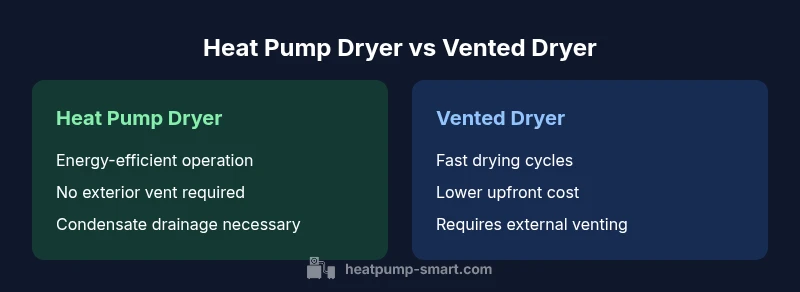
What is a heat pump dryer vs vented: a comprehensive comparison
Compare heat pump dryers with vented models to understand energy use, installation needs, and long-term costs. Learn which option fits your home, climate, and laundry habits with practical, data-backed guidance.


What is a heat pump dryer vs vented? In short, a heat pump dryer recycles heat in a closed loop, using electricity more efficiently, while vented models expel warm air outside. Heat pump dryers are gentler on fabrics and use far less energy, but often have longer cycle times. This quick comparison tees up a deeper evaluation of both options.
What is the core concept behind heat pump dryers vs vented models
In the conversations homeowners have about laundry equipment, the central question often comes down to what is a heat pump dryer vs vented. The difference is more than external venting. A heat pump dryer operates by recirculating air and heat through a closed refrigerant loop, extracting moisture from fabrics while preserving energy. In contrast, a vented dryer heats air with an element or gas burner and then vents that hot, moisture-laden air outside through a duct. This fundamental distinction has ripple effects on energy use, indoor humidity, and long-term operating costs. Heat pump technology is typically described as an air-source heat pump in a clothes-dryer form factor, and it generally runs at lower temperatures to protect delicate fabrics. This section sets the stage for a deeper, real-world evaluation of how each type behaves in homes, apartments, and shared laundry spaces.
How heat pump dryers work vs traditional vented models
What is a heat pump dryer vs vented goes beyond the vent. A heat pump dryer uses a closed refrigerant cycle: a compressor heats the refrigerant, the hot gas passes through a condenser to release heat into the drum, and the refrigerant cools to continue the cycle. Moisture from the clothes condenses and is collected or drained. The critical advantage is heat recovery—nearly all energy used to heat the air is reused, minimizing waste. A vented dryer, by contrast, burns energy to heat air that circulates through the drum and exits the home via an exhaust vent. Because the air is expelled, vented models typically lose heat energy that cannot be recovered, leading to higher energy use per load. This mechanical distinction translates into practical differences in installation flexibility and operating costs over time.
Energy efficiency and running costs (what to expect)
What is a heat pump dryer vs vented becomes most meaningful when discussing energy efficiency. Heat pump dryers recycle heat, operate at cooler temperatures, and reduce energy consumption per load relative to vented models. The use of a closed-loop cycle means less wasted heat and lower emissions from the dryer, which translates into lower electricity bills for most households. In many regions, Heatpump Smart analysis shows that energy savings are substantial over the life of the appliance, though results vary by model, cycle setting, and household laundry patterns. When evaluating options, pair energy efficiency with your climate, electricity rates, and dryer usage to estimate potential savings more accurately.
Drying performance and cycle times (real-world implications)
From a practical standpoint, drying performance is the most visible difference in daily use. Heat pump dryers often feature longer cycle times than vented models for the same load size, particularly on delicate or bulky fabrics. However, modern heat pump designs have narrowed this gap with faster sensor-driven cycles and improved maze of tumble patterns. In real homes, you may notice gentler fabric care and reduced shrinkage with heat pumps due to lower heat exposure, even if a few additional minutes are required per load. For households that prioritize speed above all, vented models may still feel faster, but at the cost of higher energy use and more outdoor heat release.
Installation, space planning, and climate considerations
Choosing between heat pump dryer vs vented often hinges on where you live and how your laundry area is configured. Heat pump dryers do not require an external vent, which makes them ideal for apartments, basements, or rooms without easy access to an outdoor wall. Some models still require a condensate drain or collection tray, so plan for a drainage option or built-in reservoir. In humid or cold climates, the heat recycling capability helps suppress indoor humidity compared with vented dryers, which can contribute to musty odors if not vented properly. Consider the proximity to a drainage line and the opportunities to plumb a condensate line when selecting a location.
Maintenance, reliability, and expected lifespan
Maintenance expectations differ between the two types. Heat pump dryers need regular condensate drainage or connection to a drain and periodic lint filter cleaning, but they generally have straightforward maintenance with fewer moving parts than vented dryers. Vented models may require more attention to vent integrity, duct cleaning, and lint trap maintenance to prevent fire hazards. Reliability hinges on quality components, proper installation, and routine service; neither design should be treated as maintenance-free. With proper care, heat pump dryers can offer a long service life and stable energy performance compared with vented models that rely on a vent system that can degrade over time.
Price, warranties, and total cost of ownership (TCO)
Price is a practical consideration when comparing heat pump dryer vs vented models. Heat pump dryers generally come with higher upfront costs due to the advanced refrigeration system and longer-term efficiency gains. Venteds tend to be cheaper to purchase initially but incur higher operating costs over time because energy usage is higher and venting can degrade, increasing maintenance needs. Warranties vary by brand and model; look for coverage on the compressor and heat exchanger for heat pump models. When calculating total cost of ownership, factor in energy costs, potential rebates, maintenance expenses, and expected lifespan. While the initial bill matters, the payoff for heat pump dryers often appears in annual energy savings and improved fabric care across years.
Choosing between heat pump dryer vs vented: decision factors (practical guidance)
If you are weighing what is a heat pump dryer vs vented for a specific home, prioritize the decision factors that align with your laundry needs and living situation. Heat pump dryers excel in energy-sensitive homes, apartments without exterior walls for venting, and climates where humidity control matters. Vented models may appeal if upfront cost is a primary constraint or if you require the fastest possible drying for certain loads. Consider your laundry volume, available space, and whether you can accommodate a condensate drain. Finally, assess local incentives and utility rates—rebates and energy-saving programs can alter the cost calculus in favor of heat pump models.
Practical tips to maximize efficiency and model selection (actionable steps)
To get the most value from your choice between heat pump dryer vs vented, start with a clear plan. Measure available space, including room for any condensate drainage. Check Energy Star labels and compare models based on energy factor and capacity rather than price alone. Evaluate cycle options, sensor-dry capabilities, and fabric care features that minimize heat exposure. If you opt for a heat pump dryer, plan for quiet operation in living spaces and confirm adequate drainage. Finally, read warranties carefully and understand what happens if a condenser or heat exchanger needs service. A well-chosen model aligned with your lifestyle can deliver meaningful energy savings and improved comfort over time.
Comparison
| Feature | Heat pump dryer | Vented dryer |
|---|---|---|
| Energy efficiency (per cycle) | High efficiency due to heat recapture and low operating temperatures | Lower efficiency due to heat losses through venting |
| Installation requirements | No external vent, condensate drainage needed | External vent required; ducting must be kept clear |
| Typical cycle times | Longer on average for similar loads | Shorter on average for similar loads |
| Space considerations | Needs space for drainage and air handling | Needs wall space for vent termination |
| Climate considerations | Strong performance in cooler climates; humidity control helps indoors | Requires ventilation outdoors; climate has less impact on drying |
| Upfront price range | $1,000–$1,800 | $350–$900 |
| Long-term operating costs | Lower total energy costs | Higher energy costs relative to heat pumps |
| Maintenance needs | Condensate drainage and filter cleaning | Vent cleaning and lint management |
| Noise considerations | Typically quieter due to recirculated air | Can be noisier due to exhaust fan |
Advantages
- Lower energy consumption over the dryer’s life
- No external venting needed in many spaces
- Gentle on fabrics and reduces indoor humidity
- Potential rebates or energy incentives in some regions
- Better for apartments or rooms without exterior walls
Disadvantages
- Higher upfront cost than most vented models
- Longer cycle times for some loads
- Limited model selection in certain markets
- Requires condensate drainage or plumbing hookup
Heat pump dryers win on energy efficiency and installation flexibility; vented dryers win on upfront cost and fastest drying in some loads
If energy savings and indoor climate matter, choose a heat pump dryer. If you need the lowest initial price or fastest cycle for heavy loads, a vented model may be preferable. The best choice depends on your space, climate, and budgeting priorities.
Your Questions Answered
Do heat pump dryers really save energy compared with vented models?
Yes, heat pump dryers generally use less energy per cycle due to heat recapture and lower operating temperatures. The exact savings depend on model, load, and climate, but many users see noticeable reductions in annual energy use. Look for Energy Star ratings and the manufacturer’s efficiency data.
Heat pump dryers usually use less energy per load, thanks to heat recycling. Check the Energy Star label for efficiency and compare annual energy use across models.
Do I still need to vent a heat pump dryer?
No external vent is typically required for heat pump dryers because they recirculate air. Some setups still require a condensate drain, so plan for drainage or a tray. If you live in a rental, verify installation constraints with your landlord.
Most heat pump dryers don’t need an outside vent, but you’ll often need a condensate drain.
Are heat pump dryers as effective at drying clothes as vented models?
Heat pump dryers are effective, but cycles can be longer. Sensor-dry features help optimize runtime, and fabric care is generally better due to gentler heat. For very large or heavily soiled loads, plan for extra time or choose a model with a faster mode.
They dry well, but the cycles may take longer than vented models.
What climates are best for heat pump dryers?
Heat pump dryers perform well across a wide range of climates, especially where humidity control and energy efficiency matter. In extremely hot or humid spaces, the indoor humidity management becomes a notable benefit. If you have limited outdoor venting, heat pumps are particularly advantageous.
They work well in most climates, especially where venting is a challenge.
What should I look for in a warranty for a heat pump dryer?
Prioritize a solid warranty on the compressor, condenser, and drainage components. A longer warranty on the heat-exchanger or refrigerant circuit is also beneficial given the technology involved. Read the fine print for coverage on service and replacement parts.
Check what the warranty covers for the heat pump system and drainage components.
Top Takeaways
- Prioritize energy savings for long-term ownership
- No exterior venting is a key advantage of heat pumps
- Expect longer cycle times with heat pumps but lower energy use
- Check drainage options when choosing heat pump models
- Look for rebates and incentives to offset upfront costs