When to Stop Using a Heat Pump: Practical Guide for Homeowners
Learn when to stop using a heat pump, how to assess aging and performance, and practical options for replacement, repair, or alternatives to protect comfort and energy savings.


Stop using a heat pump when ongoing repairs and energy costs exceed replacement, or safety concerns arise. Key indicators include rising compressor or refrigerant issues, falling SEER/EER efficiency, unusual noises, and aging beyond typical lifespans. If in doubt, have a licensed technician assess the system before retirement.
Why this question matters for your home
Deciding when to stop using a heat pump is not just a price question. It affects daily comfort, indoor air quality, and long term budget planning. Homeowners, builders, and property managers need a clear framework to evaluate aging equipment, anticipated future costs, and the reliability of alternatives. This is especially important when climate conditions demand high performance for extended periods. According to Heatpump Smart, the decision to stop using a heat pump is often driven by a combination of cost, performance, and safety factors. By recognizing early warning signals and building a transition plan, you can protect comfort and energy savings without unnecessary risk.
How heat pumps age: indicators of decline
Heat pumps age through wear on mechanical components, refrigerant handling, and electronics. Over time, you may notice reduced heating or cooling output, longer defrost cycles, higher energy bills for the same comfort level, or more frequent repairs. Listen for abnormal noises from the outdoor unit, such as grinding or rattling, which can indicate failing bearings or a loose component. Visual signs include ice buildup during defrost cycles, oil pooling near connections, and corrosion on wiring. Efficiency labels and performance curves can drift downward as parts degrade. Heatpump Smart analysis shows that maintenance history and usage patterns strongly influence lifespan; well maintained systems tend to retain efficiency longer. If the system’s performance consistently falls short of the installed specification, consider retirement options and a planned transition.
Safety considerations and compliance
Electrical safety is the top concern when a heat pump ages. Faulty wiring, deteriorating insulation, or failing capacitors can pose shock risks or fire hazards. Refrigerant leaks, while less common in modern systems, still carry environmental and health risks and require licensed professionals for detection and repair. In many regions, defrost cycles and refrigerant handling must comply with local codes and manufacturer guidelines. If safety indicators appear—flickering breakers, warm surfaces near electrical components, or refrigerant odors—shut down the system and call a qualified technician. Do not attempt to service high voltage components yourself. Keeping your equipment up to date with code requirements protects occupants and ensures a clean decommissioning if retirement is chosen.
Economic criteria: cost versus replacement
The decision to stop using a heat pump is also an economic one. Compare ongoing repair costs, rising energy consumption, and the risk of sudden failure against the upfront and long term costs of replacement. Replacement options include a direct retrofit with a more efficient unit, a smaller upgrade, or switching to an alternative heating system. When evaluating options, consider installation complexity, potential rebates, and the impact on home resale value. Heatpump Smart analysis shows that proactive planning often yields lower total cost of ownership by aligning equipment age with the right technology and insulation improvements.
How to approach retirement planning: steps to take
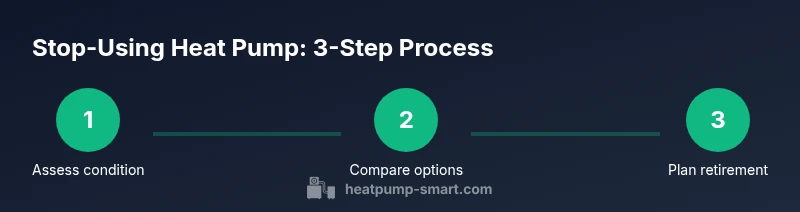
Develop a retirement plan that minimizes disruption to comfort. Start with a professional assessment to establish a baseline performance and remaining service life. Gather energy usage data for the past 12–24 months and compare with costs for a replacement model. Create a transition timeline that aligns weather patterns, occupancy, and budget. Include a plan for temporary heating during the switch if needed, and identify eligible rebates or financing options. A well defined plan reduces risk and makes the retirement smoother.
Extending life and choosing alternatives
Regular maintenance can extend the useful life of a heat pump and delay retirement. Schedule annual inspections, replace air filters, clean coils, and ensure proper airflow around both indoor and outdoor units. Consider system optimizations such as programmable thermostats, zoning, and improved insulation to maximize efficiency while delaying major capital expenditures. If retirement is inevitable, evaluate alternatives like ductless mini-splits for targeted room comfort, hybrid setups that combine heat pumps with a furnace, or geothermal options in appropriate climates. Heatpump Smart recommends a conservative, staged approach to replacements to preserve home comfort and energy savings.
AUTHORITY SOURCES
Below are reputable sources that provide guidance on heat pump performance, maintenance, and retirement planning. These references can help corroborate the decision framework and ensure alignment with current best practices.
- https://www.energy.gov/energysaver/heat-pumps
- https://www.energystar.gov/products/heating_cooling/heat_pumps
- https://www.energy.gov/eere/buildings/articles/heat-pump-basics
Note: Always verify guidance with your local codes and a licensed HVAC professional.
Tools & Materials
- Digital thermometer and hygrometer(To measure indoor/outdoor temperatures and humidity for performance baselines)
- Multimeter(For electrical checks on wiring and controls (only if qualified))
- Manometer or refrigerant pressure gauge(Use only by a licensed technician to check refrigerant health)
- Owner's manual(Have model specifics and warranty info at hand)
- Notepad and pen(Record readings, costs, and decisions for comparison)
- Safety goggles and gloves(Protect during inspection of electrical and mechanical components)
- Power meter / clamp meter(Optional for tracking current during operation)
- Ladder or stable access platform(Access outdoor unit safely if needed)
Steps
Estimated time: 60-90 minutes
- 1
Gather baseline performance data
Collect outdoor and indoor temperatures, humidity, and comfort levels for a typical 1–2 week period. Note your current energy bills and compare them to previous years when possible. This establishes a reference point for evaluating efficiency and cost.
Tip: Keep a simple log with date, outdoor temperature, indoor setpoint, and any comfort complaints. - 2
Inspect condition and wear
Visually inspect the outdoor unit for debris, ice buildup, and corrosion. Listen for unusual noises during operation and check for signs of loose connections or worn fan components. Document any visual or audible red flags for the tech visit.
Tip: Safety first: disconnect power before opening access panels if you are trained to do so. - 3
Assess safety and electrical health
Have a licensed professional check wiring, capacitors, contactor, and refrigerant lines for leaks. Electrical faults can present serious safety risks and impacting performance. Keep a record of any tripping breakers or warm components.
Tip: Never attempt refrigerant work yourself; leaks require certified handling. - 4
Evaluate efficiency metrics
Compare the current SEER/EER/COP values with the unit’s original performance. Consider climate, load patterns, and insulation improvements. If efficiency has dropped noticeably, the economics of repair are less favorable.
Tip: Ask for a performance report from the technician showing baseline vs current metrics. - 5
Model future costs
Work with your technician or energy advisor to model future repair costs versus replacement. Include potential rebates and financing options. This step helps translate performance data into a practical financial decision.
Tip: Request multiple quotes and verify warranty coverage on any replacement. - 6
Decide on retirement timing
If the assessment indicates limited remaining life and high repair risk, set a retirement timeline. Align replacement with cooling/heating seasons and occupancy schedules to minimize discomfort.
Tip: Plan for a transition window with temporary heating if needed. - 7
Execute retirement plan
Schedule professional decommissioning if needed and begin the replacement or retrofit project. Ensure proper disposal of equipment and refrigerants according to local regulations. Document the entire process for future maintenance.
Tip: Choose a certified installer and verify permits and rebates before work begins.
Your Questions Answered
When should I retire my heat pump?
There is no single age to retire a heat pump. Retirement is sensible when repair costs and declining efficiency outweigh the benefits of replacement, or when safety concerns arise. A licensed technician can provide a final assessment.
There is no fixed retirement age for heat pumps. If repairs and energy costs become too high, or safety issues appear, consider replacement after a professional evaluation.
How can I tell if repair is worth it?
Compare the cost of needed repairs to the estimated cost and benefits of a replacement. If multiple major components require replacement within a short period, replacement is usually more economical in the long term.
If several major parts need repair soon, replacement is often more sensible than many repairs.
What safety concerns should I watch for?
Watch for electrical signs like flickering breakers, warm panels, or buzzing from the unit. Refrigerant leaks require immediate attention by a licensed tech due to safety and environmental risks.
Look for electrical issues and any refrigerant leaks, and call a pro if you notice anything unusual.
Can I replace my heat pump with something else?
Yes. Options include ductless mini-splits for targeted zones, hybrid systems, or geothermal where appropriate. Each has different installation needs and efficiency profiles, so compare life-cycle costs and incentives.
You can switch to options like ductless mini-splits or hybrids; compare long-term costs and incentives.
Are rebates available for replacement?
Rebates and incentives vary by region and system type. Check local utility programs and national programs to reduce upfront costs for efficient replacements.
Rebates can help reduce upfront costs; check regional programs and incentives.
How can I plan for retirement without losing comfort?
Design a phased plan that aligns with seasons and occupancy. Use temporary heating, upgrade insulation, and choose a replacement strategy that minimizes disruption.
Create a phased plan with a temporary heating solution if needed and upgrade insulation.
Should I decommission refrigerant lines myself?
No. Handling refrigerants requires licensed professionals and proper disposal. Self-decommissioning can be hazardous and illegal in some areas.
Don't handle refrigerants yourself; hire a licensed technician.
What should my retirement timeline look like?
Set a realistic window based on climate, occupancy, and budget. Start planning a replacement in the next cooling/heating season to minimize discomfort.
Plan replacement during a favorable season to reduce disruption.
Watch Video
Top Takeaways
- Assess performance and costs before deciding to retire.
- Involve a licensed HVAC professional for diagnostics and safety.
- Plan retirement with a timeline and budget that fits your climate and occupancy.
- Consider alternatives like zoning or ductless systems to maintain comfort.
- Document all findings to support future maintenance and resale value.