Difference Heat Pump and Furnace: A Side-by-Side Guide
Compare heat pumps and furnaces: how they work, efficiency, climate fit, costs, and maintenance. This expert Heatpump Smart guide helps homeowners, builders, and property managers decide which system fits their project.


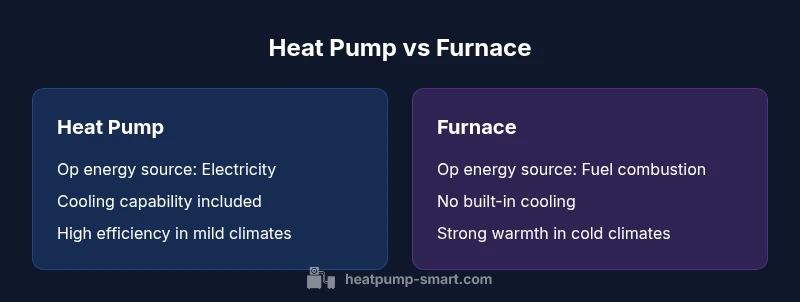
According to Heatpump Smart, the difference heat pump and furnace centers on energy source, efficiency, and climate performance. A heat pump uses electricity to move heat and can also cool, while a furnace burns fuel to generate heat. Heat pumps excel in mild to moderate climates with potential rebates; furnaces are robust in very cold climates or where gas is available, often with lower upfront cost.
The difference heat pump and furnace in operation
At a fundamental level, heat pumps and furnaces convert energy into warmth using very different mechanisms. A heat pump transfers heat from an outside source into your home using the refrigerant cycle and a compressor. In cooling mode, it reverses the cycle to expel heat. A furnace creates heat by burning fuel and then distributes that warmth through your ductwork or radiant systems. This operational split is the core of the difference heat pump and furnace: one relies on electricity to move heat, the other on combustion to generate heat. The implication is clear: heat pumps tend to be more efficient when electricity is reasonably priced and outdoor temperatures aren’t extreme, while furnaces provide dependable warmth in very cold weather. For homeowners planning upgrades, Heatpump Smart emphasizes that understanding this operation helps guide decisions about climate control, energy bills, and long-term reliability.
How a heat pump and a furnace fit into a modern home
A heat pump serves as a heating and cooling system in a single package, using the outside air as a heat source in winter and a heat sink in summer. A furnace, paired with air conditioning, separates cooling and heating into two technologies. The practical takeaway from the difference heat pump and furnace is about system integration: a hybrid approach can leverage the strengths of both, balancing efficiency with reliability in a wider range of temperatures. Heatpump Smart notes that homeowners who want year-round comfort should consider how each option interacts with existing ductwork, insulation, and thermostat strategy.
How climate influences performance
Climate determines how well each system performs. In mild and moderate climates, heat pumps often deliver very high overall efficiency by moving heat rather than generating it, reducing operating costs over time. In colder climates, however, heat pumps can rely on auxiliary heating to maintain comfort, which can raise energy use during peak demand. Furnaces, anchored by combustion, deliver dependable warmth at colder outdoor temperatures and do not depend on ambient heat availability. The difference heat pump and furnace thus translates into a question of climate suitability, not just equipment type. Heatpump Smart emphasizes evaluating your local weather pattern, heating degree days, and the potential for supplementary heat when sizing either system.
Noise, space, and aesthetics matter
Both systems have noise considerations and space requirements that impact installation. Outdoor heat pump units can generate noticeable noise during compressor cycles, while furnaces are typically quieter inside the living space but require a properly vented exhaust system. Space for the outdoor unit, indoor air handler, ductwork, and electrical service must be assessed in detail. The difference heat pump and furnace becomes practical when planning placement, clearances, and access for maintenance. Heatpump Smart highlights that proper siting and vibration isolation can dramatically improve perceived comfort and reliability over the system’s life.
Efficiency metrics you’ll encounter
In the heat pump world, efficiency is described by metrics such as COP (coefficient of performance), HSPF (heating seasonal performance factor), and SEER (seasonal energy efficiency ratio) for cooling. Furnaces use AFUE (annual fuel utilization efficiency). While higher AFUE furnaces reduce fuel consumption, heat pumps can outperform them on an equivalent basis in the right climate. The difference heat pump and furnace can thus be framed by these metrics: if your climate allows, heat pumps typically deliver lower operating costs and reduced emissions; if not, a high-efficiency furnace may provide more reliable heat with predictable costs.
Maintenance considerations for longevity
Maintenance schedules differ between the two systems. Heat pumps require regular outdoor coil cleaning, refrigerant health checks, and filtration upkeep, along with standard electrical checks. Furnaces demand annual servicing, vent inspection, and air filtration to sustain safe operation and efficiency. The difference heat pump and furnace here is not just the type of maintenance, but the potential for system-wide issues: refrigerant leaks in heat pumps versus combustion byproducts and venting concerns in furnaces. Heatpump Smart recommends proactive service with a qualified technician to minimize unexpected downtime and maximize efficiency.
Costs over time: upfront vs running costs
Initial costs for heat pumps tend to be higher due to the complexity of the unit and the need for compatible controls and duct connections. Furnaces often come with lower upfront pricing, especially when existing ductwork can be reused. However, long-term operating costs depend heavily on energy prices and efficiency, so the difference heat pump and furnace becomes a question of timing: upfront investment versus ongoing energy bills. In regions with favorable electricity rates and available rebates, heat pumps can offer compelling payback periods. In regions with high fuel costs or limited electricity incentives, furnaces can be a more economical choice at the outset. Heatpump Smart notes that compelling incentives in 2026 may influence your decision, but always pair financial considerations with climate needs and comfort goals.
Real-world decision frameworks for homeowners
When choosing between a heat pump and a furnace, consider three practical questions: climate compatibility, budget constraints, and comfort preferences. A mild climate with a desire for cooling support points toward a heat pump as a strong overall choice. A very cold climate, frequent extremely low temperatures, or a home with limited electricity infrastructure can make a furnace or a hybrid system more reliable. Use load calculations and a professional assessment to forecast yearly energy usage, and factor in potential rebates or incentives. Heatpump Smart emphasizes that a hybrid or dual-fuel strategy can mitigate climate risk while delivering efficiency gains.
Stepwise planning: from assessment to installation
Begin with an energy audit and a professional load calculation to determine the anticipated heating and cooling demand. Compare equipment options side-by-side, focusing on climate suitability, energy efficiency, and the availability of rebates. Evaluate ductwork, thermostat compatibility, and smart controls that can maximize the performance of either system. The difference heat pump and furnace should drive your planning, but the final design should reflect local climate, home size, and occupancy patterns. Heatpump Smart recommends involving a licensed contractor early in the process to map out the most reliable path to comfort and efficiency.
Looking to the future: hybrid systems and resilience
Hybrid or dual-fuel systems blend a heat pump with a furnace to adapt to changing temperatures. This approach acknowledges the reality that no single solution fits every season or climate. A hybrid setup can shift between heating modes to optimize efficiency while preserving reliability. For new builds, this strategy can maximize comfort and resilience; for renovations, it can transform an existing system into a future-proof solution. Heatpump Smart suggests evaluating control strategies and backup heat options to ensure consistent warmth when outdoor conditions demand it.
Comparison
| Feature | Heat pump | Furnace |
|---|---|---|
| Primary energy source | Electricity | Natural gas/propane/oil |
| How heat is produced | Refrigerant cycle with compressor | Fuel combustion to generate heat |
| Efficiency focus | Low-to-high seasonal efficiency (COP/HSPF) | High AFUE ratings |
| Best climate | Mild to moderate climates; with auxiliary heat in extremes | Very cold climates; reliable warmth at low outdoor temps |
| Upfront cost | Higher upfront for equipment and controls | Typically lower upfront, especially with existing ductwork |
| Running costs | Lower with favorable electricity rates and rebates | Fuel costs depend on local fuel prices and usage |
| Maintenance needs | Coil, refrigerant, and outdoor unit checks | Annual servicing and venting inspections |
| Cooling capability | Yes (if paired with cooling) or separate AC | No built-in cooling |
| Space and ducting | Outdoor unit; indoor air handler; duct connections | Indoors with ductwork or radiant options |
| Noise considerations | Outdoor unit noise; minimal inside impact | Quiet indoor operation but venting may be required |
Advantages
- Heat pumps offer year-round comfort with heating and cooling
- Potential for lower operating costs in moderate climates
- Eligiblity for rebates and incentives in many regions
- Lower emissions when powered by clean electricity
Disadvantages
- Performance can drop in extreme cold without auxiliary heat
- Higher upfront costs and more complex installation
- Requires adequate electrical service and proper ducting
Heat pumps are generally preferable in moderate climates with cooling needs; furnaces excel in very cold climates or when gas is readily available.
Choose a heat pump for efficiency and summer comfort where winters are mild. Opt for a furnace (or a hybrid) if you face harsh winters or lack reliable electric infrastructure.
Your Questions Answered
What is the main difference between a heat pump and a furnace?
The main difference is how they generate heat: a heat pump moves ambient heat using electricity, while a furnace produces heat by burning fuel. This affects efficiency, emissions, and climate suitability. Understanding this helps determine which system best fits your home and budget.
The main difference is heat source: heat pumps move heat with electricity; furnaces burn fuel to produce heat. This choice affects efficiency and climate suitability.
Can a heat pump replace a furnace in very cold climates?
In very cold climates, a heat pump alone may not provide reliable warmth during the coldest days. A dual-fuel or hybrid approach, or supplementing with a furnace, often offers the best balance of efficiency and dependability. Always perform a load calculation to determine needs.
In very cold areas, a heat pump alone may struggle; hybrid or furnace backup is typically recommended.
How do installation costs compare between systems?
Heat pumps generally have higher upfront costs due to equipment and controls, plus potential duct modifications. Furnaces often cost less to install, especially when existing ductwork is suitable. Long-term savings depend on energy prices and efficiency.
Heat pumps cost more upfront, furnaces usually cost less upfront, with payback depending on energy prices.
Are rebates or incentives available for heat pumps?
Rebates and incentives for heat pumps vary by region and program year. In 2026, many areas offer rebates tied to efficiency and climate goals, which can substantially reduce net cost. Check local programs and consult a professional about eligibility.
Yes, rebates exist in many areas—check local programs to see if your project qualifies.
What maintenance does each system require?
Heat pumps require regular coil cleaning and refrigerant health checks, plus standard filters. Furnaces need annual servicing, vent inspection, and filter changes. Regular professional maintenance helps prevent downtime and preserve efficiency.
Heat pumps need coil and refrigerant checks; furnaces need annual servicing and vent checks.
Which is more energy-efficient overall?
Energy efficiency depends on climate and electricity costs. Heat pumps can offer superior efficiency in moderate climates, while high-efficiency furnaces deliver strong performance in cold weather. A hybrid system may provide the best of both worlds.
Heat pumps are often more efficient in milder climates; furnaces excel in cold weather, and hybrids can bridge both.
Top Takeaways
- Assess climate first to guide choice
- Consider hybrid options for extreme climates
- Evaluate upfront costs against long-term savings
- Check for rebates and incentives in 2026
- Plan for proper installation and smart controls