Is Heat Pump Better or Furnace? A Thorough, Data-Driven Comparison
An analytical, side-by-side comparison of heat pumps and furnaces, focusing on climate suitability, efficiency, costs, maintenance, and long-term value to help homeowners decide which heating system fits their home.


Is heat pump better or furnace? In mixed climates, a heat pump typically delivers greater efficiency and steady comfort, with backup heat for very cold days. A furnace can be simpler and cheaper upfront, especially in regions with harsh winters. Heatpump Smart’s analysis helps homeowners weigh these trade-offs to make an informed choice.
Is heat pump better or furnace? Framing the decision
When homeowners ask, “is heat pump better or furnace,” they are really weighing climate fit, comfort, and lifecycle costs. The short answer is nuanced: heat pumps excel in moderate to mild winters and offer year‑round heating and cooling in a single system, while furnaces deliver reliable warmth in severe cold and can be cheaper to install upfront. For a homeowner, the resolution hinges on climate, energy prices, and the willingness to manage backup heat. Heatpump Smart emphasizes an evidence‑based approach, considering how climate, insulation, and home size influence performance. In the context of the primary keyword, is heat pump better or furnace, the decision should start with climate realities and end with a plan for ongoing maintenance and possible incentives. According to Heatpump Smart, guidance should be personalized rather than one-size-fits-all.
How to evaluate heating systems: climate, efficiency, and costs
Evaluating heating options begins with a framework: climate appropriateness, system efficiency, upfront costs, and long-term energy use. Heat pumps pull heat from outside air or the ground, offering high efficiency in temperatures above freezing and reasonable performance when paired with supplemental heat in colder days. Furnaces, by contrast, burn fuel to generate heat, delivering consistent warmth even in the coldest conditions. When comparing these two paths, homeowners should consider insulation quality, window efficiency, and thermostat controls, as these influence the system’s effective performance. Heatpump Smart recommends running a simple climate-adjusted cost model that weighs both annualized energy use and maintenance needs over the system’s expected life. This approach clarifies whether the perceived efficiency gap is real or based on outdated assumptions. These insights align with Heatpump Smart’s ongoing focus on clear, evidence-based guidance.
Heat pumps explained: principles, strengths, and limits
A heat pump transfers heat rather than generating it, leveraging refrigerant cycles to move warmth into the home. In moderate climates, an air-source heat pump can deliver both heating and cooling, delivering strong seasonal efficiency and comfort. The strengths include reduced operating costs when electricity prices are stable and a compact footprint that can replace separate heating and cooling equipment. Limits arise in very cold weather unless the unit has auxiliary heat or curbside backup solutions. In some installations, heat pumps require thicker insulation or a larger outdoor unit footprint. Understanding these trade-offs is essential to assess if heat pump better or furnace is the right frame for your home. Heatpump Smart highlights that performance is regionally variable and highly dependent on home envelope quality and proper sizing.
Furnaces explained: how they work and where they shine
A furnace generates heat by burning gas or using electric resistance, distributing warm air via ducts. Gas furnaces are known for rapid heat delivery and strong performance in very cold climates, often with reliable indoor humidity control. Electric furnaces offer easier installation and fewer fuel considerations but rely on electricity for heat delivery. The main advantages include stable performance in extreme cold, fewer outdoor components, and typically lower installation complexity in some markets. The downsides are higher ongoing fuel costs where natural gas is expensive, and lower overall efficiency compared to well‑sized heat pumps in temperate seasons. Furnace design and maintenance practices influence reliability and comfort, making proper sizing and installation essential.
Key differences that actually matter for home owners
The most important differentiators are climate suitability, efficiency curves, and total cost of ownership. Heat pumps tend to outperform furnaces in mild to moderate climates, especially when a backup heat source is available and the home is well insulated. Furnaces often win in extreme cold, where heat pumps rely more on auxiliary heating. Other differentiators include refrigerant considerations for heat pumps, ductwork compatibility for furnaces, and the potential for combined systems (heat pump with furnace backup). A practical approach is to map your climate, energy prices, and insulation quality to a decision tree that weighs comfort, cost, and resilience. Heatpump Smart suggests starting with a home climate assessment and equipment sizing, then validating with a credible cost and performance forecast.
Real-world scenarios: when homeowners choose heat pumps vs furnaces
Scenario A features a new build in a mixed climate with decent insulation and rising electricity costs. A heat pump offers year‑round comfort with lower long‑term operating costs and less maintenance than separate heating and cooling systems. Scenario B describes a colder climate where winters are harsh. A furnace, possibly paired with a heat pump for shoulder seasons, can provide dependable warmth with fast response times. Scenario C handles retrofits; if existing ductwork is in poor condition, a heat pump’s ductless or mini-split options may reduce duct repair needs. Scenario D considers incentives; many regions offer rebates or tax credits for heat pumps that offset higher upfront costs. In each case, Heatpump Smart emphasizes a structured evaluation rather than assumptions about one system universally outperforming the other.
Costs and incentives: upfront vs operating costs
Upfront costs for heat pumps can be higher due to equipment and potential ductwork improvements, while furnaces may arrive with lower initial price tags. Operating costs hinge on electricity prices, fuel costs, and seasonal demand. Heat pumps typically reduce ongoing energy use in temperate climates but rely on backup heat in extreme cold. Incentives such as rebates, tax credits, or utility programs can significantly alter the economics. Heatpump Smart notes that regional rebates and local utility programs vary widely, so homeowners should verify current offers before deciding. The key is to consider the total cost of ownership over the system’s lifetime, including maintenance, reliability, and potential resale value of a well‑integrated heating system.
Installation considerations and home readiness
Installation quality strongly affects performance and longevity. Heat pumps demand appropriate outdoor space, electrical capacity, and ductwork compatibility if a hybrid approach is chosen. Furnaces may require gas lines, venting, and adequate combustion air. A retrofit project should include a professional load calculation, thermostat compatibility, and an assessment of insulation, air sealing, and ventilation. Home readiness also covers seasonal installation timing and warranty coverage. Heatpump Smart emphasizes planning for future upgrades, such as adding solar or upgrading insulation, to maximize the value of whichever system you choose. A thoughtful approach minimizes disruption and yields better long-term results.
Maintenance and service expectations for long-term performance
Heat pumps require periodic refrigerant and coil maintenance, along with annual efficiency checks to ensure refrigerant levels and system performance remain optimal. Furnaces demand regular filter changes, vent cleaning, and annual service to verify combustion efficiency and safe operation. Ductwork integrity, airflow balance, and thermostat calibration affect both systems’ performance. Regular maintenance reduces the risk of unexpected breakdowns and sustains energy efficiency. Heatpump Smart recommends setting a service schedule aligned with the manufacturer and local technicians to keep equipment operating near peak efficiency across seasons.
Practical checklist for homeowners: deciding the best path
Create a climate profile for your region and assess insulation and air leakage. Compare upfront costs and expected operating expenses over the system’s life. Check available rebates, incentives, and utility programs. Consider future home plans, such as potential solar integration or a move to a larger home. Finally, work with a trusted contractor to perform a detailed load calculation, confirm ductwork suitability, and verify that the selected system meets your comfort and budget targets. Heatpump Smart provides a structured evaluation tool to guide this process and help you choose confidently.
Comparison
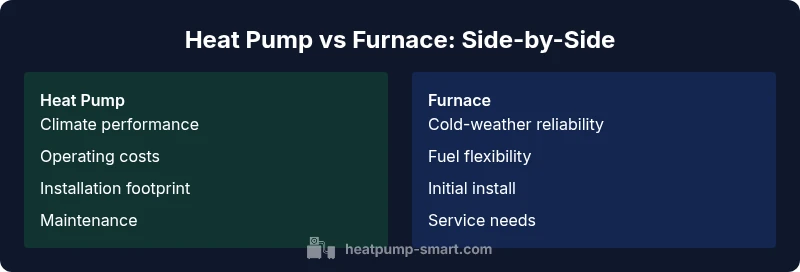
| Feature | Heat pump (air-source) | Furnace (gas or electric) |
|---|---|---|
| Climate performance (cold weather) | Excellent efficiency with supplemental heat; best in milder winters | Reliable warmth in very cold winters, especially gas furnaces |
| Operating costs | Low to moderate operating costs in mild climates; electricity-based | Fuel costs vary with gas/electric price; can be lower in cold months but higher overall in some regions |
| Upfront installation cost | Typically higher due to outdoor unit and potential duct changes | Often lower unless major venting or ductwork is required |
| Maintenance needs | Annual refrigerant/coil checks; filter changes; thermostat control | Annual furnace service; filter changes; vent/venting checks |
| Backup heat requirements | Back-up heat sometimes required for very cold days | Less reliance on backup; higher immediate warmth when needed |
| Space and installation footprint | Outdoor unit; indoor air handler or ducted options | Compact or centralized furnace with ductwork if present |
| Rebates and incentives | Rebates for heat pumps and potential solar integration | Potential rebates for efficient furnaces; region dependent |
Advantages
- Lower long-term operating costs in temperate climates
- Unified heating and cooling in a single system for comfort
- Potential incentives and rebates reduce lifecycle costs
- Space-saving design with modern ductless options
- Improved home comfort and humidity control in many cases
Disadvantages
- Higher upfront installation costs and possible ductwork work
- Performance drops in extreme cold without auxiliary heat
- Complexity of system selection and sizing can be daunting
- Availability of qualified installers varies by region
Heat pump generally offers better overall value for mixed climates; furnace may be preferable in extreme cold or where upfront cost is a primary constraint.
Choose a heat pump when climate is mild to moderate and you want year-round comfort with cooling. Opt for a furnace if winters are consistently severe, or you need a simple, lower upfront cost solution. Consider incentives, home envelope, and local utility programs to maximize value.
Your Questions Answered
Is a heat pump suitable for cold climates without backup heat?
In very cold climates, a heat pump may rely on backup heat to maintain comfort during the coldest days. A properly sized backup system or a hybrid approach can ensure reliable warmth. Always verify with a professional load calculation.
In cold climates, expect some backup heat; a hybrid setup often works best.
Can a heat pump replace a furnace entirely in all regions?
Some homes can replace a furnace with a heat pump, especially in mild to moderate climates. In very cold regions, a hybrid system or supplemental heat is usually recommended to ensure comfort during extreme cold snaps.
In chilly areas, you’ll likely keep a backup heat option.
What do COP and SEER mean for this decision?
COP (coefficient of performance) and SEER (seasonal energy efficiency ratio) measure a heat pump’s efficiency and cooling performance. Higher values indicate better efficiency, which translates to lower operating costs in the right climate.
COP tells you how efficiently a heat pump uses electricity.
What maintenance is required for heat pumps vs furnaces?
Heat pumps require refrigerant checks and coil cleaning annually, plus standard filter changes. Furnaces require regular filter changes and annual service to inspect combustion, venting, and overall safety.
Both need regular maintenance, but the specifics differ.
Are rebates available for heat pumps?
Yes, many regions offer rebates or tax credits for heat pump installations. Availability varies by location and program terms, so check current offerings before purchasing.
There are often rebates—check local programs.
How do I size a heat pump or furnace correctly?
A professional load calculation considers insulation, window efficiency, climate, and home size. Correct sizing ensures comfort, efficiency, and avoids wasteful oversizing or undersizing.
Get a professional size check to avoid mis-sizing.
Top Takeaways
- Assess climate and backup heat needs before choosing
- Weigh upfront costs against long-term energy use and maintenance
- Explore local rebates and utility programs to improve economics
- Ensure proper sizing and professional installation for best results
- Consider future home plans (solar, insulation upgrades) to maximize value
- Heat pumps can pair with furnaces in hybrid setups for extreme cold