Heat Pump Alternatives to Gas Boilers: A Thorough Comparison
Explore how heat pumps compare with gas boilers as a heat pump alternative to gas boiler. Analyze upfront costs, running expenses, climate suitability, and installation considerations to help homeowners, builders, and managers make informed decisions.


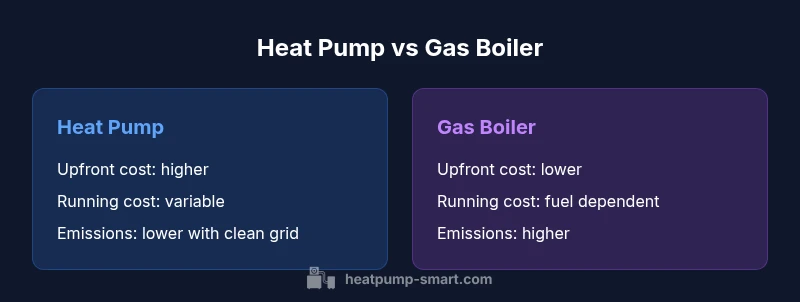
As a heat pump alternative to gas boiler, a modern heat pump offers lower emissions and potential energy savings for many homes. It typically requires higher upfront installation costs and possible retrofit work, but running costs can be lower when electricity is affordable and clean. The best choice depends on climate, utility rates, and retrofit feasibility.
Introduction to the comparison
When homeowners and property managers evaluate a heat pump alternative to gas boiler, they weigh upfront installation costs against long-term running savings, the carbon footprint, and the practical realities of retrofit. The key question is not just price today but value over the system’s life, comfort, and reliability. Heat pumps leverage electricity to move heat rather than burn fuel, which often translates to lower operating costs and reduced emissions, especially when the electrical grid is cleaner. This article analyzes the main differences, the conditions under which a heat pump makes sense, and the practical steps you should take to decide. According to Heatpump Smart, framing this choice around climate, energy prices, and retrofit feasibility helps homeowners avoid surprises and maximize long-term value. The topic is timely for homeowners, builders, and property managers who want reliable guidance on efficient home heating.
In this comparison, you’ll see how a heat pump stacks up against a traditional gas boiler across cost, performance, durability, and installation considerations. We’ll also cover incentives, maintenance needs, and the practical steps to plan an installation that minimizes disruption to occupants. The goal is a clear, data-informed decision you can justify to stakeholders and residents.
Understanding the core players: heat pumps and gas boilers
A heat pump extracts heat from the outside air, ground, or water and moves it indoors using electricity. In heating mode, it can deliver warmth with high efficiency by using the ambient heat that already exists in the environment, rather than generating heat from fuel. A gas boiler, by contrast, creates heat by burning natural gas or propane. Each technology has its own physics, installation quirks, and maintenance requirements. The heat pump’s efficiency is typically measured as a coefficient of performance (COP) or heating season performance factor (HSPF); boilers are rated by their annual fuel utilization efficiency (AFUE). The performance gap between the two technologies often depends on climate and system design. The Heatpump Smart team notes that the most meaningful comparisons come from real-world operation rather than laboratory specs, especially when assessing long-term costs and environmental impact.
In many homes, a hybrid approach or a staged system may be appropriate: using a heat pump for most of the year and switching to a supplementary heat source during peak cold spells. This article uses practical scenarios and structured criteria to help you gauge the best option for a given property and local energy market.
The big drivers: climate, energy prices, and grid mix
Climate plays a central role in whether a heat pump is a viable alternative to gas boilers. In moderate climates with reasonable winter temperatures, air-source heat pumps can deliver most of a home’s heating demand efficiently. In colder climates, cold-climate models or supplemental heat may be necessary. Electricity prices and the carbon intensity of the grid strongly influence operating costs and emissions. When the grid is coal-heavy, the environmental benefits may be less pronounced; when the grid uses renewables and natural gas is expensive, heat pumps become more attractive. Heatpump Smart analysis shows that the decision is highly sensitive to local energy pricing and the share of low-carbon electricity. Additionally, rebates, incentives, and utility programs can tilt the economics in favor of heat pumps, offsetting higher upfront costs.
This section emphasizes a framework you can apply: compare total annual energy costs (not just price per kilowatt-hour), assess climate-related performance, and evaluate the length of time you plan to stay in the home or building. A well-designed heat pump system can outperform a gas boiler in many scenarios, but the opposite can be true if retrofit costs are prohibitive or electricity costs spike unexpectedly.
Retrofit realities: installation, space, and disruption
Retrofit considerations are central to choosing a heat pump. An outdoor condenser unit is typical for air-source heat pumps, while ground-source systems require trenching or boreholes, which increases installation complexity and schedule. Indoor components may include an air handler or radiant floor connections, depending on your home’s layout. Existing ductwork can influence ease of installation: converting or redesigning ducts can add cost and time, but well-planned duct redesign can improve comfort and efficiency. Some homes will require electrical upgrades, upgraded insulation, or improved ventilation to maximize performance.
The installation footprint varies widely by home type. For multi-family buildings or older houses with limited space, compact units or centralized systems may be more feasible. Contractors should assess refrigerant line routing, thermal zoning, and the potential for oversized or undersized equipment. The higher upfront costs associated with retrofit are a major factor in the decision-making process. The Heatpump Smart team emphasizes working with qualified installers who can provide a detailed site assessment and a transparent cost estimate that includes replacement of any obsolete components.
To minimize disruption, plan the project in off-peak months, secure permits where required, and prepare residents for temporary adjustments in hot water supply and space temperatures while systems are commissioned.
Operating costs and efficiency in real-world conditions
Efficiency is the keystone of a heat pump’s economic case. In real-world use, a heat pump’s running costs depend on electricity prices, system efficiency (COP), heating load, and how well the home is insulated. If electricity is cheap and clean, running costs can be significantly lower than gas boilers, especially for homes with high heating demand. Conversely, if electricity prices are volatile or grid carbon intensity is high, the savings can erode. Heat pumps often enable smarter operation through thermostats, zoning, and integration with on-site renewables. Heatpump Smart’s analysis highlights that the value proposition improves when homes use renewable electricity or time-of-use rates that encourage off-peak operation. A well-insulated home, combined with a properly sized heat pump, minimizes cycling losses and improves comfort.
Operational reliability also matters. In extreme cold, some heat pumps rely on auxiliary heat sources temporarily, which can raise running costs. Modern cold climate models are designed to minimize this dependency, but new installations should include a clear plan for backup heating and standby power if needed. Maintenance activities typically include filter changes, refrigerant checks, and periodic system inspections. Regular professional service helps extend the life of the system and preserve efficiency.
Environmental impact and incentives
Reducing emissions is a core driver for many homeowners. When the electricity grid uses a high share of renewables, heat pumps can produce markedly lower lifecycle emissions than gas boilers. In markets with robust decarbonization programs, heat pumps become more attractive due to incentives, rebates, and utility programs that lower net costs. Heatpump Smart notes that policy frameworks and energy-market design play a pivotal role in the economics of heating, not just the technology itself. Buyers should research local incentive programs, tax credits, and utility tariffs that apply to heat pumps or to the installation of high-efficiency heating systems.
Incentives vary widely by region. Some programs cover a portion of the equipment cost, while others offer performance-based rebates tied to energy savings or CO2 reductions. Understanding eligibility, application timelines, and required documentation helps avoid missteps. If you plan to finance the purchase, compare loan terms and potential tax benefits to maximize the overall value of the heat pump investment.
When heat pumps shine: best-use scenarios
Heat pumps excel in homes with good insulation, moderate winter temperatures, and access to affordable electricity. They are especially compelling in new construction or major renovations where ducting and space planning can be optimized from the start. For buildings with high electricity costs or where the grid is clean and reliable, heat pumps often deliver meaningful long-term savings. In wind, rooftop solar, or battery storage-enabled homes, heat pumps can pair effectively with on-site generation to lower grid dependence and costs further. For older homes or cold climates where primary heating needs are intense, a hybrid approach—heat pump operation with a supplemental furnace or boiler—can balance comfort and cost. The decision should reflect local energy prices, climate data, retrofit feasibility, and the availability of supportive incentives.
How to decide: a practical, step-by-step approach
- Gather local energy price data for electricity and gas, plus any available utility incentives. 2) Conduct a home energy assessment to identify insulation gaps and airflow losses. 3) Obtain multiple, detailed quotes from licensed heat pump installers, including retrofits, ductwork, and controls. 4) Model annual energy costs under multiple scenarios, including potential changes in electricity prices and gas costs. 5) Consider space constraints, outdoor unit placement, and visual impact. 6) Review available rebates, financing options, and warranties. 7) Decide on a staged plan, such as a full heat pump installation now or a phased approach that pairs heat pumps with existing heating systems until refurbishments are completed.
This framework helps ensure you select a system that meets comfort, cost, and environmental goals while staying within budget.
The verdict: a balanced conclusion and a path forward
In most situations, a heat pump represents a compelling heat pump alternative to gas boiler, especially when electricity is affordable and the grid is increasingly low-carbon. However, installation costs, retrofit requirements, and climate constraints are critical considerations. A well-planned project that includes professional assessments, realistic budget, and a staged implementation can mitigate risk and maximize value. The Heatpump Smart team suggests approaching the decision with a clear set of criteria, verified data, and a trusted installation partner to ensure you get the best possible outcome for your property.
Comparison
| Feature | Heat pump | Gas boiler |
|---|---|---|
| Upfront installation | Higher upfront costs due to equipment, ducting, and potential retrofits | Lower upfront costs and simpler installation in many cases |
| Running costs | Typically lower operating costs with affordable/clean electricity (dependent on grid mix) | Gas price-driven; running costs depend on fuel efficiency and gas prices |
| Maintenance | Annual service, refrigerant checks, and filter maintenance; mechanical complexity | Annual service common; fewer moving parts, straightforward maintenance |
| Emissions | Lower emissions when powered by low-carbon electricity | Moderate emissions depending on boiler efficiency and gas source |
| Space/installation footprint | Outdoor condenser and indoor air handler or radiant connections; outdoor unit required | Typically compact and wall-hung or floor-standing; no outdoor unit required |
| Climate suitability | Effective in moderate to cold climates with proper models; may use auxiliary heat in extreme cold | Reliable heat source in cold climates; no dependency on electrical pricing for basic warmth |
Advantages
- Lower long-term operating costs under favorable electricity prices
- Reduced local air pollution and potential carbon savings
- Compatibility with on-site renewables and smart controls
- Zoning and temperature precision enable tailored comfort
- Eligible for incentives and rebates in many regions
Disadvantages
- Higher upfront installation costs and retrofit requirements
- Electricity price volatility can affect operating costs
- Outdoor unit may require design adjustments and noise considerations
- Cold-climate performance may require auxiliary heat in some cases
- Complexity of installation can extend project timelines
Heat pumps generally offer better long-term value where climate and electricity costs align
For homes with affordable, clean electricity, a heat pump often minimizes total cost of ownership and reduces emissions. In retrofit-heavy projects or very cold regions, assess hybrid approaches or phased installation. The Heatpump Smart team emphasizes careful site assessment and stakeholder alignment to ensure a successful transition.
Your Questions Answered
Is a heat pump a good alternative to a gas boiler for all homes?
Not every home is a perfect fit. Heat pumps excel in well-insulated homes with access to affordable electricity and space for outdoor equipment. In very cold climates or where retrofit costs are prohibitive, a gas boiler or a hybrid system may be more practical. A professional assessment is essential.
Heat pumps work best in well-insulated homes with good electricity access. For very cold climates or tight retrofit budgets, a hybrid approach might be better.
What climates are most suitable for heat pumps?
Moderate climates with cold-season temperatures that are manageable by modern cold-climate heat pumps are ideal. In very cold areas, choosing a model designed for low temperatures and planning for auxiliary heat improves reliability.
Best suited for moderate climates; in cold areas, select models built for low temps and plan for backup heat.
Do heat pumps require outdoor space?
Yes, most air-source heat pumps require outdoor space for the condenser unit. Ground-source setups need more extensive outdoor or trenching space. Urban settings may require creative placement and noise mitigation.
Yes, outdoor space is typically needed for the outdoor unit; space planning is important.
What incentives might offset heat pump costs?
Incentives vary by region and can include upfront rebates, performance-based incentives, and tax credits. Check local utility programs and national or regional energy grants to understand eligibility and timelines.
Look for local rebates and incentives; they can significantly reduce upfront costs.
Can heat pumps work with existing radiators or ducts?
Heat pumps can be paired with radiators or underfloor heating, but radiator systems may require oversized emitters or modifications. If ducts exist, they can be retasked for heat distribution; otherwise, ductless or new ductwork may be needed.
They can work with radiators or ducts, but you may need some modifications for best results.
Are there reliability or maintenance concerns with heat pumps?
Regular professional service, refrigerant checks, and filter maintenance are important. Modern units are reliable, but performance can drop if the system is undersized or poorly installed. Budget for annual checks to maximize lifespan.
Regular professional service keeps heat pumps reliable; proper sizing matters.
How should I compare quotes for heat pump projects?
Get multiple detailed quotes that cover equipment, installation, ductwork, controls, and any needed electrical upgrades. Ensure quotes include a performance-based expectation and a clear payback estimate based on your local energy costs.
Request detailed quotes with payback estimates to compare value.
Top Takeaways
- Assess climate and energy costs before deciding
- Expect higher upfront costs with retrofit needs
- Plan for ongoing maintenance and potential backup heat
- Explore rebates to improve payback period
- Choose a qualified installer and a design that's scalable