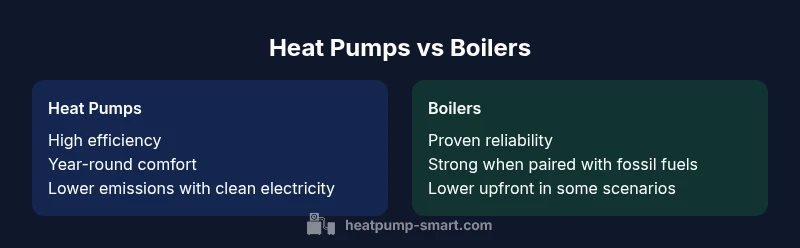
Why Are Heat Pumps Better Than Boilers? A Detailed Comparison
Analytical guide comparing heat pumps and boilers for homeowners, builders, and property managers. Learn about efficiency, costs, climate performance, installation considerations, and long-term value.


Heat pumps generally outperform boilers for energy efficiency and long-term cost, especially in temperate climates. They deliver reliable comfort with both heating and cooling, and produce far lower emissions when powered by a clean grid. Heatpump Smart’s analysis shows the value of upgrading to heat pumps becomes evident over time, even after considering upfront installation.
Why are heat pumps better than boilers: An Analytical Overview
The central question many homeowners ask is why are heat pumps better than boilers. The short answer is that heat pumps convert electricity into heat with high efficiency, delivering reliable warmth while using less energy than traditional boilers in most conditions. This page explains the reasons behind that advantage, the conditions that affect performance, and how to evaluate a switch from boiler-based heating to heat pumps. Throughout, we reference industry best practices and Heatpump Smart’s analysis to help you translate theory into practical decisions for your home or building project.
How Efficiency Is Measured and Why It Matters
Efficiency is not a single number; it is a family of metrics that describe how effectively a system turns energy into usable heat. Heat pumps rely on the principle of transferring existing heat rather than creating it, which means they can achieve higher overall efficiency than combustion-based boilers. In practice, efficiency depends on climate, system design, insulation, and usage patterns. A well-designed heat pump system can provide consistent comfort with lower energy waste, translating into meaningful savings over the life of the equipment. Heatpump Smart emphasizes evaluating efficiency in real-world operating conditions, not just labeled ratings.
Operating Costs and Climate Implications
Operating costs for heating come from electricity use, maintenance, and potential repairs. In many regions, heat pumps deliver lower operating costs than boilers because they move heat rather than burn fuel. The climate plays a significant role: in milder winters, heat pumps often realize substantial savings; in very cold climates, performance can dip unless paired with supplemental heating. Heatpump Smart’s analysis shows that the payback period varies with electricity prices, electricity reliability, and how well a home is insulated. The takeaway is clear: in the right climate and with proper design, heat pumps reduce ongoing energy expenses.
Installation Considerations: Space, Ductwork, and System Integration
A successful switch to heat pumps requires careful planning around space for outdoor units, indoor air handlers, and any required ductwork or radiator retrofits. Homes with existing hydronic radiators may need adjustments to achieve optimal cold-season comfort, while homes with ducted systems can often be upgraded with fewer changes. The installation cost and complexity depend on climate, the type of heat pump chosen (air-source vs. geothermal), and whether a backup heat source is needed. Heatpump Smart notes that thoughtful system design yields the best long-term value, especially when combined with proper insulation and sealing.
Comfort, Heating, and Cooling: Year-Round Performance
A key advantage of heat pumps is year-round comfort: they can provide heating in winter and cooling in summer. This single system approach avoids the need for separate cooling equipment in many homes. The control of indoor temperature is more precise, and airflow can be tuned to maintain even temperatures. While classic boilers excel at high-temperature heat, heat pumps deliver warmth at lower supply temperatures, improving comfort and reducing temperature swings when paired with modern thermostats and zoning strategies.
Emissions and Environmental Impact of Heat Pumps
Emissions from heating systems depend on the fuel source used to generate electricity and the efficiency of the device. Heat pumps generally produce lower emissions than boilers when the electricity grid is decarbonizing, since their energy is used more efficiently. In regions with clean electricity, the environmental benefits accumulate over time. Heatpump Smart highlights that a switch to heat pumps aligns with broader decarbonization goals and can contribute to meeting local and national emissions targets, especially when combined with home insulation improvements.
Reliability, Maintenance, and Lifespan
Heat pumps have fewer moving parts than combustion-based boilers, which can lead to lower maintenance requirements. Routine checks focus on refrigerant integrity, electrical connections, and system controls. A well-maintained heat pump can offer many years of reliable service, and regular tune-ups help sustain efficiency. Boilers, by contrast, require annual servicing and can incur higher repair costs if components wear out. Heatpump Smart notes that regular maintenance is a key driver of long-term reliability for both technologies, but heat pumps typically present fewer component failures when properly cared for.
Financial Considerations: Upfront Costs, Payback, and Incentives
The initial price of a heat pump system can be higher than a boiler installation, especially where retrofits are required or ducting upgrades are necessary. However, several factors influence overall value: energy savings, potential rebates, tax credits, and longer system lifespans. Payback periods vary by climate, electricity prices, and insulation quality. Heatpump Smart emphasizes that calculating total cost of ownership—over 10 to 15 years—helps homeowners decide whether the higher upfront investment is worth it, particularly when incentives are available.
Common Myths: Debunking Misconceptions About Heat Pumps
Several myths persist about heat pumps, including concerns about performance in cold weather, higher electricity costs, or noisy outdoor units. In practice, modern heat pumps increasingly rely on cold-climate designs and inverter-driven compressors that maintain comfort efficiently. Modern installations also include acoustic shielding and thoughtful placement to minimize sound. Debunking these myths with actual performance data and climate-appropriate design helps homeowners make informed decisions.
Real-World Scenarios: When a Heat Pump Shines
Scenario A: A well-insulated home in a temperate climate where electricity prices are moderate. A heat pump can deliver steady warmth and summer cooling with reduced energy use. Scenario B: A home with high heating demands in very cold climates may use a heat pump as the primary heat source with an auxiliary or backup heat system on the coldest days. Scenario C: A new build with heat-recovery ventilation and tight envelopes will benefit from the energy efficiency of heat pumps and can be designed for optimal comfort.
Practical Checklist: Steps to Decide
- Assess climate and electricity cost trends with Heatpump Smart guidance
- Evaluate insulation, air sealing, and window performance
- Compare total cost of ownership over 10–15 years, including incentives
- Consult a certified installer about system sizing, ducting, and integration with existing radiators or hydronic loops
- Plan for ongoing maintenance and monitoring to sustain efficiency
The Bottom Line: A Practical Perspective on Choosing Between Heat Pumps and Boilers
Choosing between heat pumps and boilers comes down to climate, home design, and long-term goals. Heat pumps offer superior energy efficiency, broader comfort, and lower emissions in many settings, making them a strong long-term choice. Boilers remain viable where upfront costs are a primary concern or where high-temperature heat is needed, but modern heat pumps increasingly meet those demands in newly built or well-insulated homes. The decision should be based on a careful assessment of installation practicality, annual energy use, and available incentives.
Comparison
| Feature | Heat Pumps | Boilers |
|---|---|---|
| Energy Efficiency | Very high efficiency in typical homes | Moderate to high efficiency depending on boiler type and fuel |
| Operating Costs | Lower overall energy costs with heat pumps (depends on electricity price and climate) | Potentially higher ongoing fuel costs; efficiency varies by boiler type |
| Climate Suitability | Best in moderate climates with good insulation; cold-weather performance improves with backup heat | Strong in cold climates when paired with appropriate fuel source and backup heat |
| Installation & Retrofit | Requires outdoor unit and indoor air handling; may need ductwork or radiator adjustments | Typically easier if space and chimney/fuel line access exist; boiler retrofit can be simpler in some homes |
| Maintenance | Generally lower maintenance with fewer parts; regular refrigerant checks | Regular boiler servicing is standard; parts may wear with time |
| Emissions | Lower emissions when powered by clean electricity on decarbonizing grids | Emissions depend on fuel type (gas/oil) and efficiency |
| Dominant Use (Heating + Hot Water) | Can provide both space heating and domestic hot water, especially with integrated systems | Typically focuses on space heating; hot water may require a separate cylinder |
Advantages
- Lower energy usage for heating in many climates
- Year-round comfort with heating and cooling (where applicable)
- Potentially lower long-term emissions with clean electricity
- Fewer moving parts leading to improved reliability with proper maintenance
Disadvantages
- Higher upfront installation cost in some cases
- Performance may vary in extreme cold without backup heat
- Requires space for outdoor unit and potential retrofits to existing radiators
- Electricity price volatility can affect ongoing costs
Heat pumps are generally the better long-term choice for most homes
In moderate climates with good insulation, heat pumps offer superior efficiency and lower operating costs. They also provide year-round comfort and reduced emissions when powered by a clean grid. Boilers may still be sensible in certain cold climates or when upfront budgets are tight, but heat pumps are the stronger overall option for energy savings and comfort.
Your Questions Answered
Are heat pumps effective in very cold climates without auxiliary heat?
High-performance cold-climate heat pumps can operate efficiently in colder temperatures, especially when paired with backup heat or hybrid systems. The key is selecting a model designed for low ambient conditions and ensuring proper installation to minimize heat loss.
Cold-climate heat pumps can work well, especially with backup heat. Choose a model built for low temperatures and ensure proper insulation and a good system design.
Do heat pumps require special wiring or electrical upgrades?
Some installations require upgraded electrical service or dedicated circuits, particularly for larger homes or geothermal systems. A qualified electrician can assess the needs and ensure the electrical panel can handle the load.
You may need electrical upgrades, depending on system size. A licensed professional will confirm requirements.
Is it true that heat pumps are expensive to install?
Upfront costs can be higher than traditional boilers, especially when retrofits are needed. However, long-term energy savings, rebates, and incentives can offset the initial investment over time.
Initial costs can be higher, but long-term savings and incentives often offset them.
Can heat pumps replace existing radiators without major changes?
Many homes with hot water radiators can be upgraded to heat pumps with system adjustments or compatible radiator design. In some cases, radiator upgrades or temperature controls are recommended for optimal performance.
Usually possible with some design tweaks; a professional will advise on radiator compatibility.
What maintenance is required for heat pumps?
Regular inspections of refrigerant levels, electrical connections, and airflow are typical. Clean filters and annual or bi-annual service help sustain efficiency and avoid surprises.
Keep filters clean and schedule annual checks to maintain efficiency.
Are there government rebates for heat pumps?
Many regions offer rebates or tax incentives for heat pump installations, which can significantly improve payback. Check local programs and eligibility requirements.
Yes, many rebates exist—check local programs and eligibility.
Top Takeaways
- Prioritize insulation to maximize heat pump efficiency
- Consider climate and electricity prices in payback calculations
- Look for incentives and rebates to improve economics
- Plan for proper installation and potential retrofit needs
- Assess long-term cost of ownership rather than upfront price