Can You Use a Heat Pump.instead of a Furnace? A Thorough Comparison
Explore whether a heat pump.instead of a furnace can meet your home heating needs, with climate guidance, performance metrics, installation considerations, and cost implications from Heatpump Smart.


The quick answer is that a heat pump can replace a furnace in many homes, but climate, insulation, and system design determine suitability. In mild to moderate climates, heat pumps often deliver lower operating costs and steady comfort; in very cold areas, a supplemental heat system or dual-fuel setup may be preferred. According to Heatpump Smart, success hinges on correct sizing, proper installation, and realistic expectations about backup heat.
can you use a heat pump.instead of a furnace: positioning and purpose
If you're weighing heating options for a home, many homeowners ask: can you use a heat pump.instead of a furnace? The short answer is that a heat pump can replace a furnace in many climates, but not every situation is ideal. The Heatpump Smart team emphasizes that performance depends on climate, home insulation, and electrical availability. This article compares heat pump installations to traditional furnaces, offering practical guidance for homeowners, builders, and property managers.
The core idea is simple: heat pumps move heat rather than generate it, which can result in higher efficiency and lower operating costs in suitable conditions. However, in temperatures consistently below freezing, auxiliary heat or a dual-fuel approach often becomes necessary. Throughout this guide, we reference Heatpump Smart analysis and real-world projects to help you decide when can you use a heat pump.instead of a furnace is the right move for your property.
This paragraph intentionally includes the keyword multiple times to support SEO density while staying informative.
Comparison
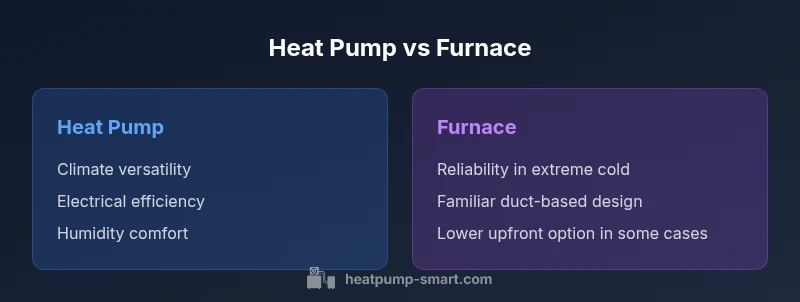
| Feature | Heat Pump System | Furnace System |
|---|---|---|
| Climate suitability | Best in mild-to-moderate climates with cold snaps handled by efficient defrost cycles | Reliable in very cold climates when paired with backup heat or dual-fuel |
| Operating costs | Typically lower when electric rates are favorable and outdoor temps are moderate | Often higher or more variable in extreme cold without supplemental heat |
| Fuel source & emissions | Electricity; potential for low-emission power | Gas or oil-based fuel with direct emissions |
| Installation complexity | Requires proper refrigerant lines, outdoor unit, and duct integration | Standard furnace installation, potentially simpler if ducts are shared |
| Maintenance | Regular outdoor unit cleaning; periodic refrigerant checks | Annual furnace service and filter changes |
| Performance metrics | COP/HSPF-based efficiency; summer and winter performance tracked | AFUE-based efficiency; predictable performance in controlled temps |
| Backup heat options | Auxiliary electric resistance or gas backup in very cold periods | None or limited without additional equipment |
Advantages
- Lower operating costs in climate-appropriate regions
- Potential tax credits and rebates for efficient heat pumps
- Improved humidity control and comfort in many homes
- Quieter operation with fewer mechanical moving parts than older furnaces
- Can reduce greenhouse gas emissions when powered by clean electricity
Disadvantages
- Higher upfront cost and installation complexity
- Auxiliary heat can raise energy use in very cold snaps
- Performance depends on climate and electricity pricing
- Duct modifications may be needed for optimal airflow
- Price and availability vary by region and contractor
Heat pumps can effectively replace a furnace in many homes with suitable climate and design.
In temperate regions, a heat pump often delivers better efficiency and comfort than a furnace. In very cold climates, plan for auxiliary heat or a dual-fuel setup. The Heatpump Smart team recommends a professional load calculation and a phased implementation to minimize disruption.
Your Questions Answered
Can a heat pump completely replace a furnace in very cold climates?
In extremely cold areas, a heat pump may need backup heat or a dual-fuel setup to maintain comfort during the coldest days. A professional assessment will reveal whether a full replacement is viable for your home.
In very cold areas, you may need backup heat alongside a heat pump to stay comfortable.
What is dual-fuel, and when is it recommended?
A dual-fuel system combines a heat pump with a furnace so the home uses the most efficient option for current conditions. It’s recommended in regions with wide temperature swings or where electricity prices vary seasonally.
Dual-fuel uses both heat pump and furnace to optimize efficiency depending on the weather.
Are there upfront costs I should expect when switching to a heat pump?
Upfront costs cover outdoor and indoor units, refrigerant lines, and potential duct modifications. While higher than a simple furnace install, long-term operating savings and incentives can offset the difference.
Expect higher initial costs, but longer-term savings and incentives may balance it.
Will a heat pump work for large homes?
Yes, but it depends on load calculations and duct design. Large homes may require multiple zones or larger equipment to maintain even comfort.
It can work in big homes with proper zoning and sizing.
What maintenance does a heat pump need?
Regular outdoor coil cleaning, ensuring clear airflow, annual professional checkups, and filter replacements help maintain efficiency.
Keep the outdoor unit clean and schedule yearly service.
Are there energy incentives for installing a heat pump?
Many regions offer rebates or tax credits for high-efficiency heat pumps. Availability varies by location and utility programs.
Check local programs for rebates and tax credits.
Top Takeaways
- Choose heat pump when climate and electricity pricing favor efficiency
- Plan for professional sizing and ductwork assessment
- Factor backup heat into your long-term energy costs
- Consider incentives and rebates to improve payback
- Assess long-term maintenance and reliability before replacing a furnace