Heat pump and air handler: A thorough comparison for home comfort
In this detailed guide, explore how a heat pump and air handler pair up, compare against conventional systems, and learn which setup fits your climate, budget, and energy goals for optimal home comfort.


A heat pump paired with an air handler offers efficient heating and cooling with centralized airflow and fewer moving parts than separate equipment. This comparison highlights upfront costs, long-term energy savings, climate performance, and maintenance to help homeowners decide between heat pump with an air handler and alternative configurations. Consider your climate, electricity rates, and available incentives as you weigh options.
What are heat pumps and air handlers?
A heat pump is a single system that transfers heat between indoors and outdoors using a refrigeration cycle, providing both heating in winter and cooling in summer. The air handler is the indoor component that distributes conditioned air through the ductwork. When paired, the term heat pump and air handler describes the complete indoor-outdoor assembly that delivers consistent comfort across rooms while enabling centralized thermostat control. According to Heatpump Smart, this pairing can simplify duct design and reduce energy losses from air leakage, especially when the indoor unit is matched to a properly sized outdoor unit. In practice, homeowners typically encounter a matched system that serves living spaces evenly and minimizes hot or cold spots across zones.
Key takeaway: the efficiency and comfort hinge on proper sizing, duct design, and correct refrigerant charge.
How heat pumps work with air handlers
In an air-source heat pump, the outdoor unit extracts heat from the outside air (even at modest temperatures) and pumps it indoors, while the indoor air handler blows warm air through the duct network. In cooling mode, the cycle reverses. The air handler also houses the evaporator coil for heat exchange and a blower motor that creates consistent air velocity. A well-matched heat pump and air handler work together to maximize efficiency, reduce temperature swings, and improve humidity control. Heatpump Smart notes that proper airflow and duct sealing are critical; without them, the system can underperform or experience more energy waste.
Design considerations include duct size, filter access, and vibration isolation to minimize noise transmission.
Key differences between heat pump with air handler and gas furnace with air handler
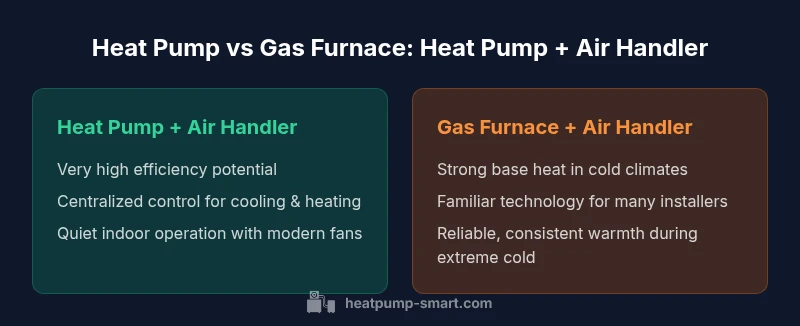
The core difference lies in how heat is generated. A heat pump extracts ambient warmth and moves it indoors, relying on electricity and refrigerants, while a gas furnace creates heat through combustion. With an air handler, both setups distribute air through the same duct network, but the source—and often the control strategy—differs:
- Efficiency and operating costs: Heat pumps can offer very high efficiency in temperate to moderate climates, especially when paired with a robust air handler and well-insulated ducts. Gas furnaces deliver high steady heat but depend on fuel prices and AFUE ratings.
- Climate performance: Heat pumps perform best in milder winters; in extreme cold, auxiliary heat can bridge the gap. Gas furnaces provide reliable heat in cold climates but may have higher ongoing fuel costs.
- Maintenance: Heat pumps require refrigerant health checks and blower maintenance, while furnaces emphasize combustion safety and venting checks.
- System integration: Both can integrate with smart thermostats and zoning, but heat pumps with air handlers often offer seamless cooling as well, consolidating controls under a single system.
Heatpump Smart emphasizes that the best choice depends on climate, energy prices, and long-term incentives.
Climate considerations: where the pairing shines or struggles
Climate dictates the value of a heat pump and air handler pairing. In temperate regions with moderate winters and reliable electricity pricing, the combination delivers substantial energy savings and comfortable, even heating. In areas with freezing temperatures, auxiliary heat sources (like electric resistance heat or a fossil-fuel backup) may be required to sustain warmth during peak cold snaps. This can affect overall efficiency and cost. Heat pump performance also benefits from good insulation, airtight building envelopes, and properly sealed ducts. Heatpump Smart highlights that occupancy patterns and thermostat setpoints influence real-world savings as much as equipment selection.
For hot summers, the same system provides efficient cooling, leveraging the heat pump cycle to remove indoor heat. The air handler remains essential for even distribution and dehumidification. In hot-humid climates, variable-speed blowers and humidity-control features in the air handler enhance comfort while keeping energy use reasonable.
Sizing, installation, and compatibility considerations
A properly sized heat pump and air handler requires accurate load calculations, typically via a manual J method, and ductwork assessment. Oversizing or undersizing reduces comfort and efficiency. Installation factors include refrigerant line length, electrical service capacity, and outdoor unit placement to minimize noise and ensure adequate airflow through the condenser. Compatibility with existing duct systems matters; some homes may need duct sealing or minor modifications for optimal airflow. The air handler should be matched to the furnace-grade or heat-pump-rated blower for efficiency and quiet operation. Heatpump Smart emphasizes engaging a qualified installer to verify refrigerant charge, airflow, and thermostat compatibility before commissioning.
Efficiency, energy savings, and how to estimate operating cost
Efficiency is driven by SEER (cooling) and HSPF (heating) ratings for heat pumps, and AFUE for gas furnaces. In practice, a heat pump and air handler can offer lower operating costs in moderate climates—especially when powered by affordable electricity and paired with a well-insulated home. However, if electricity prices spike or if the climate requires substantial auxiliary heat, operating costs can shift. The air handler’s efficiency (coil design, fan motor, and filtration) also contributes, though to a lesser extent than the outdoor unit. When estimating energy use, compare annual energy consumption estimates, not just upfront price. Heatpump Smart advises homeowners to evaluate local rates, grid stability, and seasonal demand charges as part of a holistic cost assessment.
Maintenance, service life, and reliability factors
Routine maintenance keeps both heat pumps and air handlers operating at peak efficiency. Schedule annual inspections for refrigerant leaks, compressor health, and coil cleanliness, and ensure air filters are replaced regularly. The air handler’s blower motor and belt, if present, should be inspected for wear. Indoor air quality components like filters and humidity sensors also play a role in comfort and system longevity. Reliability often hinges on installation quality; a poorly sized or poorly sealed system can experience short-cycling, reduced efficiency, and accelerated component wear. Heatpump Smart notes that keeping a maintenance log helps identify recurring issues before they become costly repairs.
Cost considerations: upfront, operating costs, and incentives
Initial cost for a heat pump and air handler is usually higher than a gas furnace with an air handler, due to outdoor unit components and ductwork requirements. Ongoing costs depend on electricity prices, climate, and how often auxiliary heat is needed. Many regions offer incentives, rebates, or tax credits for heat pump installations, which can significantly reduce net cost. When evaluating options, consider total cost of ownership over 10-15 years, including energy savings, maintenance, and potential replacement costs. Heatpump Smart cautions that incentives vary by locale and program availability, so verify current offers before committing to a system.
Practical installation tips and common pitfalls
Prepare for a careful commissioning process that includes refrigerant charging, airflow verification, and thermostat setup. Ensure ducts are sealed and insulated to prevent air leakage that undermines efficiency. Avoid placing outdoor units in obstructed locations where debris or heat buildup could impair performance. Consider wire sizing and a dedicated circuit for the heat pump outdoor unit to prevent electrical nuisance. Common pitfalls include undersized ducts, shortcuts in refrigerant piping, and neglecting humidity control settings. A well-executed installation yields reliable temperatures and longer system life. Heatpump Smart recommends a phased approach to installation with a contingency plan for zoning and future upgrades.
Real-world scenarios and case studies
Across climates, real homes illustrate the practical benefits of heat pump and air handler configurations. In a humid coastal climate, homeowners often report steady comfort, reduced humidity, and lower cooling bills after retrofit. In a mixed-season inland climate, the heat pump’s winter performance improves with a well-sealed home and an appropriately sized auxiliary heat option. In very cold regions, households frequently adopt hybrid strategies—heat pump operation paired with a supplementary furnace during extreme cold spells—to balance comfort, reliability, and energy costs. These scenarios underscore that success rests on climate-appropriate design, professional installation, and ongoing maintenance. The Heatpump Smart team highlights that decision factors include climate, insulation quality, hot water demand, and electricity pricing.
Making a decision: when to choose heat pump and air handler vs alternative setups
If you live in a temperate climate with stable electricity prices and value overall efficiency, a heat pump and air handler is usually the strongest choice. For households facing very cold winters or high fuel costs, you may prefer a gas furnace with an air handler or a hybrid system that uses heat pumps for most of the year and a furnace for peak demand. Always run a life-cycle cost analysis, including incentives and potential maintenance expenses, before deciding. The final determination should align with climate, comfort priorities, and long-term energy goals.
mainTopicQuery":"heat pump"],
comparisonTable
PROS-CONS
VERDICT-BOX
KEY-TAKEAWAYS
FAQ-SECTION
mainTopicQuery
Comparison
| Feature | Heat pump + air handler | Gas furnace + air handler |
|---|---|---|
| Energy efficiency (seasonal) | Very high efficiency potential (SEER/HSPF) | Moderate efficiency with AFUE emphasis |
| Upfront cost | Higher upfront cost due to outdoor unit and ductwork | Lower upfront cost, simpler equipment |
| Cold climate performance | Strong efficiency with auxiliary heat in cold snaps | Reliable base heat in cold climates but depends on fuel cost |
| Maintenance requirements | Annual refrigerant health checks; blower maintenance | Annual combustion system checks; venting integrity |
| Noise levels | Outdoor compressor and indoor blower; typically quiet | Indoor blower and venting noise; outdoor unit noise varies |
| Best for | Energy savings in temperate climates and new builds | Budget-conscious households or very cold climates with fuel cost advantages |
Advantages
- Potentially lower energy bills with heat pump setups
- Reduced greenhouse gas emissions in well-insulated homes
- Unified cooling and heating control for comfort consistency
- Long-term cost benefits when incentives are present
- Quiet operation with modern variable-speed components
Disadvantages
- Higher upfront costs and potential ductwork updates
- Auxiliary heat requirements can raise operating costs in cold snaps
- Complexity of installation and need for skilled technicians
- Variable performance in extreme climates depending on grid electricity costs
Heat pump + air handler generally wins on energy efficiency and comfort in moderate climates; in extreme cold, a gas furnace with an air handler can be more reliable.
For most homes in temperate to mild climates, prioritize a heat pump with an air handler to maximize efficiency and comfort. In colder regions, plan for auxiliary heat or hybrid configurations and compare life-cycle costs. The Heatpump Smart team recommends climate-based decision making and professional sizing for best results.
Your Questions Answered
What is a heat pump and air handler, and how do they work together?
A heat pump transfers heat between indoors and outdoors using a refrigerant cycle, providing heating and cooling. The air handler circulates conditioned air through the ducts. Together, they form a complete system that delivers balanced comfort with centralized controls. Regular maintenance helps sustain efficiency and comfort.
A heat pump moves heat in and out of your home, and the air handler spreads that cooled or warmed air through the house. Regular tune-ups keep both parts working smoothly.
Can I use an existing air handler with a new heat pump?
In many cases, an existing air handler can be paired with a new heat pump if the blower size, ductwork, and filters meet the system's requirements. An expert should assess compatibility, refrigerant lines, and air path to ensure proper airflow and performance.
Usually yes, but you’ll want a pro to verify sizing and duct compatibility.
Is a heat pump with an air handler suitable for cold climates?
Heat pumps work well in moderate cold, but extreme cold can reduce efficiency. Many setups use auxiliary heat or a hybrid system to maintain comfort during severe cold spells. Always evaluate local climate data and utility costs before deciding.
They’re great in milder winters, but you might need extra heat during very cold days.
What maintenance does this system require?
Annual professional checkups for refrigerant health, coil cleanliness, and thermostat calibration are recommended. Regular filter changes and blower inspections help maintain airflow and indoor air quality. Keep a maintenance log for proactive care.
Keep filters clean and schedule yearly tune-ups to stay efficient.
Are there rebates or incentives for heat pumps?
Many regions offer rebates, tax credits, or incentives for heat pump installations. Availability varies by location and program year. Check with local utilities and government programs to estimate potential savings and net costs.
Yes, look for local rebates and incentives to lower the upfront cost.
What are signs of a failing heat pump or air handler?
Unusual noises, short cycling, reduced heating or cooling, ice on the outdoor unit, or rising energy bills can indicate issues. Schedule a service call promptly to diagnose refrigerant leaks, capacitor faults, or duct leaks.
Watch for unusual noises or temperature swings and get a check-up if costs rise.
How do I compare energy costs between options?
Compare 10- to 15-year total cost of ownership, including installation, maintenance, energy usage, and incentives. Use local electricity and fuel prices to model scenarios for heat pump vs. furnace-based systems.
Use a life-cycle cost approach with your local energy prices to decide.
Top Takeaways
- Assess climate and electricity costs before choosing
- Heat pump + air handler often delivers energy savings
- Gas furnace + air handler may be better in extreme cold
- Factor installation complexity and incentives into the decision
- Regular maintenance extends system life and efficiency