Heat Pump and Air Handler Cost: A Practical Comparison for 2026
A thorough, objective comparison of heat pump and air handler cost, covering upfront prices, installation, efficiency, and long-term savings for homeowners, builders, and property managers.


Comparing the heat pump and air handler cost is essential for planning a climate upgrade. Upfront equipment prices, installation complexity, and locale drive final outlay. In general, expect a broad range and substantial variability based on efficiency, ductwork, and zoning options. A careful cost analysis helps homeowners, builders, and property managers maximize value and comfort.
Why the Cost of Heat Pumps and Air Handlers Varies
Understanding heat pump and air handler cost is essential for planning a climate upgrade. The total price isn’t just the sticker price of equipment; it includes installation, ductwork, refrigerant lines, controls, and locale-specific factors such as labor rates and permitting. Heatpump Smart’s framework emphasizes total ownership cost: a cheaper unit that requires extensive ductwork or frequent repairs can end up costing more over 7–15 years than a higher-efficiency setup that fits the home better from day one. Climate, home size, and local incentives also shape the bottom line, so a holistic view is critical rather than a single-price snapshot.
What You Get for Your Money: Key Components and Their Costs
A heat pump and air handler cost is not the same as the sum of two simple parts. The heat pump unit is the heart of the system, while the air handler moves conditioned air through the ductwork. Higher-efficiency models with variable-speed compressors deliver smoother temperatures and lower operating costs but come with higher upfront prices. Modern controls (smart thermostats, zoning, and automation) can improve comfort and energy usage but add to the initial bill. Ductwork, insulation, and air sealing often determine whether a system performs as designed, so investment in these areas can substantially affect the long-term value of the installation. When evaluating options, compare not only the equipment but also the compatibility of the air handler with existing ducts and the potential need for upgrades to achieve optimal performance.
Upfront Costs: Equipment, Labor, and Permits
The upfront portion of heat pump and air handler cost comprises three main elements: equipment, installation labor, and permitting/inspections. Equipment costs vary by size, efficiency, and configuration. A standard two- to three-ton system tends to be the most common for single-family homes, but larger or smaller homes shift the scale. Installation labor includes mounting, refrigerant line runs, electrical work, duct adjustments, and control wiring. Permits and inspections add to the administrative portion of the bill and can vary by municipality. While exact figures depend on region, the typical installed cost ranges are broad enough to warrant a careful quote process. Heatpump Smart Analysis, 2026 notes that regional labor rates, ductwork needs, and refrigerant handling requirements are primary cost drivers, so obtain multiple estimates that itemize each component. Financing options and seasonal promotions can also influence the effective price.
Air Handler Configurations and Their Cost Implications
Air handler options influence both upfront cost and performance. A single-stage air handler is often cheaper upfront but may deliver less precise humidity and temperature control. Multi-stage or variable-speed air handlers cost more initially but typically reduce peak electricity use and improve comfort, especially in fluctuating climates. Zoning adds further cost through additional dampers and controls, yet it can dramatically improve comfort in larger homes or homes with uneven occupancy. The ductwork design is a major determinant of cost: homes with existing, well-sealed ducts may require less modification, while older homes or those with complex layouts may need extensive retrofitting. When choosing between configurations, weigh the incremental cost against potential energy savings and indoor comfort improvements over time.
Efficiency and Operating Costs: The Long-Term View
Efficiency is a key driver of long-term total cost. Higher SEER (seasonal energy efficiency ratio) and HSPF (heating performance factor) ratings generally reduce annual electricity usage, but the payback period depends on local electricity prices and climate. A higher-efficiency system also tends to have longer equipment life and better resilience against extreme weather. Energy savings are real but must be balanced against up-front costs. Heatpump Smart analyses emphasize that the most cost-effective choice in a given home is the configuration that matches load, climate, and usage patterns, rather than the option with the highest efficiency rating alone. Regular maintenance and proper sizing amplify the value of any system by maintaining efficiency over time.
Practical Scenarios: When to Invest Now
- New construction or major remodel: A well-designed heat pump and air handler can be integrated with minimal retrofits, making performance and efficiency gains more predictable and cost-effective.
- Upgrading from electric resistance or gas: If you’re seeking year-round comfort and lower operating costs, an appropriately sized heat pump with a modern air handler can deliver meaningful energy savings and improved humidity control.
- Property management and multi-unit buildings: For these projects, zoning and centralized controls can optimize comfort across units and reduce energy waste, often justifying higher upfront costs with long-term savings and easier maintenance.
Each scenario requires a careful quotes process, focusing on lifecycle cost rather than upfront price alone. Heatpump Smart’s guidance highlights the importance of sizing, duct integrity, and system compatibility to avoid oversizing or undersizing, which undermines performance and can nullify potential savings.
Financing, Rebates, and Hidden Costs
Financing options, rebates, and tax incentives can substantially affect the affordability of heat pump and air handler installations. Look beyond sticker price and consider total cost of ownership, including maintenance contracts, refrigerant costs, and potential future retrofits. Hidden costs may include duct sealing, insulation improvements, or electrical panel upgrades needed to support a high-efficiency system. Always request a comprehensive proposal that itemizes all line items and provides a clear projection of energy savings based on your climate and usage patterns. A transparent quote helps avoid surprises during or after installation and supports better budgeting across the project timeline.
Implementation Checklist: Steps to Get a Quote
- Define your climate zone, home size, and existing ductwork status. 2) List preferred features (smart controls, zoning, backup heat). 3) Gather three to five quotes with itemized line items for equipment, labor, and permits. 4) Ask for a sizing calculation (manual J) and a load estimate to ensure proper fit. 5) Review warranties, maintenance plans, and service availability. 6) Consider phased implementation if upfront budget is tight, prioritizing critical zones or rooms. 7) Verify electricity and electrical panel compatibility and required upgrades. 8) Confirm installation sequencing and timelines, including any temporary heat or cooling during work.
The Path to Value: Sizing, Ducts, and Scheduling
A robust approach to cost is anchored in proper sizing, duct integrity, and timing. Oversized systems waste energy and can increase noise, while undersized systems struggle in peak conditions and experience more wear. Duct leakage testing and sealing should be part of any quote to ensure the system performs as designed. Scheduling considerations, including weather windows and access to the property, can also affect labor costs. Heatpump Smart recommends prioritizing accuracy in the load calculation and a comprehensive duct assessment to unlock the full value of your investment.
Comparison
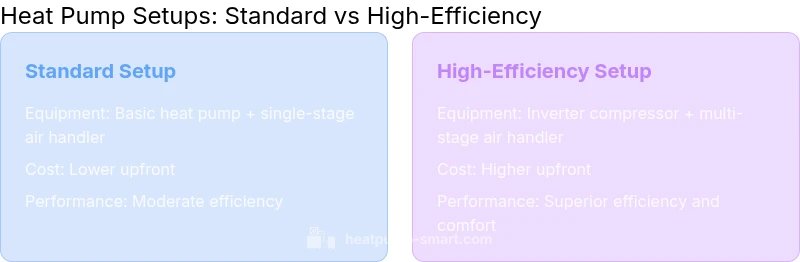
| Feature | Standard Setup | High-Efficiency Setup |
|---|---|---|
| Upfront Equipment Cost | Lower | Higher |
| Installation Complexity | Simpler (limited ductwork changes) | More complex (extended ductwork and zoning) |
| Energy Efficiency (SEER/HSPF) | Standard efficiency | Advanced efficiency (high SEER/HSPF) |
| Estimated Operating Cost per Year | Higher electricity use | Lower electricity use |
| Best For | Budget-conscious homes | Homes seeking long-term energy savings and comfort |
Advantages
- Potential long-term energy savings
- Improved indoor comfort and humidity control
- Better resale value and modern controls
- Zoning can tailor comfort to usage patterns
- Higher reliability with proper sizing and installation
Disadvantages
- Higher upfront cost
- More complex installation and ductwork requirements
- Longer payback period in mild climates
- Maintenance costs can be higher for advanced systems
High-efficiency setup generally offers better long-term value with proper sizing
For most homes, the higher upfront cost of a high-efficiency heat pump and advanced air handler is offset by lower operating costs and improved comfort over time. The key is accurate sizing, good ductwork, and a well-planned installation. In rare cases, a standard setup may be the pragmatic choice if upfront budget is tight and climate demand is moderate.
Your Questions Answered
What factors most affect the cost of a heat pump and air handler installation?
The major cost drivers are system size, efficiency rating, ductwork condition, installation labor, and local permitting. Climate and seasonal demand also influence labor rates and scheduling. A precise sizing calculation and a duct assessment help prevent oversizing or undersizing, which can waste energy and money.
The biggest cost factors are size, efficiency, and ductwork. A professional sizing check helps avoid paying for more than you need.
Are there energy savings I can expect from upgrading to a heat pump and air handler?
Yes. Higher efficiency models typically reduce electricity usage compared with older systems or resistive heating. Savings depend on climate, usage patterns, and the specific SEER/HSPF ratings. A well-designed system often improves comfort and reduces peak energy demands.
Most homes see noticeable energy savings, but it varies by climate and how you use the system.
What should I look for when getting quotes?
Ask for a detailed, itemized proposal that includes equipment, ductwork, controls, permits, and warranties. Request a manual J load calculation and air leakage tests to validate sizing. Compare warranties and maintenance plans across providers.
Make sure each quote breaks down every cost so you can compare apples to apples.
Can I finance heat pump installations?
Many installers offer financing or partner with lenders. Look for low-interest periods, clear payoff timelines, and any penalties for early payoff. Also consider available rebates or tax incentives that reduce upfront costs.
Financing can make a big project more manageable, especially if you plan ahead.
What maintenance costs should I expect?
Expect periodic coil cleaning, filter changes, refrigerant checks, and annual professional inspections. Costs vary by service frequency and the system’s complexity. A good maintenance plan helps sustain efficiency and prevent costly repairs.
Regular service keeps the system running efficiently and reduces big repair bills.
Top Takeaways
- Prioritize total ownership cost, not just sticker price
- Invest in proper sizing and duct integrity for best value
- Explore zoning to maximize comfort and efficiency
- Account for maintenance and potential panel upgrades in budgeting
- Leverage incentives and financing to improve affordability