Heat Pump or Air Conditioner: A Thorough Comparison
Comprehensive, balanced comparison of heat pumps and traditional air conditioners for homeowners, builders, and property managers. Learn about performance, costs, incentives, installation, and long-term value to choose the right system for your climate and budget.


In many homes in temperate climates, a heat pump offers both heating and cooling with higher overall efficiency than a cooling-only air conditioner. If upfront cost and simplicity matter, a traditional AC may be cheaper to install and run for cooling. The best choice depends on climate, electricity prices, and whether you plan to upgrade ductwork.
What to know before choosing: heat pump or air conditioner
Deciding between a heat pump or air conditioner starts with your climate, heating needs, and long-term goals. If you search for the most versatile option, you’ll often see that the heat pump can both heat and cool, while a traditional air conditioner focuses on cooling. In this guide, we compare these two systems, focusing on performance, efficiency, installation, and total cost of ownership. For homeowners, builders, and property managers, understanding the trade-offs helps avoid surprise costs down the line and ensures comfort through seasons. Heatpump Smart notes that the decision is rarely one-size-fits-all; the right choice depends on climate, electricity prices, and willingness to upgrade ductwork when needed. This article anchors the topic with the keyword heat pump or air conditioner to support search relevance and user intent.
How heat pumps operate in heating and cooling
A heat pump works by moving heat rather than generating it. In cooling mode, it acts like a conventional air conditioner, extracting heat from inside your home and transferring it outside. In heating mode, it reverses the refrigerant cycle to pull heat from outdoors (even when it’s cold) and deliver it indoors. The efficiency comes from transferring existing heat rather than burning fuel. You'll see terms like COP (coefficient of performance) and SEER (seasonal energy efficiency ratio) used to rate performance. In practice, a well-mated heat pump can provide comfortable heating and cooling with a single, compact system, reducing the need for separate furnaces or boilers in many homes. Heatpump Smart recommends comparing models that specify cold-climate performance for year-round reliability.
How traditional air conditioners work
A conventional air conditioner is designed solely to remove heat from indoors and reject it outside. It relies on a compressor, condenser, evaporator, and refrigerant to cycle cooling. When paired with a central furnace or a separate heating system, you can achieve year-round comfort, but the heating component is not delivered by the AC itself. In many homes, the air conditioner is part of a larger HVAC system, with separate equipment for heating either gas, oil, or electric resistance. For cooling-only use, conventional ACs are straightforward, reliable, and can be cheaper to install than a heating-capable heat pump, especially in climates with mild winters.
Efficiency and performance metrics you should know
Two key metrics matter for both systems: SEER for cooling efficiency and COP for heating efficiency. A higher SEER means lower cooling costs over a season, while a higher COP indicates more efficient heating. For air conditioners, SEER ratings typically drive cooling bills; for heat pumps, both COP and SEER influence overall operating costs. Real-world performance depends on climate, duct design, refrigerant charge, and thermostat control. In moderately warm and cool seasons, heat pumps can deliver superior energy performance compared to cooling-only systems, but extremely cold climates may reduce efficiency for some models. Choosing models with robust defrost cycles and reliable cold-weather performance matters.
Climate considerations: when to choose each option
In mild to moderate climates, heat pumps often provide the best balance of heating and cooling, delivering year-round comfort with efficient energy use. In areas with very cold winters, some heat pumps require supplemental heat to maintain comfort, though many models now perform well down to climate-specific ratings. For hot, humid regions, a traditional air conditioner paired with a heating source can be a simpler, potentially lower-cost path if you already have a furnace or boiler. Consider electricity prices, available incentives, and the cost of retrofitting ductwork when evaluating the options.
Costs, incentives, and value over time
Upfront costs for heat pumps typically exceed those of cooling-only air conditioners, largely due to the heating component and potential ductwork needs. Operating costs depend on electricity prices, climate, and usage patterns. In many cases, heat pumps deliver lower annual operating costs when used for heating and cooling, improving long-term value. Local incentives, rebates, and tax credits can significantly tilt the economics in favor of heat pumps. Heatpump Smart analysis shows that selecting a model with high efficiency and a favorable warranty, along with proper installation, contributes to rapid payback in regions with heating demand.
Installation prerequisites and system compatibility
Installing a heat pump or upgrading to a new air conditioner involves more than just buyers choosing equipment. Ductwork, zoning, and the ratio of supply to return air must be considered. For existing homes with a furnace, a heat pump may replace or work alongside the furnace, which can require refrigerant lines, an outdoor unit, and proper thermostat integration. Ductless mini-splits are a flexible option when retrofitting older homes or rooms without ductwork. Before purchase, have a licensed HVAC professional perform a load calculation and assess electrical capacity, so you don’t under- or over-size the system.
Maintenance, reliability, and lifespan expectations
Both heat pumps and air conditioners benefit from regular maintenance, including filter changes, coil cleaning, and professional inspections. Heat pumps have a defrost cycle in cold weather and may require refrigerant checks, while air conditioners need refrigerant and connections verified. Most systems last 12-15 years with proper care, but climate exposure and usage patterns influence longevity. Regular maintenance reduces the risk of compressor failure and improves efficiency. For humid environments, drainage and condensate management are important to prevent mold and mildew.
Practical decision framework and quick checklist
To decide, start with climate and heating needs, estimate total cost of ownership, and review local incentives. Use this quick checklist: 1) Is year-round heating a priority? 2) Are upfront costs acceptable for long-term savings? 3) Is there existing ductwork suitable for heat pumps? 4) Do you live in a climate with extreme cold? 5) Are there rebates available? 6) Is quiet operation important? This framework helps you pick the system that best aligns with your home, budget, and energy goals.
Common myths and misconceptions
Myth: Heat pumps aren’t effective in cold weather. Reality: Modern cold-climate models perform well in many regions, though extremes may need supplemental heat. Myth: ACs are cheaper to install than heat pumps. Reality: Costs vary with existing infrastructure and climate; long-term energy costs matter more than upfront price. Myth: A heat pump will totally eliminate heating costs. Reality: Savings depend on electricity prices, climate, and home efficiency.
Comparison
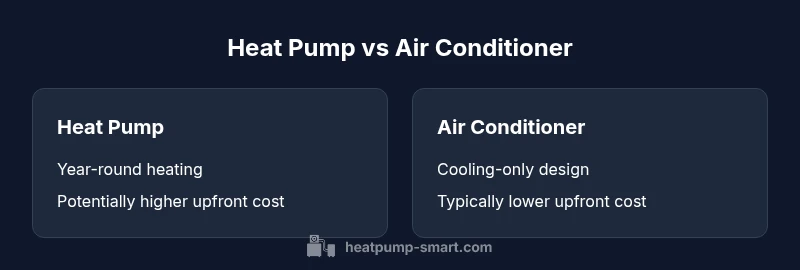
| Feature | Heat pump | Air conditioner |
|---|---|---|
| Heating capability | Year-round heating and cooling; relies on outdoor heat source (with backup if very cold) | Cooling-only; heating provided by a separate furnace/boiler or backup system |
| Energy efficiency (cooling/heating) | High SEER and COP in many climates; performance varies with temperature | High SEER for cooling, but no heating capability |
| Upfront cost | Generally higher due to heating components and potential ductwork | Typically lower upfront for cooling-focused installation |
| Running costs (annual) | Typically lower overall in heating and cooling when used appropriately; depends on electricity vs fuel costs | Primarily driven by cooling needs; does not cover heating costs |
| Installation complexity | Can require refrigerant lines, outdoor unit, and electrical upgrades | Often simpler with ductwork and electrical, especially for existing AC systems |
| Cold-climate reliability | Many models offer strong cold-weather performance, but very cold days may require backup heat | Not designed for heating; reliability depends on separate heating system |
Advantages
- Energy-efficient heating and cooling in a single system
- Lower lifetime running costs with heating when climate is moderate
- Space-saving design and fewer separate systems
- Potential rebates or tax credits in many regions
- Better humidity control and dehumidification when properly installed
Disadvantages
- Higher upfront installation cost
- Performance may drop in extreme cold for some models
- Requires professional installation and potential ductwork upgrades
- Maintenance can be more complex than cooling-only systems
Heat pumps are the preferred all-season solution for moderate climates; traditional AC may be cheaper upfront for cooling-only needs.
If you live in a region with mild winters, a heat pump typically delivers year-round comfort and savings. If your priority is cooling with minimal upfront investment, an air conditioner can be the practical choice.
Your Questions Answered
What is the main difference between heat pumps and air conditioners?
Heat pumps provide both heating and cooling, while traditional air conditioners only cool. In heating mode, heat pumps move heat from outside to inside, whereas a standalone AC cannot. The right choice depends on climate, home heating needs, and installed infrastructure.
Heat pumps heat and cool with one system, while air conditioners cool only. The choice depends on climate and existing heating setup.
Can a heat pump replace a furnace?
Yes, many homes use a heat pump as the primary heating source, especially when paired with a backup heat source for very cold days. A professional load calculation will confirm suitability for your home.
Yes—heat pumps can replace a furnace in many setups, but very cold days may need supplemental heat.
Do heat pumps work in cold weather?
Modern cold-climate heat pumps perform well in moderately cold conditions and function with supplemental heat in extreme cold. Look for equipment rated for your area's typical winter temperatures.
They work well in many cold climates, but extreme cold may require backup heat.
Are heat pumps more expensive to install?
Upfront installation costs are typically higher due to heating components and potential ductwork; however, long-term energy savings and incentives can offset the initial investment.
Yes, installation can be more expensive, but long-term savings may offset it.
What incentives are available for heat pumps?
In many regions, rebates or tax credits reduce the cost of heat pumps. Availability varies by location and program, so check local utilities and government programs.
There are often rebates and incentives depending on where you live.
Is a ductless mini-split an option?
Yes, ductless mini-splits offer flexible installation without ductwork, making them ideal for retrofit projects, additions, or spaces without existing ducts.
Yes—ductless mini-splits are great when you don’t have ductwork.
Which is better for small spaces?
For small spaces, a ductless heat pump or a compact system often works best, offering efficient cooling and heating without bulky ductwork.
For small spaces, ductless heat pumps are often the best choice.
Top Takeaways
- Assess climate and heating needs before deciding
- Prioritize high efficiency ratings (SEER/COP) for long-term savings
- Plan for ductwork upgrades or consider ductless options
- Check local incentives to improve economics
- Regular maintenance extends system life