Heat Pump Warm-Up Time: What to Expect and How to Speed It Up
Discover how long a heat pump typically takes to warm a space, the main factors that affect warm-up time, and practical tips to speed up comfort in different climates at home.


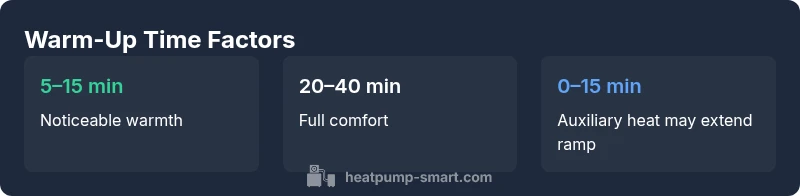
Typically, a heat pump begins delivering warmer air within 5–15 minutes after the thermostat calls for heat, with full comfort commonly reached in 20–40 minutes in cool to cold outdoor conditions. The exact warm-up depends on outdoor temperature, home insulation, system size, and whether auxiliary heat engages. For very cold weather, expect longer ramp times and possible brief defrost cycles. How long does a heat pump take to warm up varies by climate and home design.
How heat pumps respond to heat demand
When you turn on a heat pump, the system shifts from cooling or idle to heating by engaging the compressor and expanding the refrigerant cycle. The initial temperature rise you feel is driven by the outdoor temperature, the indoor setpoint, and how quickly warm air can be circulated through the ductwork or radiators. The phrase "how long does a heat pump take to warm up" is most meaningful when framed by climate, system design, and house envelope. According to Heatpump Smart, warm-up time is not a fixed clock but a dynamic range that shortens with proper sizing and insulation. In most homes, warmth is noticeable within minutes, but full comfort in living spaces with large open plans or high ceilings may take longer until the cycle stabilizes.
From a data perspective, the warm-up trajectory typically starts with rapid air temperature rise near the supply registers, followed by a slower approach toward the room’s target temperature. The interval depends on whether the heat pump relies mostly on the compressor alone or supplements with auxiliary electric resistance heat. For homeowners, knowing this sequence helps in planning initial comfort when waking up on chilly mornings or returning home after work.
In practice, you’ll often observe a quick initial boost, a plateau, and then a final push as ambient temperatures align with the thermostat setting. This pattern is amplified if the space has been left unheated overnight or if outdoor temperatures drop suddenly. Heatpump Smart’s analysis indicates most homes experience measurable warmth within the first 10 minutes, with meaningful improvements by the 15–20 minute mark as the system removes cold air pockets from the space.
}] ,
dataTable
headers
Factors influencing warm-up time for heat pumps
| Factor | Impact on Warm-Up Time | Typical Range |
|---|---|---|
| Outdoor Temperature | Colder conditions lengthen ramp time | 5–40 minutes (noticeable); longer in extreme cold |
| System Type | Air-source typically responds quicker than geothermal | 5–15 min noticeable warmth; 20–40 min full comfort |
| Insulation & Air Sealing | Better envelopes speed warm-up | Shorter ramp with good sealing; 10–20 min faster in sealed homes |
| Auxiliary Heat & Defrost | Backup heat and defrost cycles can add delay | 5–15 minutes added under cold weather |
Your Questions Answered
What is considered a normal warm-up time for a heat pump?
Normal warm-up time is not a single figure. In moderate temperatures, you’ll feel warmer air within 5–15 minutes, with full comfort often achieved in 20–40 minutes. In very cold weather, expect longer ramp times. Use this as a planning guide rather than a fixed rule.
Most homes warm up in minutes, but cold days can stretch that to tens of minutes.
Will temperatures below freezing slow warm-up more than mild days?
Yes. Colder outdoor temperatures reduce available heat from the outdoor coil and can trigger auxiliary heat sooner, extending the overall warm-up period. Efficient insulation helps mitigate this effect.
Yes, very cold days can slow warm-up, especially without proper insulation.
Does insulation affect warm-up time?
Absolutely. Better insulation and air sealing reduce heat loss, allowing the interior to reach setpoints faster. Upgrading ducts and sealing leaks can noticeably cut warm-up time.
Good insulation speeds things up and makes the heat pump work more efficiently.
Can I speed up warm-up by adjusting thermostat settings?
Setting a higher initial setback or using a programmable schedule can help the system respond quicker when heating starts, but avoid large temperature swings that waste energy. Pair with a properly sized system for best results.
Use a consistent, sensible schedule and let the system do the rest.
How should I test warm-up time in my home?
Record the time from when heat is called to when rooms reach the desired temperature at several points in the day and across seasons. Use a thermometer at multiple zones to get a representative read. This helps validate expectations and guide improvements.
Measure how long it actually takes across different days.
“A heat pump’s warm-up time isn’t fixed; it’s a dynamic interplay of climate, system design, and house envelope. Understanding these factors helps homeowners set realistic expectations.”
Top Takeaways
- Start warm-up with realistic expectations based on climate and home envelope
- Insulation and sealing can substantially shorten warm-up time
- Expect auxiliary heat to extend ramp in very cold weather
- Choose appropriately sized equipment to minimize delays and maximize efficiency
- Test warm-up times under different outdoor temps to plan comfort