The Ultimate Guide to Heat Pumps: A Comprehensive Resource for Homeowners
A complete how-to for homeowners on choosing, sizing, installing, and maintaining heat pump systems. Learn when to use air-source vs geothermal, how to evaluate efficiency, and tips to maximize comfort and savings with Heatpump Smart.


This guide shows homeowners how to evaluate, choose, size, install, and maintain a heat pump system for year-round comfort and energy efficiency. You’ll learn key decision points, essential steps, and practical precautions to plan with confidence. By following these steps, homeowners can plan strategically, avoid common mistakes, and work with qualified professionals for a smooth installation.
How Heat Pumps Work: An Energy Transfer System
Heat pumps are not a source of heat themselves; they move heat from outside to inside (and vice versa) using a refrigeration cycle powered by electricity. A typical split system has an outdoor condenser unit and an indoor air handler connected by refrigerant lines. A reversing valve lets the system switch between heating and cooling modes, enabling year-round comfort. The efficiency of a heat pump is usually expressed as a COP (coefficient of performance) and a SEER/HSPF rating, which reflect how much heat you move per unit of electricity used. In practical terms, heat pumps can deliver comfortable warmth in winter and cooling in summer with far less energy than traditional resistance heating. The Heatpump Smart team emphasizes that proper sizing, good insulation, and intelligent controls maximize performance. For homeowners, the best outcome comes from pairing a well-muited system with a programmable thermostat and zone controls, which reduce waste and keep rooms at steady, comfortable temperatures. In climates with extreme cold, some heat pumps rely on auxiliary heat; when used judiciously and managed by a smart thermostat, this minimizes energy use while ensuring comfort. Heat pumps can also be integrated with existing ductwork or deployed as ductless mini-splits for retrofit or new construction. Heatpump Smart’s analysis shows that thoughtful design and control strategies often yield noticeable improvements in comfort and energy use over time.
How Heat Pumps Work: An Energy Transfer System - continued
Tools & Materials
- Tape measure(At least 25 ft for quick room-by-room assessments)
- Notebook or digital device(Record room sizes, insulation levels, and comfort gaps)
- Flashlight(Inspect attic, crawl spaces, and outdoor unit access)
- Access to electrical panel or service disconnect(Note any existing amperage or wiring constraints)
- Pen and pencil(Useful for quick sketches and calculations)
- Thermostat manual or digital app(Helpful for planning smart controls)
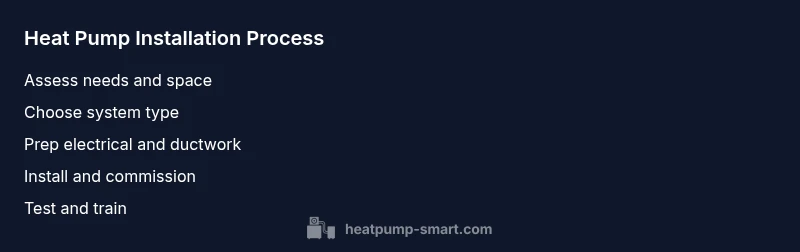
Steps
Estimated time: 2-7 days
- 1
Assess heating and cooling needs
Start by documenting your current comfort gaps, seasonal temperature ranges, and any rooms that underperform. Measure room dimensions to estimate heat load and note insulation quality, window efficiency, and shading. This helps determine the scale and type of heat pump that best fits your home.
Tip: Use a simple room-by-room checklist to capture square footage and problem areas; this data informs system sizing. - 2
Compare system types and configurations
Consider air-source vs geothermal, and ducted vs ductless options based on climate, existing ducts, and remodel plans. Air-source heat pumps are common for retrofit homes; geothermal systems offer very high efficiency but require soil thermal access. Document pros, cons, and installation implications for your home.
Tip: Ask installers for long-term efficiency metrics and how each option affects indoor air quality and humidity control. - 3
Check electrical and space readiness
Ensure your electrical service can support a heat pump’s outdoor unit and any associated controls. Verify exterior clearance, indoor air handler space, and proper drain routing. Plan for condenser location with airflow in mind and ensure safe access for maintenance.
Tip: If in doubt, have a licensed electrician or HVAC pro assess electrical capacity and clearances before selecting equipment. - 4
Gather quotes from qualified installers
Request detailed written quotes from at least three reputable installers. Compare equipment models, accessories (ducting, zoning, smart thermostats), warranties, and how each plan addresses seasonal efficiency. Ensure the quotes include permitting, removal of old equipment, and post-install testing.
Tip: Ask for third-party verification or references to confirm the installer’s workmanship and adherence to codes. - 5
Plan ductwork and controls
Decide between upgrading existing ductwork or opting for a ductless solution. For homes with uneven cooling or heating, add zoning and a capable thermostat to optimize comfort and efficiency. Ensure controls integrate with your home automation and climate goals.
Tip: Zoning can dramatically improve comfort but adds initial cost—balance benefits with budget and comfort needs. - 6
Schedule installation and verify permits
Coordinate installation timing with your contractor and ensure all required permits are obtained. Confirm electrical connections, refrigerant charges, and control programming. Leave space for a final commissioning check to verify system performance.
Tip: Do not skip the commissioning step; it confirms the system operates as designed and meets safety standards. - 7
Post-installation testing and user training
Test heating, cooling, and ventilation modes across all zones. Review thermostat settings, scheduling, and maintenance tasks. Schedule regular inspections and sign off on warranties and manuals for ongoing reference.
Tip: Keep a maintenance log and set reminders for filter changes, coil cleaning, and system checks.
Your Questions Answered
What is a heat pump and how does it differ from traditional heating?
A heat pump transfers heat between your home and the outdoors using electricity. Unlike a furnace, it doesn’t generate heat; it moves it. In heating mode, it extracts warmth from outside air or ground and delivers it indoors, and in cooling mode it reverses this process. This makes it a versatile, energy-efficient option for many homes.
A heat pump moves heat rather than generating it. It can heat and cool your home with high efficiency, making it a flexible choice for many climates.
Should I choose an air-source or geothermal heat pump?
Air-source heat pumps are common, cost-effective solutions that work well in moderate climates. Geothermal systems tap the ground or water as a heat source and are highly efficient, but require more upfront planning and excavation. Your climate, lot access, and long-term goals should guide the choice.
Air-source is usually easier to install; geothermal offers high efficiency but may need more space and planning.
What maintenance does a heat pump require?
Heat pumps require periodic filter changes, coil cleaning, and an annual inspection of the refrigerant lines, electrical connections, and thermostat. Properly maintained systems run more efficiently and have longer service life.
Regular filter changes and an annual professional check keep your heat pump running smoothly.
Can a heat pump fully replace a furnace in cold climates?
In very cold climates, some heat pumps may rely on auxiliary heat during extreme conditions. A properly sized system with quality insulation, combined with an auxiliary heat strategy, can meet most heating needs while keeping energy use reasonable.
In very cold seasons, you might use some backup heat along with the heat pump, but it can still cover most heating needs.
What is the expected lifespan of a heat pump?
With regular maintenance, a heat pump typically lasts around 10-15 years, depending on usage, climate, and care. Proper installation and seasonal service help maximize lifespan.
If well cared for, you can expect about a decade of solid performance from a heat pump.
Is ductless an option for older homes?
Yes. Ductless mini-splits are ideal for homes without existing ductwork or where duct expansion is impractical. They provide zoned comfort and can be installed with minimal structural changes.
Ductless systems are great for homes without ducts, offering flexible zoning.
Watch Video
Top Takeaways
- Plan with precise sizing and climate considerations.
- Choose ducted or ductless options based on home layout.
- Schedule professional installation and commissioning for best results.
- Use smart controls to maximize efficiency and comfort.
- Maintain the system with regular inspections and clean filters.