What Temperature Do Heat Pumps Work? An Operating Range Guide
Explore how outdoor temperature affects heat pump performance, the typical operating ranges, and tips to maximize efficiency across seasons. Learn from Heatpump Smart’s 2026 analysis for homeowners, builders, and managers.


If you're asking what temperature do heat pumps work, note that operating efficiency depends on outdoor temperature, humidity, and the specific model. In general, air-source heat pumps perform well above freezing, while many cold-climate units can still heat at subfreezing temperatures with reduced output. Availability and performance vary by system, installation, and size. Always check your equipment's rated range for accurate expectations.
How Outdoor Temperature Shapes Heat Pump Performance
If you're wondering what temperature do heat pumps work best, the short answer is that it depends on outdoor conditions, humidity, and the unit’s design. According to Heatpump Smart, outdoor temperature is the primary driver of heating demand and the system’s ability to meet it efficiently. As the air grows colder, the heat pump must extract more heat from cooler air, which reduces the COP and increases electricity use. Humidity, wind, and interior heat loss further influence performance. In mild weather, heat pumps often feel most comfortable and economical because the heating output aligns well with demand and the electrical input remains relatively modest. In extreme cold, many systems switch to backup resistance heat or activate auxiliary heaters to maintain comfortable indoor temperatures. The good news is that modern heat pumps feature variable-speed compressors, advanced refrigerants, and smarter controls to extend usable ranges. Heatpump Smart analysis shows that despite colder temperatures, homeowners can achieve comfortable indoor climate with careful sizing and proper installation.
Typical Operating Temperature Ranges (Guidance for Homeowners)
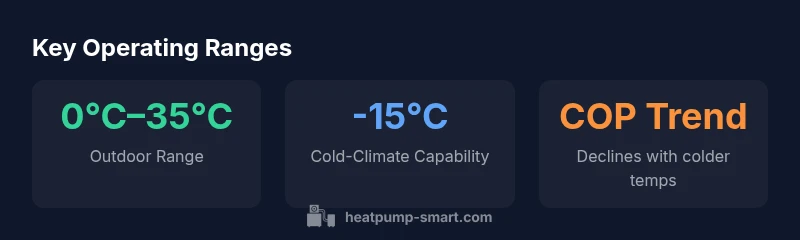
Operating ranges vary by model and climate, but some general guidance helps homeowners set expectations. Most air-source heat pumps operate effectively from roughly 0°C to 35°C (32°F–95°F). Many newer models are rated to operate down to around -15°C (5°F), with reduced heating capacity at the lowest end. In hot climates, operation can extend toward higher ambient temperatures with efficiency gains when airflow and condenser performance are favorable. It’s important to recognize that exact ranges are published in each unit’s spec sheet, not a one-size-fits-all figure. For homes in mixed climates, a dual-stage or variable-speed unit paired with smart controls often provides the best balance between comfort and energy use. Heatpump Smart’s research emphasizes that model design, refrigerant choices, and controls dictate how far the operating envelope can be stretched.
Cold-Climate vs. Mild-Climate Models
Cold-climate heat pumps are designed with features such as enhanced refrigerants, high-efficiency compressors, and smarter defrost logic to stay effective at lower outdoor temperatures. In contrast, mild-climate models excel in efficiency during moderate weather but may rely more on auxiliary heating when conditions swing outside their comfort zone. The difference is not a single number but a combination of components, software, and installation quality. For homeowners considering climate responsibility and total cost of ownership, selecting the right model for your climate is essential. Heatpump Smart analysis indicates that choosing a cold-climate variant can substantially improve performance in winter in exchange for potential upfront costs and ongoing maintenance considerations.
How to Verify Your System's Temperature Range
Start by pulling the spec sheet and user manual for your unit and noting the published outdoor operating temperature range and defrost behavior. If you can’t locate the docs, contact your installer or manufacturer support. A reputable installer can confirm whether your system meets local climate demands, whether a cold-climate model is warranted, and if any firmware updates or controls optimizations are recommended. For homeowners, keeping a log of performance during seasonal transitions helps identify when a system struggles and whether adjustments to thermostat settings or supplementary heating are needed. Heatpump Smart suggests documenting several winter nights to assess comfort and energy use under typical conditions.
Strategies to Maximize Efficiency Across Temperature Extremes
To squeeze the most comfort and savings from your heat pump across seasons, try these practical steps:
- Ensure proper sizing and professional commissioning to minimize oversizing or undersizing.
- Use a smart, learning thermostat to optimize setback schedules without sacrificing comfort.
- Improve home insulation and air sealing to reduce heat loss and indoor heat requirements.
- Maintain clean filters and clean condenser coils to sustain heat exchange efficiency.
- If you rely on auxiliary heat, set realistic temperature targets to avoid excessive energy use during cold snaps. Heatpump Smart teams often recommend a balanced approach that emphasizes passive energy efficiency first, then active heating as a backup.
Choosing the Right Heat Pump for Your Climate
Selecting a model that aligns with your climate is critical. Look for cold-climate ratings, inverter-driven compressors, and robust defrost logic. Also consider seasonal energy efficiency metrics and the system’s compatibility with your home’s insulation and ventilation. The right unit—not just the right size—will stay comfortable and economical across a wider range of temperatures. Heatpump Smart notes that the best choice depends on your climate zone, home envelope, and desired indoor temperature stability.
Operating ranges and design considerations for heat pump performance
| Aspect | Impact on Performance | Typical Range Reference |
|---|---|---|
| Outdoor temperature effect | Lower outdoor temps increase electrical consumption to meet heating demand; efficiency declines with colder air | 0°C–35°C (32°F–95°F) |
| Defrost cycle impact | Defrost cycles temporarily raise energy use and reduce net heating output | Commonly occurs at 0°C to 5°C with higher humidity |
| System sizing and load | Improper sizing causes inefficiency in cold weather; proper sizing improves performance | Based on home load calculations |
Your Questions Answered
Do heat pumps work in freezing temperatures?
Yes, many heat pumps operate in freezing temperatures, especially cold-climate models, but efficiency and heating capacity decline as it gets colder. Proper sizing and defrost controls are essential.
Yes, most heat pumps work in freezing weather, but they get less efficient the colder it is.
What outdoor temperature is best for heat pump efficiency?
Efficiency peaks in moderate outdoor temperatures. Extremely cold or hot conditions reduce heating or cooling efficiency, so managing indoor temperatures and insulation helps.
Moderate outdoor temperatures give the best efficiency.
Can I rely on a heat pump as the sole heat source in very cold climates?
In very cold climates, some homes rely on auxiliary heating to maintain comfort during cold snaps, depending on the unit’s capabilities and insulation. Proper system design matters.
You may need backup heat in very cold weather.
Should I use auxiliary heating with my heat pump?
Auxiliary heat can be used sparingly to prevent excessive energy use. Set thermostat routines to minimize reliance on auxiliary heat during mild cold periods.
Yes, use auxiliary heat only when needed.
How can I verify my heat pump's temperature operating range?
Check the manual or spec sheet for the outdoor operating range and defrost behavior. If in doubt, ask your installer for confirmation and recommended settings.
Check the manual or contact the installer.
What maintenance helps performance across temperature ranges?
Regular filter changes, coil cleaning, proper refrigerant charge, and annual professional service keep performance steady across temps.
Keep filters clean and get annual service.
“Understanding the temperature operating range helps homeowners balance comfort and efficiency across seasons.”
Top Takeaways
- Know your climate and match a heat pump to its operating envelope
- Expect efficiency to be highest in moderate outdoor temperatures
- Cold-climate models extend usable ranges but may use more auxiliary heat
- Ensure proper sizing and professional commissioning for best performance
- Use smart thermostats and home envelope improvements to maximize gains