Heat Pumps and Temperature: What They Can Handle
Learn how outside temperatures influence heat pump performance, when auxiliary heat is triggered, and practical tips to maximize efficiency across climate zones.


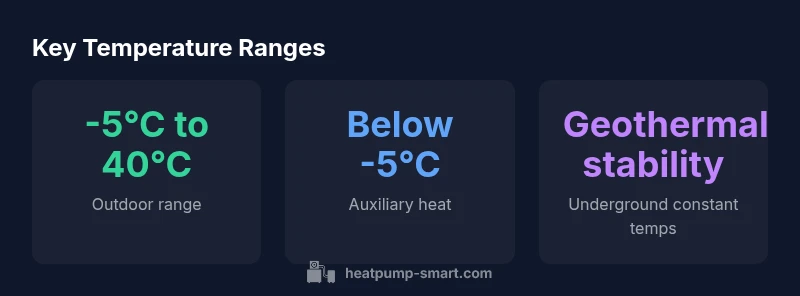
Heat pumps are commonly effective down to about -5°C (23°F) for typical heating; performance declines as outdoor temps drop. Cold-climate models can operate to around -15°C (5°F) with auxiliary heat. In mild climates, operation remains solid near freezing; extreme cold usually requires supplemental heat. For homeowners in drafty, poorly insulated homes, consider upgrading insulation or using a hybrid system.
Understanding the heat pump good to what temperature
The phrase heat pump good to what temperature is a practical way to frame how far outdoor temperatures can be while still delivering reliable heat. According to Heatpump Smart, the key idea is that performance depends on both the thermodynamics of the refrigerant cycle and the design choices of the unit. In general, air-source heat pumps perform well in temperate to cool conditions and maintain comfort when outdoor temperatures are above freezing. When temperatures dip below freezing, efficiency and capacity begin to depend more on the system’s cold-climate design, refrigerant charge, and the presence of auxiliary heat. Homeowners should consider both the climate and the home’s insulation envelope when evaluating capabilities. A well-insulated home reduces the load and helps the heat pump stay within its effective temperature band even on colder days.
This middle-ground view aligns with what the Heatpump Smart team has found: climate, equipment quality, and proper installation are the triad that determine how far a heat pump can go before supplemental heat is needed. If you want a confident answer for your property, start by checking the climate zone and the unit’s cold-weather rating from the manufacturer. The right model can keep you warm and running efficiently well into shoulder-season cold snaps, with less reliance on auxiliary heat in mild seasons.
InBlockBreaksOnlyAllowedForMarkdownCollapsible=false
wordCountEstimate":230} ,
How outdoor temperature affects efficiency and capacity
Outdoor temperature has a direct effect on heat pump efficiency and heating capacity. As the air gets colder, the heat pump’s refrigeration cycle has to work harder to extract heat from a colder source. Consequently, the Coefficient of Performance (COP)—a measure of efficiency—tends to decrease with lower outdoor temperatures. At the same time, the system may cycle more frequently or run longer to meet the same indoor setpoint, which can lead to higher energy use unless controls optimize cycling. Modern heat pumps incorporate electronically controlled compressors, variable-speed fans, and improved refrigerants to mitigate this decline, especially in mild to moderate cold. For very cold conditions, many units rely on supplementary heat—electric resistance strips or a secondary heater—to maintain comfort when outdoor temperatures push the limits of the outdoor unit’s heat extraction capability. A key takeaway is that the outdoor temperature is not a single fixed boundary; it interacts with home insulation, air leakage, thermostat strategy, and system sizing. Heatpump Smart’s guidance emphasizes modeling indoor heat demand accurately and matching equipment to climate for consistent comfort and efficiency.
InBlockBreaksOnlyAllowedForMarkdownCollapsible=false
wordCountEstimate":260} ,
Temperature thresholds: Air-source vs geothermal
Air-source heat pumps are most commonly challenged by very cold weather because they draw heat from outside air. In many models, outdoor operation remains feasible down to roughly -5°C, with performance gradually dropping as it gets colder; advanced cold-climate designs push that boundary further, often using supplementary heat to bridge the gap. Geothermal (ground-source) systems tap into a relatively stable underground temperature, which helps maintain capacity and efficiency during winter. Geothermal systems generally exhibit less performance loss in cold weather, but they require a properly installed ground loop and higher upfront costs. The practical implication is that for very cold climates, a geothermal solution can offer steadier performance, while a well-rated air-source unit with cold-weather tech can deliver excellent results in temperate regions. When evaluating options, consider climate data, insulation, and how often you rely on backup heat.
InBlockBreaksOnlyAllowedForMarkdownCollapsible=false
wordCountEstimate":250} ,
Practical tips to maximize cold-weather performance
To keep your heat pump performing near its best in cold weather, start with a tight building envelope: seal leaks around windows and doors, add attic insulation, and ensure ducts are well sealed and insulated. Use programmable zoning strategies to limit overshoot; keeping the indoor temperature consistent reduces demand on the system and improves COP. Schedule regular maintenance, including cleaning or replacing filters, inspecting the outdoor unit for snow and ice buildup, and verifying refrigerant charge with a pro. Thermostat strategies matter; use a smart thermostat to optimize cycling, ramp rates, and outdoor temperature sensors. If you live in a very cold climate, discuss hybrid configurations with your installer where a supplemental heat source contributes when outdoor temps push the heat pump toward its lower performance limit. Heatpump Smart recommends pairing a well-insulated home with a properly sized system and smart controls to minimize cold-weather penalties.
InBlockBreaksOnlyAllowedForMarkdownCollapsible=false
wordCountEstimate":190} ,
Climate-aware selection: matching model to your region
Selecting the right heat pump depends heavily on climate. Cold-climate models are designed to maintain heating capacity at lower outdoor temperatures and often include enhanced defrost control and auxiliary heating strategies. In milder regions, a standard heat pump with high seasonal performance can meet most heating needs without relying on auxiliary heat. When evaluating options, review the unit’s ability to handle your average winter temperature, the rated heating capacity at low outdoor temperatures, and the length of the defrost cycle. Also assess how your home’s insulation and air sealing complement the system. Heatpump Smart’s climate guidance suggests creating a detailed climate profile for your property and then mapping that to the model’s cold-weather capabilities.
InBlockBreaksOnlyAllowedForMarkdownCollapsible=false
wordCountEstimate":210} ,
Sizing, installation, and maintenance for best winter performance
Sizing a heat pump for cold-weather performance starts with a precise heat load calculation. Manual J or equivalent assessments help determine the right size so the unit doesn’t short-cycle or operate at partial load for too long. Installation quality matters just as much as size: ensure proper refrigerant charge, correct outdoor clearances, and adequate condensation drainage. Maintenance tasks to support winter performance include regular coil and filter cleaning, confirming drainage paths, and ensuring the outdoor unit has unobstructed airflow. If your climate sees prolonged subfreezing temperatures, discuss defrost strategy and backup heat options with your installer. A well-sized system with smart controls, combined with solid insulation, provides reliable comfort across temperature swings. Heatpump Smart emphasizes proactive checks before the cold season starts.
InBlockBreaksOnlyAllowedForMarkdownCollapsible=false
wordCountEstimate":200} ,{
Temperature-related performance guidance by heat-pump type
| Climate Condition | Impact on Heat Pump Performance | Tips |
|---|---|---|
| Mild winter climate | High efficiency; lower reliance on auxiliary heat | Maintain consistent indoor setpoint; seal ducts; ensure windows are well sealed |
| Moderate cold (-5°C to 0°C) | Balanced performance; occasional auxiliary heat | Check insulation and ductwork; consider cold-weather rated model |
| Very cold (< -10°C) | Auxiliary heat dominates; reduced output | Enable auxiliary heat; evaluate hybrid or backup system |
| Geothermal advantage | Stable underground temps; less performance loss | Ensure proper loop integrity and professional installation |
Your Questions Answered
What temperature is considered cold climate for heat pumps?
Cold climate applicability varies by model, but many units rated for cold climates perform well down to about -5°C to -15°C, with some capable models pushing further with auxiliary heat. Always verify the specific ratings of your chosen unit.
Cold climate capability depends on the model; many units perform well to around -5°C to -15°C, and some go lower with auxiliary heat.
Do heat pumps work well in freezing temperatures?
Yes, heat pumps can operate in freezing temperatures, but capacity and efficiency decline as it gets colder. Models designed for cold climates and with auxiliary heat will maintain comfort more effectively in those conditions.
They work in freezing temperatures, but efficiency drops; cold-climate models with auxiliary heat help keep you warm.
How can I ensure proper sizing for winter performance?
Work with a licensed HVAC pro to perform a detailed load calculation (Manual J) and verify duct sealing, insulation, and airflow. Correct sizing minimizes cycling and maximizes efficiency in winter.
Get your home professionally sized for winter load to ensure efficient operation.
What thermostat settings maximize heat-pump efficiency?
Keep a steady indoor setpoint around 68°F (20°C) and use a programmable thermostat to reduce daytime loads. Avoid large temperature swings that force the heat pump to frequently start up and shut down.
Use a steady, moderate setpoint and programmable controls to minimize cycling.
Are geothermal systems better for very cold climates?
Geothermal systems offer stable performance due to underground temperatures, but they come with higher installation costs. They can be a strong option in very cold climates if upfront cost is manageable and space is available for the loop.
Geothermal can be better in extreme cold, though installation costs are higher.
“Choosing the right heat pump depends on your climate and home insulation; intelligent controls and a qualified installer are essential for reliable winter performance.”
Top Takeaways
- Check your climate before choosing a model
- Prefer cold-climate rated heat pumps for colder regions
- Maximize efficiency with proper insulation and smart controls
- Expect supplemental heat in extreme cold
- Ask installers about climate zone and system sizing