Will Heat Pumps Work Below Freezing? A Homeowner's Guide Today
Explore whether heat pumps can operate in subzero weather, how cold temperatures affect performance, and practical steps to maximize efficiency and reliability during freezing conditions.


Yes. Modern heat pumps designed for cold climates can operate below freezing, delivering heat down to about -15°C to -25°C in many models, though efficiency falls as outdoor temperatures drop. When temperatures plummet, some systems switch to auxiliary heating or use split-stage operation to maintain comfort.
will heat pump work below freezing: what actually happens in winter climates
will heat pump work below freezing is a common concern for homeowners facing cold winters. The quick reality is that many modern heat pumps, especially models designed for cold climates, continue to deliver heat when outdoor temperatures dip below 0°C. But performance hinges on several factors: equipment ratings, installation quality, insulation, and how the system is managed during severe cold. In practice, you may notice slower warm-up, reduced perceived heat, and higher energy use on the coldest days. According to Heatpump Smart, selecting a unit with a cold-climate rating, a variable-speed compressor, and an efficient defrost strategy makes sub-freezing operation more reliable. These features help extract heat from colder air and minimize energy waste. However, regardless of design, you should expect some days when backup heat is helpful, and you should size your system to handle peak winter loads.
To plan effectively, homeowners should read the manufacturer ratings and consider climate-specific performance data. Real-world performance varies by humidity, wind, and your home's insulation. The aim isn't perfect heat at -20°C every hour, but steady comfort with reasonable energy use.
In practical terms, the best-performing cold-climate heat pumps maintain comfort by balancing outdoor temperature, indoor setpoints, and house envelope. Homeowners often pair these systems with improved insulation, air sealing, and smart thermostats to optimize energy use during freezing weather. This combination reduces heat loss and helps the unit work more efficiently when outdoor air is cold.
How cold-weather performance is measured and reported
Performance in freezing temperatures is described through a mix of ratings and real-world data. Manufacturers publish COP (Coefficient of Performance) at specific sub-freezing outdoor temperatures, often alongside capacity ratings showing how much heating output remains as the air cools. Seasonal Performance Factor (SPF) or SCOP (Seasonal Coefficient of Performance) gives a broader view of efficiency over winter months, factoring in defrost cycles, standby losses, and part-load operation. For cold climates, look for a unit with a usable COP at the coldest design temperature in your region and a well-tuned defrost schedule. Real-world performance also depends on humidity, wind, and the building envelope. Heatpump Smart recommends reviewing test results from independent labs and user reports in your climate zone to gauge how a system behaves during prolonged cold snaps. When evaluating a unit, compare the rated efficiency at -7°C or -15°C (where available) and note how quickly the system can deliver warmth after a cold start. A well-documented cold-weather performance profile helps homeowners estimate energy use and comfort during winter.
Air-source vs ground-source in freezing temps: what's different
In freezing conditions, air-source heat pumps (ASHPs) extract heat from outdoor air, which becomes less efficient as temperatures drop. Ground-source (geothermal) heat pumps rely on relatively stable underground temperatures, so their performance tends to stay more consistent in cold weather, but installation costs and space requirements are higher. For cold climates, ASHPs with cold-climate ratings and enhanced defrost controls are typically the most cost-effective option, while geothermal systems offer reliability and efficiency in severe cold at a higher upfront price. The choice often depends on climate depth of freezing, available land, and long-term energy goals. Regardless of type, proper soil or ground-loop design, thorough home insulation, and professional commissioning are essential to achieve reliable winter performance.
How to choose a heat pump for sub-freezing operation
Selecting a unit designed for sub-freezing operation starts with cold-climate ratings. Look for models that specify performance at low outdoor temperatures and feature variable-speed compressors for better low-load efficiency. Defrost control should be proactive and minimize heat loss during cycles. Consider auxiliary heat integration (electric resistance or a gas backup) for extremely cold days, and ensure your thermostat can manage stage heating automatically. A thorough load calculation based on climate data, insulation quality, and window performance will help you size the system correctly and prevent over- or under-sizing, both of which degrade winter performance.
Practical strategies to maximize efficiency in cold weather
Beyond selecting a cold-climate heat pump, homeowners can optimize winter performance with practical steps. Improve the building envelope: seal air leaks, add attic insulation, and install weather stripping around doors. Use a programmable thermostat to optimize indoor temperatures, and consider zoning to avoid heating unused spaces. Regularly clean outdoor condensers, clear snow around the unit, and ensure adequate airflow. If your climate experiences prolonged sub-freezing periods, pair the heat pump with supplemental heat strategically, and set expectations for energy usage during peak cold spells. Heatpump Smart highlights that planning for variations in outdoor temperature and humidity yields more consistent comfort at lower operating costs.
Defrost cycles and icing: what happens behind the scenes
Defrost cycles are essential for maintaining heat-pump performance in cold weather, but they interrupt heat delivery momentarily. In frequent freeze-thaw cycles, heat pumps allocate time to melt frost on the outdoor coil, which can slightly raise energy use and affect temperature stability indoors. Modern systems optimize defrost with outdoor sensors and intelligent controls to minimize run-time and to switch back to heating quickly. Understanding defrost timing helps homeowners interpret temperature changes indoors and fosters realistic expectations during winter. If icing becomes a persistent issue, a professional check on refrigerant charge, airflow, and soil/installation conditions is warranted.
Installation and maintenance considerations for cold-weather reliability
Cold-weather reliability begins at installation. Place the outdoor unit with adequate clearance to promote airflow, shield it from wind and snow, and ensure proper ducting and indoor air distribution. A precise refrigerant charge and well-sealed refrigerant lines prevent performance losses at low temperatures. Schedule annual maintenance to inspect coils, filters, and electrical connections, and verify that the defrost control works as intended. Finally, integrate the heat pump with a well-insulated home and a smart thermostat to maximize comfort and minimize energy use during the coldest months.
Comparison of sub-freezing performance factors
| Aspect | Typical range | Notes |
|---|---|---|
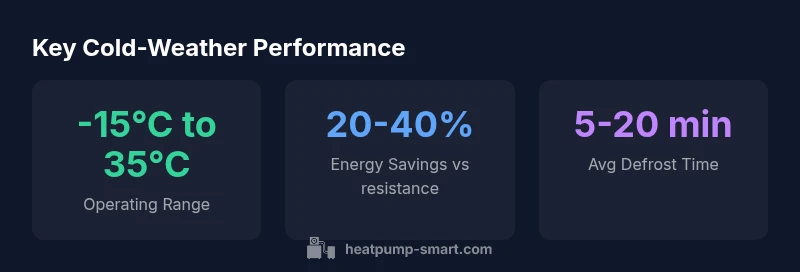
| Operating temperature range | -15°C to 35°C | Varies by model and climate zone |
| Defrost frequency | Occasional to frequent in freezing temps | Depends on humidity and model |
| Energy savings vs resistance heating | 20-40% | Based on climate and usage |
| Backup heat reliance | Moderate to high in extreme cold | Hybrid systems common in very cold climates |
Your Questions Answered
Will a heat pump work below freezing in all climates?
Not in all climates; performance depends on outdoor temperature, humidity, and model. Cold-climate units perform better, but there may be days with reduced comfort without backup heat.
It depends on the climate and model; some days may require backup heat.
What is the lowest temperature a heat pump can operate?
Most modern air-source heat pumps operate down to around -15°C to -25°C, depending on the design and ratings.
Many models operate down to roughly -15°C to -25°C, depending on the system.
Do I need a backup heat source in freezing weather?
Often yes, especially on the coldest days. Hybrid or dual-fuel setups combine a heat pump with another heat source for reliability.
Yes, especially during very cold snaps; a backup heat source helps maintain comfort.
How does defrost affect heating performance?
Defrost cycles melt ice on the outdoor coil, temporarily reducing heat output. Modern controls minimize energy loss during defrost.
Defrosting briefly reduces heat output, but is essential to keep the system working.
Will energy bills rise in winter with a heat pump?
Heating demand increases in winter, but heat pumps typically cost less to run than electric resistance heating. Savings depend on climate and usage patterns.
Winter heat demand can raise bills, but still often cheaper than resistance heating.
What should I look for in cold-weather heat pump specifications?
Look for a cold-climate rating, low-temperature COP, efficient defrost controls, and the availability of auxiliary heat options.
Check cold-climate ratings and defrost performance, plus backup heat options.
“In cold climates, heat pumps can keep you comfortable below freezing, but success depends on system rating, installation, and the building envelope.”
Top Takeaways
- Choose a cold-climate heat pump with credible low-temperature ratings and defrost controls.
- Expect backup heating on very cold days and plan for seasonal energy use.
- Ensure your home insulation and air sealing support heat pump efficiency.
- Install professionally and monitor performance with a seasonal energy-use plan.
- Review manufacturer ratings and real-world tests for sub-freezing performance.