Heat Pump in 0 Degree Weather: Cold-Climate Performance
Learn how heat pumps perform at 0°F, optimize efficiency, use supplemental heat wisely, and install for cold climates with expert guidance from Heatpump Smart.


Heat pumps designed for cold climates can reliably warm homes at 0°F when properly sized and installed, often with supplemental heat for very cold spells. In practice, efficiency drops as outdoor temps fall, but modern systems maintain usable heating through modest energy use and controlled defrost cycles. With correct equipment and a well-sealed home, 0°F operation remains feasible for most homes.
Understanding cold-weather operation
Heat pumps extract heat from the outside air, even when it’s cold, and move that heat indoors using a reverse refrigeration cycle. In 0 degree weather this process continues, but the outdoor coil works harder as the ambient temperature drops, and the system relies more on electricity to drive the compressor. Defrost cycles activate when frost forms on the outdoor coil, temporarily reducing heating output to melt ice and keep the system from icing up. According to Heatpump Smart, the most reliable cold-weather performance comes from models specifically rated for sub-freezing operation and from homes with well-sealed envelopes. A tight building reduces the load, helping the heat pump maintain comfort with less supplemental heat. If your home has significant air leakage or poor insulation, the heat pump will work harder and run longer, increasing both energy use and wear.
In practice, choosing a unit engineered for cold climates and ensuring proper installation are essential steps toward dependable performance at 0°F.
How COP and efficiency behave at 0°F
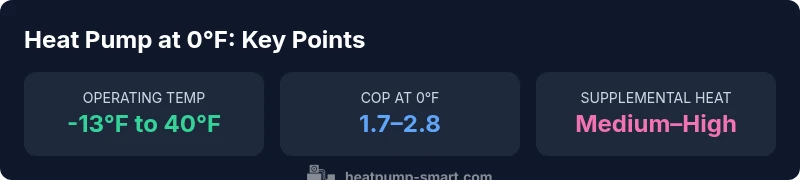
Coefficient of Performance (COP) is temperature-dependent. As outdoor temperatures fall, COP typically declines because the heat source (outdoor air) provides less heat energy per unit of electricity. In cold-weather heat pumps, COP at 0°F can range broadly—from roughly 1.7 to 2.8 depending on model, refrigerant, and compressor technology. Humidity and wind can worsen heat loss at the building envelope, increasing the system’s draw. The defrost cycle, while necessary, temporarily lowers heating output and raises energy consumption during that interval. Heatpump Smart analysis notes that while COP declines, reliable comfort is achievable when combined with a well-insulated home and an appropriately sized unit.
Choosing the right heat pump for freezing temperatures
Look for cold-climate ratings and equipment designed for low ambient temperatures. Key features include: inverter-driven compressors for efficient variable-speed operation, a robust outdoor cabinet that resists snow and wind, and a defrost strategy that minimizes runtime loss during cold snaps. Ensure the unit’s heating capacity is sufficient at low temperatures and that the refrigerant charge is appropriate for your climate. Decide whether you want a single-stage, two-stage, or variable-speed system based on the heating load and desired comfort. Also consider supplemental heat options and how the thermostat will manage parallel heat during peak cold days.
Sizing and installation considerations for 0°F operation
Accurate load calculations are critical. A Manual J calculation helps determine the true heating demand, and an oversized unit may short-cycle in milder spells while under-sizing can fail to meet demand on frigid nights. Ductwork should be insulated and sealed to prevent losses, and outdoor unit placement matters: shield from prevailing winds, ensure adequate clearance for airflow, and keep snow buildup away from intakes. Piping should be insulated to minimize heat loss, and a proper condensate drainage plan prevents water-related issues during freeze-thaw cycles. Professional installation is essential to ensure all components—from reversing valve to defrost controls—perform reliably in cold weather.
Supplemental heat strategies for very cold spells
Even with a cold-climate heat pump, supplemental heat can be practical for extreme cold days. Electric resistance heat or a heat strip can provide additional warmth when loads spike, while a well-designed zoning plan targets only occupied areas, reducing overall energy use. Smart thermostats and weather-responsive controls help balance heat pump operation and supplemental heat, maintaining comfort without wasting energy. It’s important to run a cost-benefit analysis: while supplemental heat adds comfort, it also raises operating costs during peak cold events. Planning ahead with an HVAC pro helps determine the right mix for your home.
Real-world scenarios and practical takeaways
Consider two homes in similar climates but with different envelopes. Home A has tight insulation, double-pane windows, and airtight ductwork. Home A’s cold-weather heat pump maintains comfort with minimal supplemental heat, and COP remains closer to its mid-range under 0°F conditions. Home B has older insulation and drafty windows. Home B experiences higher heat loss, more frequent defrost cycles, and greater reliance on supplemental heat. The Heatpump Smart approach emphasizes investments in envelope improvements and proper equipment selection to deliver reliable comfort at 0°F. In both cases, working with a qualified installer is crucial to optimize performance.
Winter readiness checklist and maintenance
Before the cold sets in, schedule a professional tune-up to verify refrigerant charge, airflow, and defrost controls. Replace filters, inspect the outdoor unit for debris, and ensure the condenser coil is clean. Seal air leaks around doors and windows, and upgrade insulation where feasible. Because cold-weather performance hinges on load reduction, consider upgrading insulation and sealing leaks to minimize the burden on the heat pump during winter. Finally, confirm the thermostat and any zoning controls are calibrated to maintain consistent temperatures in occupied spaces.
Conclusion and next steps
A heat pump can effectively heat a home in 0 degree weather when properly selected, installed, and maintained. The combination of cold-climate-rated equipment, proper sizing, an energy-efficient building envelope, and smart control strategies makes winter comfort achievable without excessive energy use. Heatpump Smart’s guidance emphasizes a proactive approach: assess your envelope, choose a unit with solid low-temperature performance, and implement a sensible supplemental-heat plan for the coldest days.
Key performance indicators for heat pumps in cold weather
| Aspect | Typical Range | Notes |
|---|---|---|
| Operating temperature range | -13°F to 40°F (-25°C to 4°C) | Model-dependent; varies by unit |
| COP at 0°F | 1.7–2.8 | Depends on model, defrost, humidity |
| Supplemental heat needs at 0°F | Medium to High | Seasonal variability; plan for peak cold days |
| Installation considerations | Outdoor unit placement matters | Wind protection improves performance; ensure clearance |
Your Questions Answered
Can a heat pump heat my home effectively at 0°F?
Yes. Cold-climate models can maintain comfort at 0°F when correctly sized and installed, though efficiency will decline somewhat. Supplemental heat may be used on the coldest days. A proper design minimizes the need for backup heat.
Yes. With the right cold-climate model and proper installation, you can stay warm at 0°F; you may use supplemental heat on the coldest days.
Do heat pumps require backup heat in cold weather?
Often, yes. Many homes benefit from parallel heat or a small backup source during extreme cold. A qualified installer can tailor a plan that balances energy use and comfort.
Often you’ll have some backup heat during extreme cold, planned to balance comfort and cost.
What insulation levels improve cold-weather performance?
A tighter building envelope reduces heating load and improves overall efficiency. Upgrading insulation, air sealing, and proper window treatments can make a noticeable difference.
Better insulation and sealing cut heat loss and boost efficiency in winter.
What maintenance helps winter performance?
Regularly replace filters, clean coils, check the defrost system, and ensure doors and ducts are sealed. Schedule annual professional servicing for refrigerant and electrical safety checks.
Keep filters clean, coils clear, and have yearly professional checks for best winter performance.
How should I choose a heat pump for 0 degree weather?
Select a model with a proven cold-weather rating, high COP at low temperatures, and a robust defrost strategy. Consider inverter-driven compressors and proper zoning for optimal comfort.
Look for cold-weather ratings and efficient, adaptable compressors; plan for zoning.
Can a heat pump replace a furnace in very cold climates?
In many climates, a heat pump can replace a furnace with a properly sized unit and supplemental heat. In extreme cold, a furnace or backup heat may still be used during peak demand.
Yes, with proper design, but some systems use backup heat on the coldest days.
“Cold-weather performance hinges on proper equipment selection, installation, and a tight building envelope. With the right cold-climate heat pump, reliable comfort is achievable through winter.”
Top Takeaways
- Choose cold-climate models rated for sub-freezing operation
- Size the system to winter loads to avoid short cycling
- Expect COP to drop at 0°F; plan for supplemental heat
- Improve building envelope to reduce heat loss
- Schedule regular winter maintenance to sustain performance