Zero Emission Boiler vs Heat Pump: A Comprehensive Comparison
Compare zero emission boiler vs heat pump: emissions, efficiency, installation, and long-term costs to help homeowners choose the best decarbonized heating solution.


TL;DR: When weighing zero emission boiler vs heat pump, the heat pump generally offers higher efficiency and lower long‑term emissions, especially when paired with clean electricity. A zero-emission boiler can be competitive where electrical capacity or hydrogen supply is reliable, or where rapid heat is needed. According to Heatpump Smart, the best choice hinges on grid decarbonization, climate, and home insulation.
Defining the two options
A zero emission boiler refers to a heating system that releases no direct emissions at the point of use. In practice, this usually means electrical boilers or hydrogen boilers designed to run on zero-emission energy carriers, such as green electricity or green hydrogen. A heat pump, by contrast, extracts heat from the outside environment (air or ground) and uses electricity to upgrade that heat to comfortable indoor temperatures. The two are not simply competing technologies; they represent different pathways to decarbonize space heating. The central question for homeowners is how these options perform given local climate, electrical infrastructure, insulation, and the availability of zero-emission fuels. For many households, the decision involves balancing upfront retrofit costs with long-term operating expenses and emissions. According to Heatpump Smart, the direction of decarbonization in your region will strongly influence which path yields the lowest lifecycle impact. In short, zero emission boiler vs heat pump is not a one-size-fits-all choice, but a decision rooted in energy sources, climate, and retrofit feasibility.
How heat pumps work in practice
Heat pumps operate like a refrigerator reversed: they absorb ambient heat from outside (air, ground, or water) and move it indoors using a small amount of electricity to drive a compressor. Modern units can achieve high coefficients of performance (COPs) under mild conditions and still provide reliable heating when temperatures drop, thanks to variable-speed compressors and refrigerants optimized for efficiency. In homes with good insulation and a well-sized system, heat pumps can deliver most of a household's heating needs with substantial energy savings. However, performance declines in extreme cold unless paired with defrost strategies or supplemental heat. The system typically requires an outdoor condenser (for air-source models) or a ground loop (for geothermal variants) and may demand electrical upgrades to handle peak loads. The long-term value hinges on electricity costs, climate, and the availability of rooftop solar or other renewables to power the unit.
What is a zero-emission boiler?
A zero-emission boiler is designed to deliver space heating and hot water while producing no direct pollutants at the point of use. Electric boilers are the most common form, operating entirely on electricity. Hydrogen boilers are another option, burning hydrogen instead of natural gas, with emissions tied to the production of the hydrogen fuel. The key advantage is a familiar radiators-and-boiler layout for retrofit projects, often without outdoor equipment. The caveat is that achieving true zero emissions depends on the energy mix feeding the boiler—electric grids powered by fossil fuels will diminish the environmental benefit. Thus, zero emission boilers can be highly effective when paired with decarbonized electricity or clean hydrogen, but their real-world impact tracks closely with fuel supply and infrastructure.
Emissions and energy sources
Emissions are not created equal across heating technologies. Heat pumps reduce on-site emissions by shifting energy use from burning fuels to electricity, but the actual environmental benefit depends on the electricity grid’s cleanliness. When the grid is heavily renewable, heat pumps frequently deliver far lower emissions per unit of heat than gas boilers. A zero emission boiler can match or exceed this performance if powered by green electricity or green hydrogen, effectively eliminating direct emissions. Heatpump Smart analysis shows that regional electricity decarbonization is a major lever in determining which option produces the lower lifecycle emissions. In regions with slower decarbonization, the difference between options can narrow, making other factors like cost and convenience more important.
Efficiency and real-world performance
A heat pump’s efficiency is expressed as COP, often between 2.5 and 4.0 in moderate climates, meaning it produces 2.5–4 units of heat per 1 unit of electricity. Real-world COPs depend on outdoor temperatures, heating demands, and system design. In milder climates, heat pumps excel; in very cold climates, performance can drop unless paired with auxiliary heat or a higher-capacity system. Zero emission boilers, especially electric boilers, offer consistent performance with decent efficiency but are strongly influenced by electricity price and availability. Hydrogen boilers promise low emissions and familiar boiler behavior, but their practicality depends on hydrogen infrastructure and supply reliability. Consumers should consider seasonal variations, insulation quality, and radiator sizing when weighing efficiency expectations.
Installation considerations and space needs
Heat pumps require space for an outdoor unit and, in some cases, a compatible indoor distribution system. Retrofits may need electrical upgrades to accommodate peak loads, and homeowners should plan for adequate clearance around the outdoor unit to ensure airflow. Zero emission boilers often fit within existing boiler rooms without outdoor equipment, potentially simplifying retrofits. However, electric boilers still demand service capacity on the electrical panel, and hydrogen boilers require access to hydrogen delivery or storage arrangements. The choice ties directly to property layout, local codes, and the ability to upgrade electrical infrastructure or hydrogen supply lines. Proper sizing and professional installation are essential for both paths to achieve the promised efficiency.
Operating costs and energy bills
Operating costs hinge on energy prices and efficiency. Heat pumps generally have lower running costs when electricity is reasonably priced and the grid is green, but the payback period depends on local electricity and gas prices and the cost of installation. Zero emission boilers can rival heat pumps on operating cost if electricity prices are favorable or hydrogen is inexpensive, but their economics rely on fuel prices and availability. For homeowners, calculating total cost of ownership means comparing upfront retrofit costs, maintenance, energy consumption, and potential incentives. Heatpump Smart analysis highlights that incentives, such as rebates or subsidies, can significantly affect the financial equation by reducing upfront costs and accelerating payback periods.
Climate suitability and cold-weather performance
Climate is a major determinant. Heat pumps perform exceptionally well in temperate and mild cold climates with proper sizing and insulation; in harsher winter zones, modern cold-climate heat pumps with advanced refrigerants and defrost cycles can still deliver reliable heat, though at reduced COP during deep freezes. Zeno emission boilers, particularly electric models, do not rely on outdoor weather, which can be advantageous in extreme cold when paired with electrical heating. Hydrogen boilers’ cold-weather performance mirrors other gas-based systems, but the emission profile depends on hydrogen purity and infrastructure. The takeaway: assess your climate, insulation, and heating load to determine which technology maintains comfort with reasonable energy use.
Maintenance and lifecycle considerations
Maintenance needs differ. Heat pumps require periodic refrigerant checks, filter cleaning, and fan maintenance for the outdoor unit, with generally lower ongoing maintenance than gas-fired systems. Electric boilers demand standard boiler maintenance but have fewer moving parts than combustion-based systems. Hydrogen boilers need specialized servicing for hydrogen components and safety protocols. Lifespan and warranty vary by brand and model but expect that every option benefits from regular professional service. Planning for routine maintenance and potential mid-life system upgrades is essential for long-term performance and reliability.
Decision guide: when to choose which option
Your decision should be guided by energy sources, climate, retrofit feasibility, and financial goals. If your area has a rapidly decarbonizing electricity grid and strong insulation, a heat pump usually delivers better long-term value and lower emissions. If electrical upgrades are challenging or clean hydrogen/hydrogen-ready infrastructure is reliable, a zero emission boiler can be a practical alternative, especially for retrofit projects that demand minimal outdoor equipment. Consider home performance measures—insulation, air sealing, and solar PV—as these can shift the balance toward heat pumps when integrated with clean energy. Finally, compare local incentives and service networks to determine which path offers the best combination of comfort, reliability, and cost.
Real-world examples and case studies
Across different home sizes, climates, and budgets, homeowners have found that a well-planned evaluation yields the best outcome. A typical scenario might involve a well-insulated, medium-sized home in a temperate climate that benefits most from a heat pump paired with solar PV. Another scenario could involve an older home in a colder climate where a hydrogen-ready boiler with grid decarbonization shows a favorable total cost of ownership. Real-world decisions often involve staged upgrades and hybrid approaches, such as installing a heat pump for space heating and a high-efficiency electric boiler for peak loads. These patterns illustrate that zero emission boiler vs heat pump is not a binary choice but a spectrum of options aligned with energy strategy, climate, and infrastructure.
Comparison
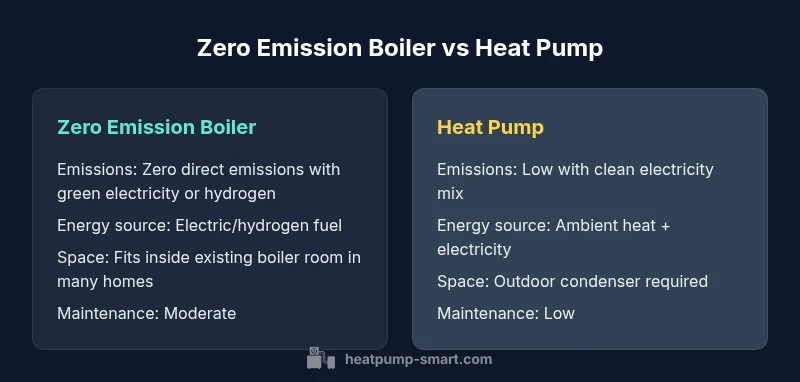
| Feature | Zero Emission Boiler | Heat Pump |
|---|---|---|
| Emissions at point-of-use | Zero direct emissions when powered by green electricity or hydrogen | Very low to zero direct emissions with a clean electricity mix |
| Energy source | Electricity or hydrogen fuel for boiler operation | Ambient heat from air or ground, using electricity |
| Space and installation footprint | Often fits inside existing boiler room; less outdoor equipment | Outdoor condenser required (air-source) or ground loop (geothermal) |
| Climate performance | Consistent performance independent of outdoor temperature (with power source) | Best in mild to moderate climates; advanced cold-climate models exist |
| Maintenance needs | Standard boiler maintenance; electric or hydrogen safety considerations | Lower maintenance with fewer moving parts; outdoor unit requires care |
| Upfront cost and retrofit | Moderate to high retrofit cost depending on electrical/H2 readiness | High initial cost in some cases due to outdoor unit and electrical upgrades |
Advantages
- Lower operational emissions with clean electricity for heat pumps
- Strong compatibility with solar PV and home energy storage
- Zero emission boiler provides familiar retrofit path with minimal outdoor equipment
- Hydrogen-ready options offer future decarbonization potential
- Smart controls optimize performance and comfort in both paths
Disadvantages
- Upfront retrofit costs can be substantial
- Heat pumps depend on electricity grid decarbonization and price
- Hydrogen infrastructure and supply are still developing
- Zero emission boilers require reliable clean energy supply and may need electrical upgrades
Heat pumps generally offer better long-term efficiency and decarbonization when the electricity is clean; zero emission boilers can be a strong fit where electrical upgrades or hydrogen supply are constrained.
Choose a heat pump if you have access to decarbonized electricity and good insulation. Opt for a zero emission boiler when electrical upgrades are not feasible or hydrogen infrastructure is readily available in your area.
Your Questions Answered
What is a zero emission boiler and how does it differ from a heat pump?
A zero emission boiler uses electricity or hydrogen to heat your home with no direct emissions. A heat pump moves ambient heat into the home using electricity and can achieve high efficiency. The key difference is the energy pathway: direct electric heating versus energy transfer using ambient heat.
A zero emission boiler uses electricity or hydrogen, while a heat pump moves heat from outside. Both aim to reduce emissions, but their energy pathways and installation needs differ.
Which option is cheaper upfront, zero emission boiler or heat pump?
Upfront costs depend on retrofit requirements and equipment. Heat pumps may require outdoor space and electrical upgrades, while zero emission boilers often fit into existing boiler rooms but can need electrical or fuel infrastructure changes. A local quote from an installer will reveal the best option for your home.
upfront costs vary; get a local quote to compare retrofit needs and equipment costs.
Can heat pumps operate effectively in very cold climates?
Modern cold-climate heat pumps perform well in many regions, though efficiency can drop at very low temperatures unless paired with auxiliary heat or a high-capacity unit. In extremely cold zones, a backup heating strategy or hybrid system may be appropriate.
They work well in many cold areas, but very cold days may require extra heating support.
Are hydrogen boilers realistic for most homes soon?
Hydrogen boilers are developing, with regional infrastructure and supply considerations shaping feasibility. If hydrogen is widely available, they offer low-emission operation without changing existing radiator layouts.
Hydrogen boilers depend on local hydrogen supply and infrastructure; check availability.
What maintenance is required for these systems?
Heat pumps require refrigerant checks and outdoor unit maintenance; electric boilers need standard boiler servicing; hydrogen boilers require specialized safety checks. Regular professional servicing extends system life and maintains efficiency.
Regular professional service keeps both systems running efficiently.
Is a retrofit feasible for older homes?
Retrofit feasibility depends on existing radiators, insulation, and electrical capacity. Electric or hydrogen options may be easier to retrofit in some older homes, while others benefit from new radiant systems or hybrid approaches.
Older homes can retrofit, but evaluate radiators, insulation, and wiring first.
Top Takeaways
- Evaluate your local electricity decarbonization trajectory before deciding
- Consider climate, insulation, and heat load for accurate performance expectations
- Assess retrofit feasibility and potential incentives to shorten payback
- Factor space, noise, and system complexity into installation planning