Charge Heat Pump in Heat Mode: A Step-by-Step Guide
Learn how to safely charge a heat pump in heat mode with practical steps, required tools, and safety considerations. This expert guide covers pre-checks, charging methods, and post-charge verification.


In heating mode, charging a heat pump involves confirming the system is in heat operation, connecting a manifold gauge set to the service ports, and adding refrigerant only to the manufacturer’s specified charge. You’ll need a scale, access to the correct refrigerant, PPE, and the unit’s service manual to verify pressures and safety procedures.
Why proper charging in heat mode matters
Charging a heat pump correctly when it runs in heat mode is a foundational step for reliable home comfort and efficient energy use. A properly charged system delivers the designed heating performance, avoids excessive cycling, and minimizes wear on compressors and outdoor components. According to Heatpump Smart, getting the charge right in heat mode helps keep indoor temperatures steadier and reduces run-time swings that drive energy bills higher. Heatpump Smart analysis shows that an improper charge can lead to reduced heating capacity and unnecessary energy use, especially in shoulder-weather conditions when outdoor temperatures fluctuate. This block explains why correctness matters, clarifying how a small adjustment at the service ports can translate to meaningful comfort and efficiency gains without invasive repairs.
How charging in heat mode differs from cooling mode
Charging a heat pump for heating operation has unique considerations compared with cooling. In heat mode, refrigeration pressures respond to outdoor air temperature and the system’s heat load, which changes with sun exposure and indoor setpoints. The charging approach must account for these variables and align with the manufacturer’s specified charge condition, commonly expressed as a target superheat at a given indoor coil temperature or a target subcooling at the outdoor condenser, depending on the design. Precision during charging matters because heating performance depends on maintaining the correct refrigerant balance across the evaporator and condenser. Heat mode charging also emphasizes moisture control and system cleanliness since moisture can freeze and block flow paths during colder periods.
Safety and eligibility: when to involve a licensed tech
Refrigerant handling carries health, safety, and environmental risks that require appropriate training and equipment. If you are not a certified HVAC technician, consider contracting a pro for any charging task. Electricity, refrigerant, and high-pressure lines pose risks that can cause injury or environmental harm if mishandled. A licensed technician can verify electrical shutdown procedures, perform leak checks, and ensure that tooling and refrigerant recovery practices comply with local regulations. Even experienced DIYers should seek professional advice if the unit exhibits refrigerant smells, obvious leaks, or frequent compressor short-cycles. The goal is safe operation and long-term performance, not shortcuts.
Tools, safety gear, and documentation you’ll need
Before you touch the heat pump, assemble the essential equipment and confirm you have access to the unit’s service sheet. A standard checklist includes a calibrated manifold gauge set, refrigerant scales or a precise scale, a vacuum pump (for evacuating if needed), appropriate refrigerant grade, compatible hoses, PPE such as gloves and goggles, and a copy of the manufacturer’s charge specification. Documentation should include system warranty notes, indoor and outdoor temperature references, and any prior service records. Having these items ready reduces delays and helps you stay within safe operating limits during the process.
Understanding charge terminology: refrigerant, superheat, and subcooling
A clear grasp of core terms helps you communicate with technicians and interpret readings on gauges. Refrigerant charge refers to the amount of refrigerant in the closed loop, typically expressed by weight or by measured pressure and temperature relationships. Superheat describes how much the refrigerant vapor at the evaporator exceeds its saturation temperature, guiding charging decisions in heating mode. Subcooling measures how far the liquid refrigerant at the condenser is below its saturation temperature, which helps verify proper system balance. In heat mode, readings must reflect the system’s heating demands and outdoor conditions, and readings should be compared against the unit’s service data rather than generic values.
Step-by-step overview (high-level method)
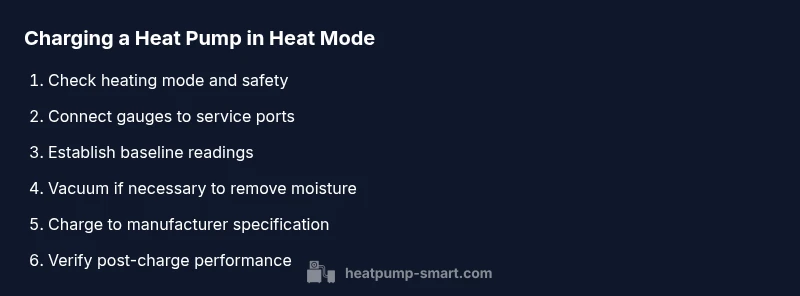
This section provides a high-level map of what a charge in heat mode entails without diving into step-by-step actions. Start with a safety check and confirm power is off, then identify service ports and verify unit labeling. Establish a reference baseline by recording existing pressures and temperatures, and prepare the correct refrigerant charge according to the manufacturer’s documentation. Use a calibrated manifold gauge and scale to monitor, and keep a precise log of readings and any adjustments. The goal is to reach the specified condition described in the service data while avoiding overcharging, which can increase pressure, noise, and energy use. Finally, recheck all readings after stabilization to confirm consistent operation.
Pre-charge checks: leaks, vacuum, and refrigerant grade
Before adding refrigerant, inspect the system for leaks using established leak-detection methods and ensure there is no oil staining around joints and connections. If moisture is present or a leak is suspected, avoid charging until repairs are completed and the system can be evacuated. A vacuum test helps remove moisture and air that can compromise performance. Use only refrigerant grade material specified for your unit, and handle empty cylinder storage safely to prevent contamination. Document any prior repairs and verify that the service ports are clean and accessible for accurate measurements during charging.
Charging method: weighing vs superheat method
Charging methods fall into two practical categories: weighing, which uses a precise refrigerant weight, and superheat-based charging, which relies on temperature-pressure relationships at the evaporator outlet. Weighing is straightforward when the system is accessible and a reference charge is known, but it requires accurate scale measurements and a clean cylinder. Superheat charging adjusts the charge while the system runs, balancing temperatures at the evaporator. In heat mode, both methods require clear data from the manufacturer and careful interpretation of readings under the current outdoor and indoor conditions. A professional can decide which approach best fits your unit and climate.
Verification: pressures, temperatures, and performance tests
After charging, perform verification steps to confirm the system operates within safe limits and provides the intended heating performance. Compare high and low-side pressures with the manufacturer’s reference ranges and observe superheat or subcooling values at steady-state operation. Check for stable compressor operation, proper fan function, and consistent airflow. Listen for unusual noises or rapid cycling, which can indicate an overcharged or undercharged condition. Record ambient conditions and performance metrics for future reference, and schedule a follow-up check to ensure the charge remains stable over time.
Maintenance considerations and long-term monitoring
Charging a heat pump in heat mode isn’t a one-time task; ongoing maintenance helps sustain efficiency and comfort. Schedule periodic checks to verify refrigerant levels, inspect for leaks, and ensure seals around access panels remain tight. Keep the service log updated with readings and any adjustments, and track indoor temperature consistency over the heating season. Clean filters, inspect ductwork, and monitor outdoor unit clearance to optimize airflow. A proactive maintenance mindset reduces the likelihood of unexpected failures and helps preserve energy savings and reliability over the life of the system.
Tools & Materials
- manifold gauge set(Calibrated for high- and low-side pressures; compatible with the refrigerant used by your heat pump)
- refrigerant scales(Accurate weight measurement for charge verification)
- vacuum pump(Used to evacuate moisture and air from the refrigerant circuit if needed)
- refrigerant (proper grade)(Only use refrigerant specified for your unit; follow local regulations for handling and disposal)
- protective PPE (gloves, goggles)(Essential for handling refrigerants and working around electrical components)
- service manual / unit data plate(Contain the exact charge method, pressures, and safety limits for your model)
- hoses and adapters(Ensure all connections are secure and leak-free)
- notebook or digital log(Record readings, adjustments, and weather conditions for future reference)
Steps
Estimated time: 2-4 hours
- 1
Verify operating mode and safety
Power down the system safely, confirm the thermostat or control system is in heating mode, and ensure outdoor clearance and electrical safety. This step prevents accidental cooling calls during charging and protects you from electrical hazards.
Tip: Double-check that the outdoor unit is not energized and that disconnect switches are clearly labeled. - 2
Access service ports and prep gear
Locate the service ports on the outdoor condenser and the indoor coil if accessible. Clean the fittings, inspect hoses for cracks, and arrange the gauges, scales, and refrigerant in a clean, dry workspace.
Tip: Keep all connections dry to avoid moisture entering the system. - 3
Establish baseline readings
Attach the manifold gauge set to the service ports and record the existing high- and low-side pressures, along with evaporator chamber temperature. This baseline helps determine how much refrigerant is present before charging.
Tip: If readings are outside manufacturer ranges, stop and consult a pro before proceeding. - 4
Evacuate or vacuum if required
If moisture or air is suspected, use a vacuum pump to evacuate the circuit according to the manufacturer’s procedure. This step removes contaminants that compromise refrigerant performance.
Tip: Do not skip moisture control; moisture can freeze and block flow paths in heating mode. - 5
Charge using manufacturer specification
Add refrigerant gradually while monitoring pressures and temperatures. Stop when readings align with the prescribed charge condition for heat mode, then allow the system to stabilize.
Tip: Never guess the charge; use the data sheet and manufacturer guidance for your model. - 6
Verify post-charge performance
Re-check pressures, observe compressor operation, and run a test cycle to confirm consistent heating output and airflow. Document results for future reference.
Tip: Watch for short cycling or abnormal noises indicating overcharge or a leak.
Your Questions Answered
Is it safe to charge a heat pump in heat mode by myself?
Charging a heat pump in heat mode involves refrigerants under pressure and potential electrical hazards. It is safest to have a qualified technician perform the charge, especially if you detect leaks or moisture.
Charging a heat pump should be done by a licensed technician, especially if leaks or moisture are present.
What signs indicate I might need to charge the system?
Unstable indoor temperatures, longer cycling, or reduced heating performance can indicate a charge issue. If readings deviate from the manufacturer’s data, inspect for leaks or incorrect refrigerant amounts.
If heating is less effective or the unit cycles a lot, have the system checked for proper charge and leaks.
Can I recharge a unit without evacuating moisture?
Moisture in the refrigerant circuit can cause freezing and blockages. If moisture is suspected, evacuate and dry the system as per manufacturer instructions before charging.
Moisture can cause big problems, so evacuating the system before charging is important if moisture is suspected.
What safety equipment should I use?
Always wear PPE, including gloves and eye protection, and ensure power is off before touching electrical components. Follow all safety procedures in the service manual.
Wear protective gloves and goggles and shut off power before starting.
Should I always hire Heatpump Smart or a local pro?
For refrigerant charging, especially in heat mode, professional service is recommended to ensure accuracy, safety, and compliance with regulations.
If you’re unsure, it’s best to hire a professional for charging a heat pump.
Watch Video
Top Takeaways
- Charge only with the system in heating mode
- Use manufacturer specs and accurate measurements
- Document all readings and adjustments
- Prioritize safety and professional guidance when unsure