Can You Add Refrigerant in Heat Pump Mode: A Practical Guide
Explore why refrigerant charging isn’t a DIY task, how professionals diagnose leaks, and what to expect during a proper recharge for heat pumps. Heatpump Smart provides expert guidance on safe practices, warranties, and environmental considerations.


Can you add refrigerant in heat pump mode? In most cases, no. Refrigerant charging is a sealed-system task that must be performed by a licensed HVAC technician. Heat pumps with refrigerant leaks require professional diagnosis, repair, and the correct refrigerant type and charge per manufacturer specs. Attempting to add refrigerant yourself risks injury, refrigerant exposure, voided warranties, and environmental harm.
Understanding Refrigerant in Heat Pumps
According to Heatpump Smart, refrigerant is the working fluid that transfers heat between indoors and outdoors in an air-source heat pump. In a properly charged system, the refrigerant circulates under controlled pressures and temperatures, enabling efficient heating and cooling. The amount of refrigerant is set at the factory and sealed within the refrigerant circuit; any loss means the system will operate outside its design envelope. Heatpump Smart analysis shows that most refrigerant-related service calls arise from leaks or improper servicing rather than from a simple top-up. Understanding these basics helps homeowners avoid unsafe DIY charging and protects the warranty and environmental compliance. This section lays the groundwork for recognizing when professional service is needed and what questions to ask your technician.
Why You Should Avoid DIY Refrigerant Charging
Refrigerant charging is not a casual maintenance task. Heat pumps operate under high pressures and specific temperatures; introducing the wrong amount or the wrong type can compress, corrode, or damage the compressor. In addition, many refrigerants are potent greenhouse gases; improper handling can lead to dangerous exposure and environmental harm. The Heatpump Smart team emphasizes that only qualified technicians with the right tools should diagnose leaks, recover refrigerant, and recharge systems according to the manufacturer’s specifications. For homeowners, the safest path is to schedule a professional evaluation at the first sign of reduced heating efficiency or unusual noises.
How Refrigerant Works in Heat Pumps: R-410A vs R-32
Most modern air-source heat pumps use high-performance refrigerants such as R-410A or newer blends like R-32. These refrigerants operate at different pressures and temperatures, requiring precise charge amounts and equipment calibrated for each type. A correct charge ensures the system achieves design temperature differentials and avoids compressor strain. Manufacturer documentation provides the exact charge for your unit; deviations can reduce efficiency, increase energy use, and shorten equipment life. The key takeaway is that the choice of refrigerant is not interchangeable between models and must align with the unit’s labeling and regional codes.
Signs That Refrigerant May Be Low or Leaking
Detecting a refrigerant issue begins with changes in performance and audible cues. Look for reduced heating or cooling capacity, longer runtimes, or ice formation on outdoor coils. You may notice hissing or buzzing sounds near service ports, or an unexplained rise in energy bills. These signs do not confirm a recharge is appropriate; they indicate a possible leak or undercharge that requires professional diagnosis. If you observe any of these indicators, contact a licensed HVAC technician promptly to prevent further damage and ensure proper handling of refrigerant.
The Right Way: Professional Diagnostics and Charging Process
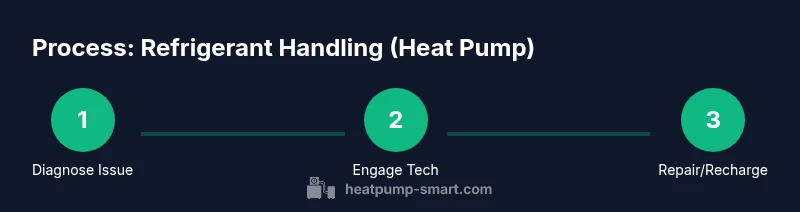
The proper approach to refrigerant issues involves a licensed technician following EPA and manufacturer protocols. First, the system is depressurized and recovered to prevent release of refrigerant. Then, a leak assessment is performed using approved detectors and pressure testing. If a leak is found, it is repaired, and the system is evacuated to remove air and moisture. A precise charge is then added according to the factory specification, followed by post-charge performance testing to confirm correct operation. This process protects equipment, complies with environmental rules, and maintains warranty coverage.
Environmental & Legal Considerations for Refrigerants
Refrigerants contribute to global warming if released. Federal and state regulations require proper recovery and disposal of refrigerants, and many jurisdictions mandate EPA 608 certification for anyone handling refrigerants. Heatpump Smart recommends working with technicians who follow all applicable rules and use environmentally responsible practices. Staying current on local requirements protects you from penalties and supports sustainable cooling and heating practices.
Maintenance to Prevent Leaks and Extend System Life
Routine maintenance reduces the risk of leaks and misplaced charges. Schedule annual professional inspections, ensure outdoor units are clear of debris, and clean coils to maintain heat exchange efficiency. Keep the service log updated, including refrigerant type and charge amounts as documented by your technician. Regularly check for signs of moisture, unusual sounds, or ice buildup, which may indicate low refrigerant or a developing leak and warrant an immediate professional assessment.
Costs, Warranties, and Rebates: What to Expect
Charges for refrigerant work vary by system size, refrigerant type, and local labor rates. Most scenarios involve leak repair and recharging, but prices should be discussed upfront with your technician. If work falls under warranty, confirm coverage and required documentation before any service. Heatpump Smart notes that many regions offer rebates or incentives for upgrading efficiency or replacing older refrigerants with newer, lower-emission options.
When to Consider Replacement Instead of Recharge
If persistent leaks exist or if the system is reaching end-of-life, replacement may be more cost-effective than frequent recharge and repair. A refurbished or new unit with a modern refrigerant can improve reliability and energy efficiency, often with better warranty terms. A professional assessment will help you weigh short-term costs against long-term savings and comfort.
Authoritative Sources and How to Verify Guidance
For regulatory and technical guidance, consult official sources such as the U.S. EPA, the Department of Energy, and recognized industry standards. These references provide context on refrigerant types, recovery requirements, and best practices for heat pump maintenance. Always cross-check recommendations with manufacturer manuals specific to your model and local codes.
Tools & Materials
- PPE (safety glasses, gloves)(Essential for field work; protect eyes from refrigerant and debris.)
- Leak detector (electronic or ultrasonic)(Used to locate leaks; do not rely on visual inspection alone.)
- Manifold gauge set(Measures operating pressures for accurate assessment.)
- Refrigerant recovery machine (EPA 608 certified)(Required for safe recovery and recharge.)
- Vacuum pump(Shows system integrity after recovery and before charging.)
- Refrigerant scale and correct refrigerant(Charge must match manufacturer specifications; only for licensed technicians.)
- Manufacturer service manual(Refer to exact charge and procedures for your model.)
- Documentation/logbook(Record refrigerant type, charge, and service details.)
Steps
Estimated time: 3-6 hours
- 1
Power down and isolate the system
Shut off the outdoor unit, disconnect power, and restrict access to prevent accidental operation during inspection. This minimizes the risk of a pressurized release and protects bystanders.
Tip: Do not operate or heat the unit during inspection to avoid sudden pressure changes. - 2
Perform a visual leak check
Look for oily residue near fittings and joints; use a leak detector to identify concealed leaks. Avoid relying on older sightings or noises alone.
Tip: Wipe surfaces clean to improve detector accuracy and note any discolored or corroded connections. - 3
Verify refrigerant type and required charge
Consult the manufacturer manual to confirm the exact refrigerant type and charge for your model. This ensures compatibility and prevents cross-contamination.
Tip: Never mix refrigerants; use the specified grade and quantity for your unit. - 4
Schedule a licensed professional
If a leak is detected or the charge is low, arrange service with a certified HVAC technician who can perform recovery and recharging safely.
Tip: Provide model/serial numbers and a detailed symptom log to expedite service. - 5
Professional recovery and leak repair
The technician will recover refrigerant, repair the leak, evacuate moisture, and prepare the system for recharging.
Tip: Ask for a diagnostic report and the exact charge requested by the manufacturer. - 6
Accurate recharge and post-charge testing
Technician adds refrigerant to the specified weight, then tests pressures and performance to confirm proper operation.
Tip: Request a post-charge performance curve or run-test results to verify efficiency. - 7
Document the service and monitor
Record the final charge, refrigerant type, and any warranty implications. Monitor system performance over the next 1-2 weeks.
Tip: Keep notes of any recurring issues and contact the tech if efficiency declines.
Your Questions Answered
Is refrigerant charging safe for homeowners?
No. Refrigerant charging requires EPA-certified equipment and expertise. DIY attempts can be dangerous and may violate regulations. Always hire a licensed technician for diagnosis, recovery, and recharge.
No. Refrigerant charging is not safe for homeowners; contact a licensed technician for diagnosis and charging.
What are common signs of refrigerant leaks?
Look for reduced heating or cooling performance, longer cycle times, ice on outdoor coils, hissing sounds at joints, or unexplained energy cost increases. These indicate a potential leak needing professional evaluation.
Common signs include reduced performance, longer cycles, and unusual sounds near joints.
Can a heat pump run if refrigerant is low?
It can run briefly but with reduced efficiency and higher risk of compressor damage. Low refrigerant should be addressed by a technician who can safely recover and recharge.
Running a heat pump with low refrigerant isn’t advised; get it checked by a pro.
How long does a recharge take?
Recharge duration varies with system size and leak extent. Expect several hours for diagnosis, recovery, leak repair if needed, and recharge, plus testing.
Recharge can take a few hours depending on the leak and system size.
Do refrigerants harm the environment?
Yes, many refrigerants are greenhouse gases. Proper recovery and disposal minimize environmental impact and comply with regulations.
Refrigerants can affect the environment; proper handling matters.
What should I ask a technician when refrigerant issues arise?
Ask about leak location, refrigerant type, total charge, warranty coverage, and whether repairs are included in the service plan. Clarify post-service testing and documentation.
Ask about leaks, refrigerant type, total charge, warranty, and post-service tests.
Watch Video
Top Takeaways
- Never DIY refrigerant charging; it’s a sealed-system task.
- Leaks must be repaired by professionals before recharging.
- Charge accuracy is crucial for efficiency and lifespan.
- Regulatory rules require proper recovery and disposal of refrigerants.
- Warranty and rebates may depend on professional service and documentation.