Do Heat Pump Dryers Need a Drain? Practical Guidance
Explore whether heat pump dryers require a drain, compare reservoir-based and direct-drain setups, and get installation, maintenance, and energy-efficiency tips from Heatpump Smart.


Do heat pump dryers need a drain? It depends on the model. Most heat pump condensers use a built-in water reservoir you empty by hand. Some units offer a direct-drain hose to a sink or drain line, or an optional pump kit. Always consult the manual and local codes. Consider your laundry load and plumbing setup when choosing.
Condensation mechanics in heat pump dryers
Heat pump dryers operate as a closed-loop system, using a refrigerant cycle to extract moisture from clothes and convert it into condensate. When considering do heat pump dryers need a drain, start with how condensate is handled. In most residential designs, the moisture collects in an internal tank that you empty by hand, but many models also offer a direct-drain option or a small pump to move condensate to a nearby drain. The arrangement affects where you place the unit, how often you perform maintenance, and whether you need a dedicated plumbing line. According to Heatpump Smart analysis, the majority of home units still rely on a removable condensate reservoir, but a growing subset supports direct-drain connections for busy households. Across brands, capacities and regional electrical standards drive noticeable differences, so always review product schematics and installation guides before purchasing or retrofitting a dryer.
Do heat pump dryers need a drain? Yes, but with nuance
For many households, the instinct is that a drain is not strictly required if the machine uses a condensate tank you empty regularly. However, the design choice matters: a direct-drain option can pipe condensate to a sink or floor drain, removing the need to handle a tank altogether. Heatpump Smart's analysis, 2026, shows direct-drain configurations are becoming common in higher-capacity and integrated laundry spaces, especially where frequent drying happens. If you opt for a model without a drain, you’ll rely on the water tank and schedule routine emptying, which can become a bottleneck during peak laundry periods or vacations. In humid climates, a drain kit can also prevent overflows and keep the cabinet dry. Always verify the exact drainage behavior in the manual and ensure compliance with local codes.
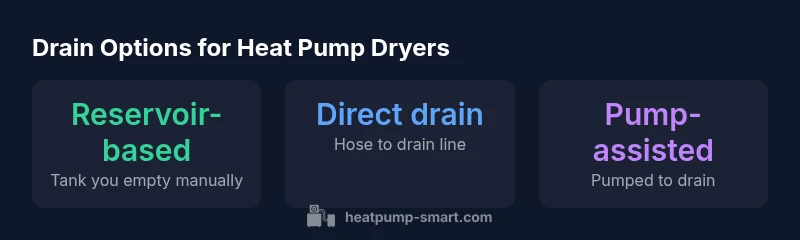
Drain options: reservoir-based vs direct drain vs pump-assisted
Choosing the right drain path depends on your space, plumbing access, and lifestyle. Reservoir-based models are simple and portable, ideal for renters or small households. Direct-drain kits connect a hose to a household drainage line, providing continuous removal but requiring proximity to a drain and some plumbing work. Pump-assisted drains offer a middle ground: a small pump pushes condensate to a drain line even when the dryer sits farther from a sink. Heatpump Smart analysis suggests that for households with high drying demand or limited manual effort, a direct drain or pump-assisted setup can significantly cut maintenance time while stabilizing floor moisture.
How to verify if your model supports drainage
Start by locating the user manual or model number plate on your dryer. Look for terms like "drain hose," "direct drain," or "condensate pump". Check the installation section for recommended connection methods and hose sizes. If you already own the unit, inspect the back or bottom panel for a drain port or hose stub. Manufacturer websites and support portals often list compatible accessories and installation kits. If you’re unsure, contact customer support with the model number to confirm whether a drain option exists and what additional parts you’d need.
Installation steps for a drain kit
If you decide to add a direct-drain option, plan the routing path to a suitable drain. Typical steps include: selecting a drain location, measuring hose length, securing the drain hose with clamps to prevent leaks, installing a trap if required by local codes, and ensuring the hose slope allows gravity drainage. For pump-assisted systems, ensure the power supply matches the pump’s requirements and that the discharge line remains clear of kinks. Always follow the manufacturer’s instructions and consider a licensed plumber if you’re modifying household plumbing.
Plumbing, codes, and safety basics
Drain installations must comply with local plumbing codes, especially in multi-unit buildings or within shared walls. Use appropriate hose materials rated for condensate temperature, maintain bend radii to prevent clogs, and install backflow prevention where required. If you’re retrofitting, consult a professional to verify electrical and plumbing compatibility and to reduce the risk of leaks, water damage, or venting issues. Remember that improper setup can void warranties and create insurance complications in the event of damage.
Maintenance tips for moisture management
Regardless of drainage type, routine maintenance is essential. Empty reservoir tanks promptly and clean the tank and seals to prevent mold and mineral buildup. If you use a direct drain, periodically check hoses for cracks or detachment and inspect the drainage point for clogs. Run a maintenance cycle with a mild cleaner to prevent musty odors. For homes with hard water, consider a descaling routine to minimize mineral deposits that can affect condensate quality and efficiency.
Energy, space, and lifestyle considerations
Drain choices influence appliance placement and energy use. A direct-drain setup may free up cabinet space and reduce manual tasks, potentially contributing to time savings and lower energy waste from forgotten tanks. Conversely, reservoir-based systems are less invasive to install but require discipline to maintain. In small spaces or rental scenarios, a portable or pump-assisted solution can offer flexibility without permanent modifications.
Quick decision guide: should you install a drain?
If you have high drying needs, a busy household, or limited space for tank maintenance, a direct drain or pump-assisted option is worth considering. If you value simplicity and minimal installation, a reservoir-based model is usually sufficient, provided you’re comfortable with regular tank emptying. Always balance upfront installation costs with ongoing maintenance time and any potential energy savings when making your decision.
Drain options for heat pump dryers
| Drain Type | Typical Moisture Path | Installation Difficulty | Best For |
|---|---|---|---|
| Reservoir-based | Water tank you empty manually | Low | Small households, renters |
| Direct drain with hose | Hose to drain line | Medium | High-use households, where maintenance time matters |
| Pump-assisted drain | Condensate pumped to drain | Medium-High | Larger homes, flexible layouts |
Your Questions Answered
Do all heat pump dryers require a drain?
No. Most use a condensate tank you empty manually, but some models offer a direct-drain option or a pump to move condensate to a drain. Always check the product specs.
No. Most rely on a tank you empty, but some models can drain directly to a line. Check your model specs.
How do I know if my dryer supports a direct drain?
Look in the manual for terms like drain hose, direct drain, or condensate pump. Inspect the back or bottom for a drain port or hose. Manufacturer support pages can confirm compatibility.
Check the manual for drain terms and inspect the back for a hose port to confirm direct-drain support.
What maintenance is needed if I use a drain kit?
Regularly inspect and clear hoses, check for leaks, and ensure the drain path stays clear of clogs. Periodically run a cleaning cycle to prevent odors.
Inspect hoses for leaks and clogs, and run cleaning cycles to prevent odors.
Are direct-drain installations safe?
Yes, when installed per local codes and manufacturer instructions. Use proper hoses and secure connections to prevent leaks or backflow.
Yes, if installed per code with secure connections to prevent leaks.
Can I retrofit a drain to an existing heat pump dryer?
Possible with a compatible kit or professional retrofit, but it may affect warranty and require plumbing work.
Retrofitting is possible with a kit or pro help, but check warranty terms.
Do drains influence energy use?
Direct drains can reduce ongoing maintenance and reduce standby moisture buildup, potentially saving a small amount of energy overall.
A direct drain can cut maintenance time and may offer small energy benefits.
“"Drain-related decisions don’t have to complicate heat pump performance. With the right drainage option, moisture management becomes straightforward and predictable."”
Top Takeaways
- Know your model’s drainage options before buying
- Reservoir-based systems need regular emptying
- Direct-drain and pump-assisted setups reduce manual maintenance
- Always follow local plumbing codes and manufacturer guidelines
- Consider space, usage, and maintenance when choosing a drain path