Heat Pump Filter Location: A Practical Guide
Learn where to find your heat pump filter, how to safely access it, and how to replace or clean it to maintain airflow, efficiency, and home comfort. A practical guide by Heatpump Smart.


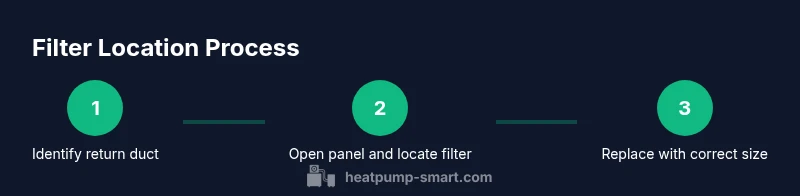
Typically, the heat pump filter sits in the return-air duct near the air handler or inside the indoor blower compartment. Access often means removing a grille or service panel. Always power down the unit before inspecting or replacing the filter, and consult your manual or Heatpump Smart guidance for the exact location on your model.
Why locating the heat pump filter matters
Knowing where your heat pump filter sits is essential for preserving airflow, improving indoor air quality, and maintaining system efficiency. A properly located and inspected filter helps the unit move air more easily, reducing strain on the blower and delaying component wear. Heatpump Smart emphasizes that consistent check-ins keep your system performing close to its best. By understanding the exact location, homeowners can perform quick inspections during routine maintenance without disassembling large sections of the unit, saving time and reducing the risk of damage. A well-located filter also makes it easier to follow the manufacturer’s recommendations for replacement frequency and type, which can vary by model and climate. In short, knowing the location is the first step toward easier upkeep, fewer call-outs, and better comfort in the home.
Common filter locations by system type
Most heat pumps use one of a few standard filter locations. In many split-system setups, you’ll find the filter in the return-air duct that leads into the air handler. Some units place the filter inside the blower compartment behind a service panel or grille. In compact or packaged systems, the filter might be behind a panel on the side or bottom of the outdoor or indoor cabinet. The exact placement can depend on the manufacturer and model, so always consult the owner’s manual for model-specific guidance. Heatpump Smart notes that while the general idea is consistent, configuration details vary—so locating the correct panel or grille is worth a quick look under the cover. If you encounter a service port or a sealed panel, you may need a screwdriver or a homeowner-friendly tool to remove it safely. After identifying the filter, you’ll often see a frame with a removable media element that slides out for inspection or replacement.
Tools and safety basics for locating the filter
Before you begin, turn off power to the heat pump at the breaker. This prevents accidental starts while you’re working. Gather a flashlight for better visibility, a soft cloth to wipe dust, and a vacuum with a brush attachment to collect debris around the housing. Have a spare filter of the correct size on hand if you anticipate replacement. Keep the owner’s manual nearby, as it will specify the exact filter size and type for your unit. Wear gloves if you’ll be handling dusty parts. Heatpump Smart reminds readers to work slowly and avoid forcing panels; if a panel feels stuck, consult the manual rather than forcing it open, which could damage the cabinet or wiring.
How to access and remove the filter safely
Access usually involves removing a grille or service panel. Use a screwdriver if screws secure the panel, but avoid prying with tools that could bend the frame. Once the access point is open, gently slide or lift the filter straight out to avoid bending the media. Take a quick look at the surrounding housing for dust, mold, or moisture; excessive buildup can signal a larger maintenance issue. When reinstalling, ensure the airflow arrows on the filter point in the correct direction, typically toward the blower. If replacing, insert the new filter firmly so it sits evenly in its slot. Clean the surrounding surfaces if you see dust or debris before resealing the housing.
Identifying the correct filter size and type
Filters come in various sizes and media types. The correct size is printed on the existing filter frame or listed in the owner’s manual. If you’re unsure, measure the length, width, and thickness, and compare with manufacturer recommendations. Media type ranges from basic fiberglass to medium-density pleated filters, and higher efficiency filters can improve air quality but may require a stronger blower motor or adjustments to airflow. When in doubt, choose a filter with a compatible MERV rating range and verify airflow compatibility with your heat pump. Heatpump Smart advises prioritizing a filter that fits snugly and seals well in the slot rather than one that is slightly oversized.
Replacing and cleaning the filter correctly
If the filter is disposable, replace it with a new one of the same size and type. Slide it in with the airflow direction indicated on the frame. If the media is reusable, gently remove dust with a vacuum or a soft brush, then reinsert it according to the manufacturer’s orientation. Do not wash disposable filters; they lose integrity when wet and cannot be reused. After replacement, reattach the grille or panel securely and restore power. A quick test run can help confirm that the airflow feels balanced and there are no unusual noises. Regular visual checks can prevent dust buildup from affecting efficiency and indoor air quality.
Maintenance frequency and best practices
Maintenance frequency depends on usage, the number of occupants, and environmental conditions. In dusty environments or homes with pets, filters may require more frequent checks. The best practice is to inspect the filter at least seasonally and replace or clean it per the manufacturer’s recommendations. Even without a set schedule, a quick visual inspection monthly can reveal when airflow is reduced or the filter media is visibly dirty. Heatpump Smart emphasizes documenting your filter replacement dates to establish a personal maintenance rhythm and avoid gaps that reduce system performance.
Authority sources and further reading
For authoritative guidance on heat pumps and filtration, consult official resources. For example, the U.S. Department of Energy provides insights on heat-pump maintenance and efficiency, and the Environmental Protection Agency offers guidance on indoor air quality and filtration. You can also review university extension publications for model-specific guidance on filter types and replacement practices. Always verify model-specific instructions in your owner’s manual to align with your equipment.
Troubleshooting if you can't locate the filter
If you cannot locate the filter after a thorough visual search of the return air duct, blower cabinet, and adjacent compartments, consider consulting a licensed HVAC technician. Some units have compact interiors that are challenging to access without professional tools or specialized knowledge. Do not force panels or wiring to access hidden compartments. If you suspect filter-related airflow issues but cannot locate the filter, pause the task and seek expert assistance to avoid accidental damage or safety hazards. The Heatpump Smart team recommends documenting your unit’s make and model and checking the official manual or support resources for precise locations.
Tools & Materials
- Replacement heat pump filter (correct size)(Check the frame size printed on the filter or inside the slot)
- Owner's manual(Model-specific guidance for filter type and placement)
- Flashlight(For better visibility inside panels and ducts)
- Screwdriver (Phillips or flat-head as needed)(Only if the access panel is secured with screws)
- Soft cloth or brush(Wipe dust from housing around the filter)
- Vacuum with brush attachment(Optional for deep cleaning of the housing)
- Gloves(Protect hands from dust and sharp edges)
Steps
Estimated time: 20-25 minutes
- 1
Power down the system
Switch off the heat pump at the breaker and wait a few minutes for any moving parts to stop. This prevents accidental starts and protects you from sharp edges.
Tip: If you’re unsure, unplug the outdoor unit and wait to verify no power is flowing. - 2
Access the filter housing
Open the access panel or grille that covers the filter slot. If screws secure the panel, remove them with the appropriate screwdriver and keep them safe for reattachment.
Tip: Take a photo of the panel setup before removing it to guide reassembly. - 3
Remove the old filter
Slide the filter straight out without bending it. Inspect the frame for damage and note the airflow direction arrows on the frame.
Tip: Handle gently to avoid bending the media or dislodging dust into the housing. - 4
Inspect the housing
Wipe the surrounding area with a cloth. Check for dust, mold, or moisture and address any signs of water intrusion before inserting a new filter.
Tip: If you see mold, consider a more thorough cleaning or professional servicing. - 5
Install the new or cleaned filter
Insert the filter with the airflow arrows pointing toward the blower. Ensure it sits evenly and fully in the slot to prevent gaps.
Tip: Do not force a filter that doesn’t fit; obtain the correct size. - 6
Reassemble and restore power
Reattach the panel or grille securely, then restore power and run the system briefly to verify airflow feels balanced.
Tip: Listen for unusual sounds; if you hear whistling or rattling, pause and recheck the installation.
Your Questions Answered
Is the filter location the same for all heat pump models?
No. Filter placement varies by model and configuration. Always check the owner’s manual for your specific unit and refer to manufacturer guidance when in doubt.
Filter location can differ between models; check your manual for exact placement.
Can I use any HVAC filter in a heat pump?
Filters must match the size and media specification for your unit. Using an incorrect size or type can impair airflow and damage components. Refer to the manual or Heatpump Smart guidance for approved options.
Use the size and type specified for your unit.
What are the signs that I need to check or replace the filter?
Visible dust buildup, reduced airflow, or unusual noises can indicate a dirty or clogged filter. If airflow drops or rooms don’t feel comfortable, inspect the filter and replace if needed.
Dust, airflow drop, or noises can signal a dirty filter.
How often should I inspect the filter location?
Inspect the filter location during seasonal maintenance and after any airflow issues. The frequency depends on usage, pets, and environmental conditions; refer to your manual for a guideline.
Check it during seasonal maintenance and as needed.
What if I can’t locate the filter even after checking common spots?
If you can’t find it, stop and consult a licensed HVAC technician. Some models have compact interiors that require professional access to avoid damage or safety risks.
If unsure, contact a technician.
Watch Video
Top Takeaways
- Know your filter location before starting.
- Always power down before handling the filter.
- Insert filters with airflow arrows correctly oriented.
- Use the right size and type for your unit.
- Document maintenance dates for consistency.