How to Wash a Heat Pump Filter
Learn how to wash a heat pump filter safely and effectively. This expert guide from Heatpump Smart covers tools, steps, drying, and maintenance to keep your system efficient and your home comfortable.


You will learn how to safely wash a heat pump filter, boost system efficiency, and extend equipment life. Gather the right tools, remove the filter, wash it without harsh cleaners, dry it completely, and reinstall it correctly. This step-by-step guide covers common residential air-source and ducted heat pumps. Regular checks help prevent clogs and energy waste.
Why washing heat pump filter matters
A clean filter is a quiet, reliable ally for home comfort. Inside most air-source and some ducted heat pumps, the filter traps dust, pollen, pet dander, and other debris before air reaches the evaporator coil. When the filter becomes clogged, airflow to the coil drops, which forces the system to work harder, raises energy use, and can shorten equipment life. According to Heatpump Smart, routine maintenance of the filter is a simple, high-impact habit that pays dividends in comfort and efficiency. Keeping the filter clean helps maintain consistent indoor temperatures and reduces the likelihood of stale air or odors circulating through living spaces. For homeowners, property managers, and builders, this small step delivers meaningful results over the season.
In many homes, a dirty filter contributes to warmer living spaces in summer and cooler rooms in winter, as the heat pump struggles to achieve the target temperatures. By washing the heat pump filter on a regular schedule, you also extend the time between more expensive interventions like coil cleaning or professional service. The goal is to preserve maximum airflow, protect the evaporator, and ensure the system can move air freely without obstruction. Heatpump Smart analysis shows that managed filter maintenance correlates with improved system responsiveness and more even distribution of heating and cooling across rooms.
note”: null},{
Filter types and where they live in a typical home heat pump
Filters come in a few varieties, and where you find them depends on whether you have an air-source or a ducted heat pump. In many homes, the return-air filter sits near the furnace or air handler. This is often the first line of defense for the system, trapping dust and allergens before air enters the evaporator coil. Reusable filters can be washed and reused, while disposable ones are designed for single use. Before you wash, verify the type and size so you select the right cleansing method and avoid damaging the filter frame.
Washing heat pump filter is more straightforward when you understand the parts involved. Look for a rectangular or square panel that sits behind a return grille or in a dedicated filter housing. If you own a ductless mini-split, filters can be located behind the indoor unit’s grille or within a removable panel. Always consult the user manual for the exact filter location and replacement guidelines. If in doubt, contact a heat pump specialist rather than forcing a filter out of place. This is especially true for systems with integrated humidifiers or electronic air cleaners, where filter assemblies can be more intricate.
From Heatpump Smart’s perspective, knowing your filter type and location makes the washing process safer and more effective. A misidentified filter may require a different cleaning approach or replacement. When you wash, ensure you do not dislodge other components and avoid using aggressive cleaning solutions that could compromise the filter material.
note”: null},{
Safety and preparation before you start
Before you handle any heat pump components, power off the unit and shut off the dedicated circuit if you can. This prevents the blower from starting unexpectedly while you’re working, reducing the risk of injury. Wear gloves to protect your hands from sharp edges and dust. Have a washable container or bucket ready to submerge the filter if needed, and place a towel beneath the work area to catch drips. Make sure the room is well-ventilated; hot or humid air can make the task more uncomfortable and may cause condensation on surfaces.
Set realistic expectations for the cleaning session. A quick wash may remove loose dust, but stubborn grime or pollen may require additional steps, especially in areas with high outdoor pollution. Always check the filter’s label or manufacturer’s instructions for specific guidance on water temperature, cleaning agents, and drying times. If you spot signs of mold or damaged filter material, do not continue washing; replace the filter and consult a professional if necessary. This phase reduces risk and sets the stage for a successful wash.
As part of best practice, align this maintenance with your seasonal heating and cooling schedule. The Heatpump Smart team notes that consistency is the key to keeping a heat pump filter performing at its best and to maintain indoor air quality for occupants.
note”: null},{
Washing heat pump filter: method overview
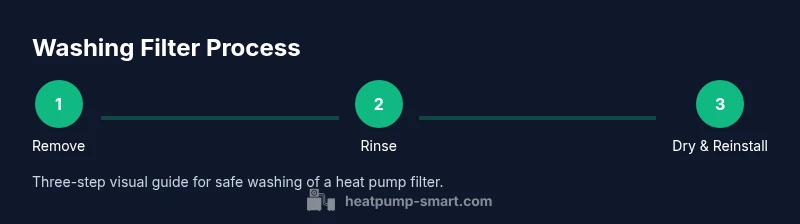
The core of the process is simple: remove, rinse, clean (if reusable), dry, and reinstall. Start by removing the filter from its housing, taking care to document how it sits so you can replace it correctly. Rinse with lukewarm water, using a gentle stream to dislodge loose dust. If the filter is washable and the manufacturer allows mild soap, use a small amount of soap and a soft brush to loosen embedded grime. Rinse again until the water runs clear and there is no soap residue. Avoid hot water, bleach, solvents, or abrasive brushes that can damage the filter material.
After washing, shake out excess water and pat the filter dry with a towel. Allow it to air-dry completely in a well-ventilated area before reinstalling. A damp or humid filter can harbor mold or mildew and impede airflow. Once dry, reinstall the filter securely, ensuring it seats evenly. Run the heat pump on a short cycle to confirm it’s drawing air properly and that there are no unusual noises or leaks around the filter housing. This method balances safety, effectiveness, and efficiency in common home systems. The Heatpump Smart team emphasizes following the manual for any system-specific steps.
note”: null},{
Drying, reinstalling, and testing the system
Drying is often the most overlooked step but is crucial for preventing mold and maintaining filtration performance. Place the washed filter in a dry, breathable environment or use a fan to speed up evaporation. Ensure the filter is completely dry on all sides before reinsertion. Incorrect drying can lead to trapped moisture, which encourages mold growth and reduces filtration efficiency. Once dry, carefully reinstall the filter, ensuring it-friendly fits snugly without forcing it into place. If your unit requires a specific orientation, match the original position precisely.
After reinstalling, power the system back on and run it for a few minutes on the appropriate mode (cooling or heating) to verify airflow and sound. Listen for unusual whines, rattles, or vibrations that may indicate the filter is seated incorrectly or another component is impacted. If you detect any issues, switch off the unit and recheck the filter alignment. Regularly checking the filter during operation helps catch issues early and maintain overall performance.
Heatpump Smart’s practical guidance reinforces that consistent washing and proper drying will help protect the evaporator coil and keep energy costs in check. Document the maintenance date for future reference so you maintain a steady, predictable schedule.
note”: null},{
Common mistakes and maintenance tips
Common mistakes include using hot water, harsh detergents, or bleach on reusable filters, which can degrade the filter media and reduce performance. Avoid over-washing a filter to the point of warping or deformation; repeated aggressive washing can shorten the filter’s life. If a filter appears damaged, bent, or torn, replace it rather than attempting to repair it. Remember, disposable filters should be replaced rather than washed in most cases.
Tips to make filter washing effective: label or photograph how the filter sits in its housing for easy reinstallation; clean filters at a consistent cadence, aligned with seasonal usage. Keep spare disposable filters on hand so you can swap quickly when a reusable filter is out of service. Use lukewarm water and mild soap only if the manufacturer approves; otherwise, rinse with water alone. If you’re unsure about your specific heat pump configuration, consult a professional to avoid damaging the unit.
note”: null},{
Maintenance schedule and energy considerations
A proactive maintenance routine for heat pump filters helps maintain indoor air quality and system efficiency. For most homes, check the filter monthly during peak heating or cooling seasons and clean or replace it as needed. In lower-usage periods, you may extend checks to every 2-3 months. The key is consistent observation: a noticeable reduction in airflow or cooler/warmer rooms than expected signals it’s time to inspect the filter.
From an energy perspective, a clean filter minimizes air resistance and reduces the workload on the blower, contributing to more stable temperatures and potentially lower running costs. Heatpump Smart’s analysis indicates that regular filter maintenance is a straightforward, cost-effective way to sustain performance without major system interventions. If you have pets, allergies, or high dust levels, you may need more frequent maintenance. Keep a simple log and, if possible, pair this with other routine checks such as coil cleanliness and overall duct integrity.
note”: null}],
toolsMaterials”:{
items
name”:
required”: true,
note”:
]},
stepByStep
steps
estimatedTime
:
tipsList
tips
note
keyTakeaways
videoEmbed
faqSection
mainTopicQuery
}]},
mediaPipeline
heroTask
stockQuery
overlayTitle
badgeText
overlayTheme
infographicTask
type
htmlContent
altText
caption
taxonomy
categorySlug
tagSlugs
Tools & Materials
- Filter (reusable or disposable as applicable)(If reusable, ensure it's the correct size and model for your heat pump.)
- Bucket or bowl(Large enough to submerge the filter.)
- Soft brush(Nylon bristles; used for stubborn debris.)
- Mild detergent or soap (optional)(Use only if the filter is washable with soap; never use harsh chemicals.)
- Clean water( Lukewarm water is ideal.)
- Towel or cloth for drying(Pat dry and ensure complete dryness.)
- Gloves (optional)(To keep hands clean and protected.)
Steps
Estimated time: 10-20 minutes
- 1
Power down and locate filter
Turn off the heat pump and locate the filter housing per your manual. This prevents unplanned fan operation while you work.
Tip: Consult the manual to confirm filter location before removing. - 2
Remove the filter carefully
Gently detach the filter from its housing, supporting it to avoid dislodging nearby components.
Tip: Note how it was seated for easier reinstallation. - 3
Rinse with lukewarm water
Hold the filter under lukewarm running water to loosen dust and debris. Do not use hot water or harsh cleaners.
Tip: A palindrome mantra helps: rinse, never soak in bleach. - 4
Wash with mild soap if reusable
If the filter is washable, use a small amount of mild soap and gently scrub with the soft brush.
Tip: Rinse until all soap suds are gone. - 5
Rinse until clear and drain
Rinse thoroughly until the water runs clear and there is no soap residue.
Tip: Tap water impurities can cause buildup, so thorough rinsing is important. - 6
Dry completely and reinstall
Shake out excess water, dry with a towel, and air-dry until fully dry before reinstalling.
Tip: Do not reinstall a damp filter; moisture reduces filtration efficiency and may cause mold.
Your Questions Answered
How often should I wash or replace the heat pump filter?
Most homes benefit from washing or replacing filters every 1-3 months, depending on usage and dust levels. If you notice reduced airflow or higher energy bills, check sooner.
Most homes wash or replace filters every one to three months, depending on use and dust. If you notice reduced airflow, check sooner.
Can I wash disposable filters?
Disposable filters should not be washed. They are designed for single use and should be replaced when dirty.
Disposable filters are single-use; replace when dirty.
What cleaning agents are safe for washable filters?
Most washable filters only need clean water, or mild soap if specified by the manufacturer. Avoid bleach or solvents that can degrade the filter material.
Stick to water, or a mild soap if allowed by your manufacturer. Avoid bleach.
How can I tell if my filter is completely dry before reinstalling?
Touch the filter; it should feel dry to the touch in all areas. If it's still damp, air-dry longer before reinstalling.
Make sure the filter is fully dry before reinstalling; damp filters can mold.
Does cleaning the filter improve energy efficiency?
Yes. A clean filter reduces airflow resistance and helps the heat pump operate more efficiently, lowering energy use and maintaining comfort.
A clean filter helps the heat pump run more efficiently and saves energy.
Watch Video
Top Takeaways
- Keep filters clean to maintain airflow.
- Use lukewarm water and mild soap when applicable.
- Dry completely before reinstalling.
- Document maintenance for reliability.
- Regular cleaning supports energy efficiency.