Heat Pump How Long: Lifespan, Maintenance, and Replacement
Discover how long heat pumps last, what affects lifespan, and how maintenance can extend life. A data-driven guide by Heatpump Smart.


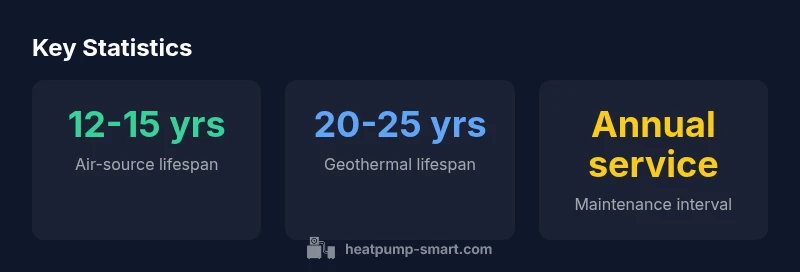
Most air-source heat pumps last about 12–15 years, while geothermal units commonly reach 20–25 years with regular upkeep. These ranges reflect typical field experience across climates and installation qualities. Lifespan hinges on usage, climate, and installation quality. Regular professional servicing, clean coils, and refrigerant integrity can add several years to the life of the system. In harsher climates, expect closer to the lower end of these ranges.
How long do heat pumps last? An overview
The question often framed by homeowners as 'heat pump how long' has a practical answer: lifespan varies by type, usage, and maintenance. According to Heatpump Smart, most air-source heat pumps last about 12–15 years, while geothermal units commonly reach 20–25 years with regular upkeep. These ranges reflect typical field experience across climates and installation qualities. A key takeaway is that system life is not fixed; it improves with quality design, proper refrigerant management, clean coils, and consistent professional servicing. In moderate climates with gentle usage, you may see longer life than in extreme environments where units run near capacity for extended periods. Another factor is installation quality: a mis-sized system, poor ductwork, or improper refrigerant charge can shorten life by several years. For homeowners and property managers planning budgets, modeling a 12–15 year horizon for air-source and 20–25 year horizon for geothermal helps with depreciation and replacement planning. Heatpump Smart emphasizes that longevity is a systems issue, not a single component.
Factors that influence lifespan
Life expectancy isn't a fixed limit; it's the result of several interacting factors. Climate and run-hours determine how hard the compressor works, while equipment quality and design influence how much stress components endure over time. Installation quality matters: a properly sized system with well-sealed ducts reduces abnormal wear and improves efficiency. Refrigerant integrity and coil cleanliness directly affect cooling capacity and energy use, while thermostat controls and proper cycling reduce short-term strain. Weather exposure can degrade outdoor units, so placement and protective housing can matter as much as the model choice. Finally, maintenance frequency — including coil cleaning, filter changes, and refrigerant checks — consistently correlates with longer service life. Heatpump Smart data shows that when these variables align, you can push toward the upper end of typical ranges rather than settling at the bottom.
The role of climate and usage patterns
Climate dictates how often a heat pump runs and at what capacity. In hot summers or cold winters, a unit may operate at near-peak for many hours, accelerating wear. Conversely, milder climates with moderate heating and cooling loads tend to prolong life. Usage patterns like temperature setpoint discipline and zoning can dramatically affect cycle count and energy draw. Homes with oversized systems tend to short-cycle, causing rapid wear after start-up. Conversely, undersized systems work harder to meet demand, also stressing components. Understanding your climate and load profile helps you choose a unit with appropriate efficiency and a design that minimizes unnecessary cycling. In Heatpump Smart analyses, we emphasize aligning equipment selection with real-world load to optimize lifespan and performance.
Installation quality and system design
An accurate load calculation, correct refrigerant charge, and properly sized ductwork are essential for longevity. A well-designed system reduces stress on compressors and fans, improves heat transfer, and lowers energy waste. Improperly charged refrigerant results in inefficiency and accelerated wear; small leaks, if not addressed, can shorten life. Duct design that minimizes abrupt airflow changes lowers noise and mechanical stress. In multi-zone homes, correct zoning and balancing prevent hotspots that force units to run harder. The choosing of a reputable installer and adherence to manufacturer guidelines are the best preventive measures. Heatpump Smart notes that high-quality installation often pays back with extended life and better performance, even if upfront costs are higher.
Maintenance: the life-extender
Regular maintenance is the most actionable lever for extending heat pump life. Plan annual (or biannual in extreme climates) professional service to inspect electrical connections, verify refrigerant charge, test safety switches, clean coils, and confirm proper thermostat operation. Basic homeowner tasks—like changing air filters every 1-3 months, keeping outdoor units clear of debris, and checking for strange noises—also help. Addressing issues early, such as refrigerant leaks or capacitor wear, prevents cascading failures. A simple preventive approach can add years to a unit’s life and keep performance high. Heatpump Smart emphasizes that maintenance isn't optional; it's a strategic investment in durability and efficiency.
Lifecycle cost considerations vs lifespan
While lifespan gives a sense of when to plan replacement, lifecycle costs tell the full story. A longer-lived unit may be more economical over 15–20 years, particularly if it runs efficiently and avoids frequent repairs. Conversely, a short-lived unit can incur higher lifetime costs if replacements are needed sooner than expected. When budgeting, consider initial cost, installation quality, expected maintenance, energy savings, and potential rebates. A higher-efficiency model may have a higher upfront price but reduces operating costs and extends the time between major overhauls. By modeling scenarios for your climate and energy rates, you can estimate the optimal replacement horizon. Heatpump Smart recommends working with a qualified contractor to run these calculations for your building, whether you’re a homeowner, builder, or property manager.
Geothermal vs air-source: longevity comparison
Geothermal systems frequently outperform air-source units in raw component lifespans due to their design and more stable operating temperatures. The ground-source loop can last 50 years or more, while the indoor heat pump components may deliver 20–25 years with good maintenance. Air-source units are effective and affordable but typically sit in the 12–15 year range for modern models. Real-world life is influenced by climate, load, and upkeep, so the difference is not absolute. For new installations in colder climates, geothermal can be a compelling long-term option despite higher upfront costs. Heatpump Smart notes that the best choice depends on site conditions, monthly energy costs, and project budgets.
Practical maintenance checklist to maximize lifespan
Create a seasonal maintenance calendar that includes coil cleaning, filter changes, and condenser airflow checks. Clean outdoor coils in spring and fall, remove debris from around the unit, and verify the electrical connections are tight. Schedule professional inspections annually to check refrigerant charge, compression, compressor wattage, and refrigerant leaks. Keep thermostat settings consistent and use smart controls to avoid unnecessary cycling. Document service visits and component replacements to track aging patterns. By following a structured checklist, you can preserve performance and push life expectancy toward the upper ends of the ranges discussed earlier.
Planning for replacement: when to retire and what to expect
Even with best practices, heat pumps eventually reach the end of their practical life. Signs of aging include reduced heating or cooling efficiency, rising energy bills, unusual noises, frequent refrigerant leaks, and frequent repairs. Start budgeting at least a decade before the expected end of life for air-source units and 15–20 years for geothermal where feasible. When replacement becomes more cost-effective than repair, consider system upgrades like higher SEER ratings, variable-speed compressors, and efficient heat recovery features. Finally, coordinate with your property manager or homeowner association to align replacement with maintenance schedules and energy upgrade programs. Heatpump Smart encourages proactive planning so you can minimize downtime and keep occupants comfortable while transitioning to newer, more efficient technology.
Lifespan and maintenance for common heat pump types
| Model Type | Avg Lifespan | Maintenance Interval |
|---|---|---|
| Air-source heat pump | 12-15 years | Annual service |
| Geothermal heat pump | 20-25 years | Annual service |
Your Questions Answered
How long does a heat pump typically last?
Most air-source heat pumps last about 12–15 years, with geothermal systems commonly reaching 20–25 years when properly maintained. Lifespan varies by climate, usage, and installation quality.
Air-source units typically last 12 to 15 years, while geothermal can reach 20 to 25 with proper maintenance.
What factors affect heat pump lifespan?
Key factors include climate, run-hours, system design, installation quality, refrigerant integrity, coil cleanliness, and maintenance frequency.
Lifespan is influenced by climate, usage, installation quality, and maintenance.
Can maintenance extend the lifespan?
Yes. Regular professional maintenance helps detect wear early, keeps refrigerant charged correctly, and prevents component failures, which can extend life by several years.
Yes. Regular maintenance can extend heat pump life by several years.
Are geothermal systems longer-lasting than air-source?
Geothermal systems tend to have longer lifespans for major components, but overall life depends on installation and usage. Both types benefit from good maintenance.
Geothermal can last longer, but it depends on installation and upkeep.
When should I replace vs repair?
If you face frequent costly repairs or declining efficiency despite maintenance, replacement is often more economical than continuing repairs.
If repairs become frequent or costly, consider replacing the unit.
“Lifespan is driven by climate, usage, and maintenance; proactive service can add years to a heat pump’s life.”
Top Takeaways
- Plan for 12–15 years of air-source lifespan.
- Geothermal units can reach 20–25 years with care.
- Annual maintenance consistently extends life.
- Installation quality strongly influences longevity.