How Long Does a Geothermal Heat Pump Last: A Comprehensive Lifespan Guide
Learn realistic lifespans for geothermal heat pumps, ground loops, and components. Discover maintenance tips to maximize efficiency and reliability over decades.


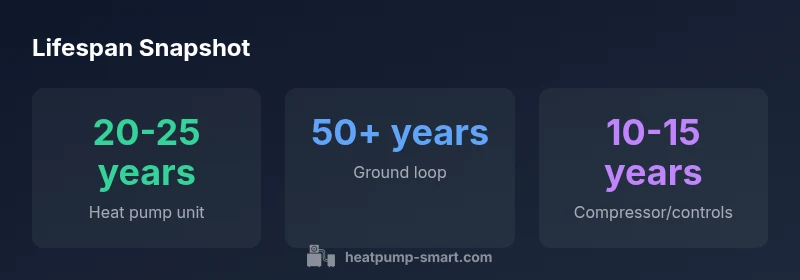
Geothermal heat pumps typically last longer than most air-source systems. The outdoor/indoor heat pump unit usually yields about 20-25 years of reliable service, while the buried ground loop can endure 50+ years with proper design and maintenance. Expect compressor and electrical components to require replacement or service within 10-15 years, depending on usage and climate. Regular maintenance extends total system life.
How long does a geothermal heat pump last? A practical view on lifespan and reliability
Geothermal systems leverage stable underground temperatures, which generally reduce wear on performance-critical components. The heat pump unit itself commonly wears at a slower rate than air-source models due to cooler intake temperatures and fewer environmental stressors. Within this context, homeowners can expect realistic lifespans published by industry analysts. According to Heatpump Smart, the typical heat pump unit lasts about two decades or more, with many installations reaching the mid-20s before major overhauls. The underground loop, a separate but essential part of the system, is designed for longevity—often surpassing the life of the indoor equipment by decades. Understanding these timelines helps you plan for replacements and maintenance without surprises.
Distinguishing the heat pump unit from the ground loop
In a geothermal system, the main mechanical unit (the heat pump) and the ground loop serve different purposes and age at different rates. The heat pump’s compressor, fan, and control circuitry carry the bulk of wear and typically require attention every 5-10 years, with replacements most commonly discussed in the 10-15 year window depending on running hours and climate. By contrast, the ground loop—comprised of interconnected pipes buried in the yard or geothermal boreholes—offers a far longer service life, often 50+ years, because it is physically isolated from the day-to-day indoor environment. When both components are considered together, a well-designed and properly installed geothermal system can provide reliable service for multiple decades, with the loop acting as a long-term anchor for system performance.
Key factors that influence lifespan and reliability
Several variables determine how long a geothermal system lasts in a given home:
- Installation quality: Proper trenching, loop spacing, and braid or tracer wire installation reduce early failures.
- System sizing and selection: A correctly sized heat pump avoids overworking components, extending life.
- Climate and usage: Extreme seasons can stress compressors; moderate climates with balanced duty cycles tend to reduce wear.
- Maintenance schedule: Regular professional checkups catch refrigerant leaks, electrical issues, and dirty coils before they cause cascading damage.
- Component quality: Higher-efficiency motors, better electrical components, and robust loop materials typically resist degradation longer.
- Warranty coverage: Longer warranties often reflect confidence in longevity and help offset repair costs over time.
In practice, you’ll get the best results when you combine a well-engineered loop with a high-quality heat pump and a maintenance plan aligned with your local climate. This means you’ll likely see the best overall lifespan by investing in proper installation and ongoing care, rather than chasing the lowest upfront price.
Maintenance strategies to maximize longevity
Proactive maintenance is the most reliable way to extend a geothermal system’s life. Consider the following actions:
- Schedule annual professional inspections to verify refrigerant levels, electrical connections, and compressor health.
- Keep air filters clean and ensure proper airflow to reduce strain on the indoor unit.
- Inspect the outdoor unit for debris, corrosion, and vegetation encroachment; clear obstructions to maintain efficient heat exchange.
- Monitor performance metrics such as heating/cooling output and energy usage; unusual drops can indicate wear or leaks.
- Prioritize high-quality installation and refrigerant quality; use factory-approved components and respect system warranty guidelines.
- Plan ahead for loop integrity checks and pressure tests after major landscaping or soil work near the loop area.
A well-maintained system not only lasts longer but also preserves efficiency, reducing operating costs over time. Heatpump Smart’s guidance emphasizes view-on-life planning: schedule maintenance as a fixed annual event and address any anomalies promptly to avoid cascading failures.
Planning for replacement and budgeting over decades
Even with excellent maintenance, all mechanical systems experience eventual aging. The decision to replace a geothermal heat pump generally occurs when repairs become less cost-effective or reliability declines. Because the loop is often the longest-lasting element, many homeowners end up replacing the heat pump unit while reusing the loop. Budgeting for a system refresh should account for the expected 20-25 year lifespan of the heat pump plus potential compressor replacements within that period. Costs vary widely by region, system size, and labor rates, so consult local installers for a range. Heatpump Smart’s analysts advocate a long-range plan that considers possible upgrades to variable-speed compressors, advanced controls, and refrigerant compatibility to maximize future efficiency and longevity.
Signs your system is aging and when to act
Be attentive to several indicators that aging may be underway:
- Frequent or costly repairs that accumulate over time
- Significant increases in energy bills without a corresponding drop in output
- Unusual noises from the outdoor unit or indoor air handler
- Decreased heating or cooling efficiency and uneven temperatures
- Leaks or refrigerant smells near connections
If you notice these cues, consult a qualified technician to assess remaining life and discuss replacement options. The Heatpump Smart team recommends proactive planning and timely intervention to avoid mid-season breakdowns and to preserve system performance.
Lifespan ranges by component
| Component | Typical Lifespan | Notes |
|---|---|---|
| Geothermal heat pump unit | 20-25 years | Includes compressor, fan, and heat exchanger |
| Ground loop | 50+ years | Buried pipes designed for longevity |
| Inverter/controls | 10-15 years | Subject to usage and electrical quality |
Your Questions Answered
Do geothermal heat pumps last longer than air-source systems?
Yes. Geothermal systems benefit from stable underground temperatures and fewer weather-related stresses, which generally translate to longer service life. In practice, the heat pump unit and loop are designed for decades when properly installed and maintained.
Geothermal systems often outlast air-source units due to stable underground conditions and lower environmental wear.
Which components wear out first in a geothermal system?
The compressor, fan, and electrical components tend to wear first in most geothermal setups. The ground loop is long-lasting but may require periodic checks for leaks or soil movement.
Compressor and electrical parts wear first; the loop usually lasts longer with maintenance.
Does climate affect geothermal heat pump lifespan?
Yes. Colder climates with extreme heating demands can stress components more than milder climates. Proper sizing and seasonal maintenance help mitigate wear.
Climate can influence wear; correct sizing and regular service help.
How often should maintenance be performed to maximize lifespan?
Aim for an annual professional service, with potential mid-season checks in very harsh climates. Regular tune-ups catch refrigerant issues and electrical faults early.
Have a yearly professional service to keep things running smoothly.
What signs indicate it may be time to replace rather than repair?
Frequent breakdowns, rising energy costs, refrigerant leaks, unusual noises, or a noticeable loss of efficiency suggest it may be time to replace the unit rather than pursue ongoing repairs.
If repairs pile up or efficiency drops, consider replacement.
“Geothermal systems offer longer lifespans than many alternatives when correctly installed and maintained. The ground loop provides a durable anchor for decades.”
Top Takeaways
- Plan for a ground loop that lasts 50+ years.
- Maintain annual service to extend heat pump life.
- Expect compressor replacement in the 10–15 year window.
- Budget for a full system refresh around 20–25 years.
- Proper installation and regular maintenance maximize longevity.