Heat Pump Tune-Up Near Me: A Practical How-To Guide
Learn how to find and perform a heat pump tune-up near you with expert tips, checklists, and safety guidance from Heatpump Smart. Includes when to service, what to expect, cost ranges, and a maintenance schedule.


To find and complete a heat pump tune-up near you, locate a licensed HVAC tech with heat pump experience, schedule a preventive inspection, and ensure you review the findings. The goal is to optimize efficiency, extend life, and catch issues before they become costly repairs. Gather your unit details and access needs in advance.
What a heat pump tune-up near me actually covers
Heat pump tune-up near me is a preventive service performed by a trained technician to ensure your system runs at peak efficiency while preventing breakdowns. According to Heatpump Smart, scheduling an annual tune-up with a qualified technician helps sustain comfort, protect equipment, and keep energy bills stable. A typical tune-up examines both the indoor air handler and the outdoor condenser, verifying refrigerant levels, calibrating controls, cleaning coils, and verifying electrical connections. Because heat pumps operate across heating and cooling seasons, the service focuses on both modes, safety checks, and system labeling.
During the visit, the technician will review your thermostat settings and fan operation, inspect wiring for wear, test voltage and electrical connections, and check diagnostic fault codes from the system controller. They will also test airflow by measuring duct pressure and blower performance, which helps identify restricted return paths or dirty filters. The best tune-ups include a coil cleaning for evaporator and condenser coils, which reduces energy resistance and supports heat transfer. Finally, the technician will provide a written report detailing findings, recommended actions, and a projected schedule for future maintenance.
How a tune-up typically runs: inspection, cleaning, and testing
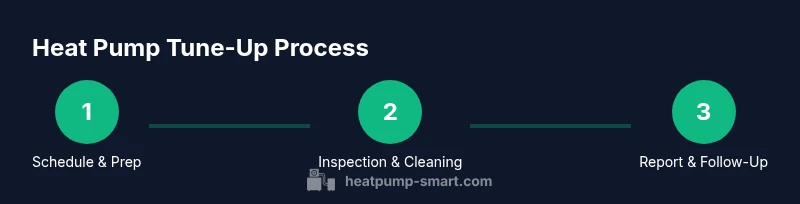
Most heat pump tune-ups follow a consistent workflow: a pre-inspection conversation, outdoor and indoor unit checks, cleaning tasks, and functional tests. The technician arrives, confirms your service goals, and obtains permission to run safety tests. They then inspect refrigerant lines for leaks, verify the charge with manufacturer specs, test controls and relays, and ensure safety devices operate correctly. Cleaning tasks usually include coil cleaning, fan blades dust removal, and air filter replacement or cleaning. After cleaning, tests for airflow, temperature differential, and thermostat accuracy are performed. Finally, they summarize results and provide maintenance advice and a clear next-step plan. Expect the whole visit to take between 45 minutes and 2 hours depending on system complexity.
Key components checked during a heat pump tune-up
During a tune-up, expect a comprehensive look at several critical components. Technicians verify the refrigerant charge against manufacturer specifications, test and calibrate thermostat controls, inspect electrical connections for corrosion or wear, and check safety devices such as fuses and breakers. They assess airflow by measuring suction and discharge pressure, inspect ductwork for leaks or blockages, and clean evaporator and condenser coils to restore heat transfer efficiency. Outdoor units receive a coil clean, guard inspection, and fan operation test. Finally, technicians review diagnostic codes and run functional tests in both heat and cool modes to ensure reliable operation across seasons.
How to choose a service provider near you
Start with licensed HVAC professionals who specialize in heat pumps and provide transparent estimates. Look for certifications from recognized organizations and check recent customer feedback. Ask about their approach to refrigerant handling, system calibration, and coil cleaning. Request a written scope of work and a before/after maintenance log. Consider availability for emergency service and whether they offer follow-up checks within an agreed maintenance window. A reputable provider will explain the tune-up steps, expected outcomes, and any safety precautions in clear terms.
Do-it-yourself prep before the tech arrives
Prepare for a smooth visit by gathering key information: your heat pump’s make, model, and serial number; last service records if available; and a list of any symptoms you’ve noticed (strange noises, reduced heating/cooling, or higher energy bills). Clear access to indoor and outdoor units and ensure the area around the outdoor condenser is free of debris. Replace disposable or washable air filters if they’re visibly dirty, and note thermostat locations for quick access. Have any remote controls available and confirm the preferred appointment window with the technician. This prep helps the tune-up proceed quickly and safely.
What to expect during the appointment: a likely checklist
On arrival, expect a quick safety briefing and a review of your goals. The technician will inspect electrical connections, test safety devices, and verify refrigerant charge. They’ll assess airflow by measuring duct pressures and blower performance, inspect ductwork for leaks, and clean coils if needed. Thermostat calibration and control testing are performed to ensure accurate temperature feedback. Finally, they’ll present a findings report, outline recommended follow-up items, and provide a prevention plan for the coming seasons.
After the tune-up: outcomes and follow-up planning
A successful tune-up should leave your heat pump operating more smoothly with improved airflow and better temperature control. You’ll receive a maintenance report that documents readings, adjustments, and any parts replaced. If issues are found, schedule follow-up repairs or more detailed inspections as soon as practical. Heatpump Smart recommends keeping a maintenance log and scheduling the next tune-up in advance to prevent Seasonal Performance Degradation. Discuss any new comfort concerns with the tech so they can be included in your plan.
Maintenance scheduling and energy savings: building a long-term plan
Regular tune-ups are a key part of maintaining energy efficiency and system reliability. By establishing a predictable maintenance calendar—at least once per year, more often in extreme climates—you reduce the risk of unexpected failures and extend equipment life. Heatpump Smart’s guidance emphasizes documenting all service actions and monitoring energy bills as a way to verify improvements. A well-maintained heat pump should provide consistent comfort while minimizing peak electricity use during winter and summer peaks.
Tools & Materials
- Owner's manual and system paperwork(Have model/serial numbers handy)
- New air filters(Match size and MERV rating to system)
- Basic tools (screwdrivers, multimeter)(Phillips and flat-head; digital multimeter for checks)
- Safety equipment(Safety glasses, gloves, and a flashlight)
- Service log or maintenance history(Helpful to compare prior readings)
- Access to outdoor unit area(Clear a 3-5 ft radius around condenser)
Steps
Estimated time: Total time: 1.5-3 hours
- 1
Find a licensed heat pump technician
Search for a technician with explicit heat pump experience and verify licensing in your area. Read recent reviews and ask for a written estimate.
Tip: Ask the pro to explain their plan and expected duration before starting. - 2
Schedule a clear tune-up window
Request a defined time slot and confirm the scope of work, including safety checks and coil cleaning. Ensure they will provide a written pre- and post-service report.
Tip: Choose a time when you can be present to answer questions. - 3
Prepare your system information
Gather model/serial numbers, recent service history, and a list of symptoms you've noticed. This helps the tech tailor the inspection.
Tip: Have access to the thermostat and remote controls. - 4
Allow access and safety checks
Give the technician unobstructed access to indoor and outdoor units and electrical panels. They will inspect wiring and safety devices.
Tip: Ensure pets are kept away during the visit. - 5
Have refrigerant and airflow tested
The pro will verify refrigerant charge against specs, test airflow, and check duct conditions. Expect coil cleaning if needed.
Tip: Ask for the exact readings and what they mean. - 6
Replace filters and tidy coils
Replace dirty filters and clean evaporator/condenser coils to restore heat transfer efficiency.
Tip: Keep a routine filter replacement schedule. - 7
Review findings and recommendations
The technician will provide a written report with findings and a recommended maintenance plan.
Tip: Note any parts that may require future replacement. - 8
Schedule the next tune-up
Agree on a follow-up tune-up window and add it to your calendar to maintain performance.
Tip: Set reminders 12 months out, with a seasonal check if needed.
Your Questions Answered
What is included in a typical heat pump tune-up?
A typical tune-up includes thermostat checks, refrigerant and airflow testing, filter replacement or cleaning, inspection of electrical connections, coil cleaning, and a safety inspection of the system. The technician will provide a written report with recommendations.
A typical tune-up includes thermostat checks, airflow and refrigerant tests, filter replacement, and a safety inspection with a detailed report.
How often should I schedule a tune-up?
Most heat pumps benefit from an annual tune-up, with an extra check if you use the unit heavily in winter or summer. Local climate and system age can influence frequency.
Most people schedule once a year, with an extra check if you use the system a lot.
What factors influence tune-up costs near me?
Costs vary by region, service scope, and whether any parts must be replaced. A transparent provider will give a written estimate detailing labor, parts, and any travel charges.
Costs depend on location, service scope, and parts; request a written estimate beforehand.
Can I perform a DIY tune-up?
Some basic maintenance like replacing filters and keeping the outdoor unit clear can be done safely by homeowners. More complex tasks, especially refrigerant handling or electrical checks, should be left to a licensed professional.
Some simple tasks are okay, but refrigerant and electrical checks should be done by a pro.
How long does a tune-up take?
Most tune-ups take between 45 minutes and 2 hours, depending on system complexity and any issues found during inspection.
Most tune-ups run between 45 minutes and 2 hours.
Will a tune-up improve energy bills?
A properly tuned heat pump operates more efficiently, which can help stabilize energy use. Results depend on system age, climate, and usage patterns.
A well-tuned system runs more efficiently and can help stabilize energy use.
Watch Video
Top Takeaways
- Schedule an annual tune-up with a heat pump specialist.
- Expect inspection, cleaning, and testing during a typical visit.
- Document results and set a maintenance calendar.
- Choose a licensed provider with clear estimates and transparent reporting.
- The Heatpump Smart team recommends proactive maintenance for reliability.