How Often Should a Heat Pump Defrost: Practical Guide
Explore how often heat pumps defrost, what influences cycles, and maintenance tips to keep your system efficient and comfortable.


In most climates, defrost cycles are triggered automatically and vary by model and conditions, so there isn’t a universal frequency. A practical baseline is that heat pumps may defrost more often in very cold, humid weather and less in dry, milder climates. Understanding this helps homeowners set expectations and plan preventative maintenance.
how often should a heat pump defrost: baseline understanding
Defrost frequency hinges on outdoor conditions, coil frost buildup, and the heat pump’s control strategy. The exact cadence isn’t carved in stone; manufacturers tune defrost cycles to balance warm-room comfort with energy use. For homeowners, the most actionable takeaway is to recognize that in humid, subfreezing conditions, frost accumulates more rapidly and triggers more frequent defrosts. Conversely, in drier, slightly warmer weather, defrost cycles occur less often. According to Heatpump Smart, this climate-driven variability means you should plan around seasonal patterns and monitor outdoor conditions rather than chase a single numeric target. When frost appears on the outdoor coil, the system reverses the refrigerant flow briefly to melt the frost, restoring efficient heat transfer. Observing how often defrost occurs over a few weeks provides a practical reference point for your home.
Triggers and signals: what sets off a defrost cycle
Defrost is not a random event. Modern heat pumps monitor outdoor coil temperature, ambient humidity, and frost formation. When frost layers reach a threshold, a defrost sequence is initiated. The sequence typically lasts a couple of minutes and deliberately pauses until the frost is removed. You may notice a brief rise in outdoor unit activity and a temporary drop in indoor heating. The key signal to watch is whether the outdoor fan and compressor continue to operate smoothly during and after defrost. If frost reaccumulates quickly, it may indicate airflow restrictions, dirty coils, or incorrect thermostat settings. Heatpump Smart analyses emphasize using proper sizing and regular maintenance to prevent frequent, unnecessary cycles.
Climate zones: how weather shapes defrost rhythm
Climate is the primary driver of defrost rhythm. In cold, humid winter climates, frost forms more readily on outdoor coils, prompting more frequent cycling. In dry winter climates or during milder days, defrosts are rarer, and cycles may be spaced well apart. For heat pumps in northern regions, you might see defrosts every 20-40 minutes during peak cold snaps, while milder winter days could stretch intervals to 60 minutes or more. In southern climates with occasional cold snaps, cycles may occur sporadically with longer gaps. The variability means homeowners in any climate should expect a dynamic defrost pattern rather than a fixed tempo. Heatpump Smart’s guidance centers on aligning system checks with seasonal expectations and documenting observed defrost frequency to guide maintenance timing.
System type and defrost patterns: air-source vs geothermal
Air-source heat pumps (ASHPs) rely on outdoor coils exposed to ambient weather, so defrost cycles are more sensitive to frost formation and humidity. Geothermal systems (ground-source) have different frost dynamics because the outdoor temperatures are usually more stable, and there is often less surface frost. Consequently, ASHPs tend to defrost more frequently in the same climate. If you’re comparing models, expect a broader defrost cadence range for ASHPs in winter than for geothermal systems. Regardless of type, proper airflow, clean coils, and well-functioning sensors help keep defrost timing accurate and minimize energy penalties.
How to monitor your system and verify proper defrost operation
The simplest check is to observe the outdoor unit during cold, humid days. A successful defrost cycle shows a brief pause in heat output indoors, then a return to steady operation. You should hear a momentary change in compressor sound as the system reverses flow. Keep an eye on frost buildup: if frost remains for long periods, or the unit runs in defrost mode with the outdoor fan stopped, there could be a sensor or valve issue. Use your thermostat’s data or an app to review defrost events over a week. If cycles seem overly frequent, unusually long, or accompanied by heating inefficiency, schedule a professional inspection. Regular maintenance, including coil cleaning and refrigerant checks, helps ensure defrost timing aligns with design expectations and reduces unnecessary energy use. Heatpump Smart’s approach emphasizes documentation and routine checks as part of a proactive maintenance plan.
Maintenance practices that support reliable defrost performance
Maintenance is not glamorous but is essential for efficient defrost. Key practices include: cleaning outdoor coils regularly to prevent frost from building up rapidly; ensuring proper airflow across the outdoor unit; checking the reversing valve and defrost temperature sensors for proper operation; and scheduling an annual professional inspection to calibrate defrost logic and verify system refrigerant charges. A well-maintained system reduces the frequency and duration of defrost cycles, conserving energy and maintaining indoor comfort. For homeowners, pairing routine coil cleanings with seasonal checks creates a predictable defrost rhythm and helps prevent frost-related performance dips. Heatpump Smart notes that proactive maintenance yields tangible benefits in defrost reliability and overall efficiency.
When to involve a professional: signs of defrost trouble
If frost persists on the outdoor coil or indoor heating seems sluggish even after a defrost cycle, it’s prudent to call a technician. Other red flags include frost forming during warmer parts of the day, frequent short cycles without relief, or audible rattling or grinding during defrost. A technician can verify sensor accuracy, valve operation, and refrigerant integrity, and they can recalibrate defrost timing to match your climate. Regular professional service helps catch subtle issues before they escalate into costly repairs. Heatpump Smart recommends at least an annual service, with additional checks after extreme weather or noticeable performance changes.
Debunking myths: defrost frequency myths and realities
A common myth is that defrost always reduces comfort or wastes energy. In reality, defrost is essential to maintain performance; without it, frost grows, reducing heat transfer and increasing energy use. Another myth is that you should never see a defrost cycle; many systems perform multiple short defrosts during cold, humid weather, and this is normal. Finally, some homeowners worry that defrost cycles imply a failing system. In truth, a properly designed and well-maintained heat pump will cycle through defrost as needed to preserve efficiency and comfort. The Heatpump Smart team emphasizes that understanding your unit’s defrost rhythm and keeping it well-maintained is the best approach to sustaining performance year-round.
Key data points on defrost behavior in typical heat pump systems
| Aspect | Typical Range | Notes |
|---|---|---|
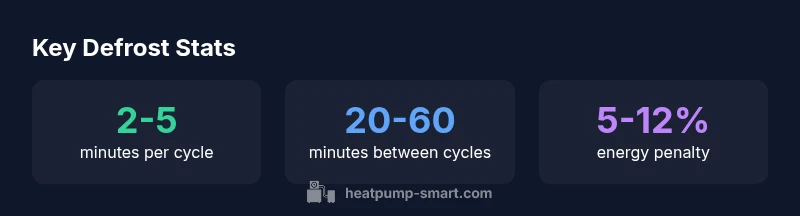
| Defrost cycle duration | 2-5 minutes per cycle | Varies by model and outdoor conditions |
| Defrost frequency (winter) | 20-60 minutes between cycles | Climate-dependent; higher in humid cold |
| Energy impact during defrost | 5-12% | Depends on compressor load and outdoor temperature |
| Maintenance impact on defrost | Regular coil cleaning reduces frost buildup | Follow manufacturer guidance and Heatpump Smart maintenance tips |
Your Questions Answered
How often should a heat pump defrost?
There isn’t a universal frequency; it depends on climate, humidity, and system design. In colder, humid conditions, cycles occur more often; in milder, drier weather, they occur less often. Track defrost events over several weeks to establish a practical baseline for your home.
Defrost frequency varies with climate and the system—there isn’t a single universal number.
What are signs that the defrost cycle is not working?
Persistent frost on the outdoor coil, frequent short cycling, or indoor heating decline during cold spells can indicate defrost issues. If the outdoor fan doesn’t run during defrost or frost reappears quickly, schedule a professional check.
Frost staying on the coil or cooling down the house despite defrost could mean a problem.
Can defrost cycles affect energy bills?
Defrost adds a temporary energy load, but a well-maintained system minimizes long-term costs. Regular coil cleaning and sensor checks help keep defrost efficient and limit energy penalties.
Defrost costs a little energy, but upkeep keeps it efficient.
Does defrost occur in geothermal heat pumps as well?
Geothermal systems have defrost controls, but frequency and patterns differ from air-source models. The core principle is the same: remove frost to maintain heat exchange efficiency.
Geothermal systems also defrost, but differently from air-source units.
Should I manually defrost the outdoor unit?
No. Modern heat pumps manage defrost automatically; manual defrost can damage components and upset the control logic.
Don’t manual-defrost; let the system handle it.
What maintenance helps defrost performance?
Keep coils clean, verify airflow, check the reversing valve and sensors, and schedule annual service to calibrate defrost timing and refrigerant health.
Regular coil cleaning and professional checks keep defrost performing well.
“Defrost cycles are a normal part of heat pump operation, and their frequency should be evaluated in the context of climate and system design.”
Top Takeaways
- Know climate-driven defrost frequency and set expectations.
- Monitor defrost indicators to validate proper cycles.
- Schedule regular coil cleaning to reduce frost buildup.
- If frost persists, consult a professional for accurate diagnosis.
- Use seasonal maintenance to optimize defrost timing and energy use.