Geothermal Heat Pump Installation Near Me: A Practical Guide
Find reliable geothermal heat pump installation near me with expert guidance on sizing, costs, rebates, and tips for long-term home comfort and energy savings.


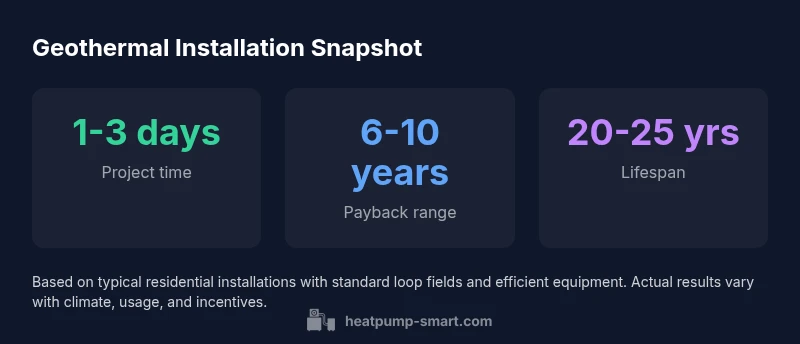
Finding geothermal heat pump installation near me usually starts with a local contractor performing a site assessment to determine system size and borehole or trench requirements. Expect 1–3 days of install work, a visible energy savings projection, and a quote from multiple installers. Local incentives can shorten payback, typically six to ten years, depending on usage and climate.
Understanding geothermal heat pump installation near me and why location matters
Geothermal heat pump installation near me puts you in the driver’s seat for comfort and efficiency. Local conditions—soil composition, groundwater, insulation levels, and winter temperatures—drive system sizing, loop design (horizontal vs vertical), and drilling or trenching requirements. A qualified installer conducts a site assessment to determine borehole depth, loop length, and overall feasibility. Proximity to skilled drillers and access to rebates can also influence scheduling, permitting, and total project cost. In practice, homeowners who start with a clear plan save time and avoid surprises during the installation.
During the consult, expect the contractor to explain how groundwater temperature stabilizes the loop field, how seasonal performance changes COP (coefficient of performance), and how your existing heat pump or furnace interacts with the geothermal system. They will verify property boundaries, electrical service capacity, and access to outdoor space for the equipment pad. For reliable results, insist on a written design and a detailed equipment spec, including loop type, bore depth, condenser placement, and control wiring. By starting with a measured assessment, you’ll understand whether a closed-loop horizontal, vertical bore, or open-loop approach best fits your site and budget.
Factors that influence cost and installation time
Costs can vary dramatically based on site characteristics and loop design. Borehole depth, land area for the loop field, existing utilities, and the complexity of trenching or drilling all shape the price and timeline. A vertical bore system in a dense urban lot typically requires more specialized drilling and permits, raising both cost and duration. Conversely, a horizontal closed-loop field on larger properties can be more economical but demands more outdoor space. Permitting requirements, electrical upgrades, and equipment selection (pump, refrigerant lines, and heat exchanger) also affect both upfront cost and time to commission. Rebates or utility incentives available in your region can dramatically shorten the payback period, making the project financially attractive. When you compare bids, ask for a site-specific design that explains loop type, bore depth, and equipment lists so you’re comparing apples to apples.
Sizing, design options, and site requirements
Geothermal systems are sized to meet your heating and cooling load, not just house size. A properly sized system uses the correct COP and EER ratings to maintain comfort efficiently. Design choices include closed-loop vertical bore fields, horizontal trench fields, or sometimes open-loop configurations in appropriate groundwater conditions. Site requirements cover electrical capacity, space for the outdoor unit and manifold, access for equipment transport, and minimal disturbance to landscaping. Subsurface conditions, such as rock hardness or groundwater flow, influence the preferred loop material and backfill. It’s essential to have a professional perform a thermal load calculation and ground survey before signing a contract. A well-designed loop will deliver steady temperatures and consistent performance across seasons.
Permitting, incentives, and choosing a contractor
Local permitting is common for geothermal installations, and inspections ensure safety and code compliance. A contractor should help you navigate required permits, electrical service upgrades, and drilling or trenching regulations. Incentives vary by region and utility; look for federal tax credits, state rebates, and local programs. When selecting a contractor, prioritize licensed installers with experience in geothermal projects, a clear written contract, and warranties on both equipment and installation workmanship. Request references and a detailed bid that includes site work, loop design, equipment, installation timeline, and a marketing-approved energy savings projection. Heatpump Smart recommends verifying contractor credentials and checking current incentives to maximize your return.
Maintenance, efficiency, and long-term savings
Geothermal systems benefit from regular maintenance, including filter changes, annual inspections, and periodic checks of loop field integrity and refrigerant pressures. Efficiency remains high due to the stable ground temperature, but performance can dip if insulation or ductwork is leaky. Upgrades to smart thermostats and zoned controls can further reduce energy use and increase comfort. Property managers and homeowners should plan for routine maintenance windows and ensure access for service technicians. With proactive care and clean air paths, geothermal systems often outperform traditional HVAC options in both comfort and operating cost over the life of the system.
What to ask and how to compare bids
When you invite bids for geothermal installation near me, ask for a site-specific design, including bore depth, loop type, refrigerant charge, and warranty terms. Compare equipment efficiency ratings (COP, EER), the quality of loop field materials, anticipated maintenance costs, and the installer’s schedule. A strong bid should include a commissioning checklist, a clear payment schedule tied to milestones, and a statement about permitting obligations. Request a written performance projection that links up-front costs to expected energy savings over time. Don’t hesitate to push for a no-surprises change order policy and ongoing support after installation. The lowest price isn’t always the best value if it compromises system performance or warranty coverage.
Case study: A typical installation scenario
Consider a mid-sized 2,000 square foot home in a mixed climate. After a professional load calculation, a licensed installer recommends a vertical bore field and a high-efficiency closed-loop heat pump. The project includes trenching a 300-foot loop, a small equipment pad, and electrical upgrades. The homeowner receives a detailed bid with a 60-day timeline from contract signing, with permits completed by the installer’s team. Post-install, the system is commissioned, tested for COP and airflow, and integrated with a smart thermostat. In the first winter, the home remains comfortable with reduced energy consumption, and the owner begins to see the projected payback as incentives are applied.
Geothermal installation cost and performance ranges for typical residential systems
| Category | Low-end | High-end | Notes |
|---|---|---|---|
| Total installed cost (pre-incentives) | 8000-20000 | 25000-42000 | Cost varies with bore depth, loop field size, equipment quality |
| Payback period | 6-8 years | 10-15 years | Impacted by energy prices and rebates |
| System lifespan | 20-25 years | 25-30 years | Depends on maintenance and component quality |
| Annual energy savings | 10-25% | 40-60% | Climate and usage drive results |
| Project duration (timelines) | 1-2 days | 3-5 days | Site work and testing included |
Your Questions Answered
What is geothermal heat pump installation near me?
Geothermal installation near me refers to finding local licensed installers who design and install a closed-loop or open-loop geothermal system, including the loop field, heat pump, and controls. The process emphasizes site-specific design, permit readiness, and professional commissioning.
Geothermal installation near me means finding local pros who design and install the system, including the loop field and heat pump.
How long does installation typically take?
Most installations take 1–3 days for site assessments, loop installation, equipment mounting, and commissioning, depending on loop type and site conditions. Additional time may be required for permits and electrical upgrades.
Most installs take a few days, with permitting adding some time.
Are permits and inspections required?
Yes, local permits and inspections are common for geothermal projects. Your contractor should manage filings and coordinate with inspectors to ensure code compliance.
Yes—permits and inspections are typically required.
What rebates or incentives are available?
Rebates and tax credits vary by region and utility. Check federal, state, and local programs, and consult your installer for current options and how to apply.
Incentives vary; check local and federal programs.
What maintenance does it require?
Annual inspections, filter changes, and periodic checks of refrigerant and loop integrity help sustain efficiency. Keep an eye on ductwork and insulation to maximize savings.
Yearly inspections and regular filter changes keep it running well.
How should I compare bids?
Look at total installed cost, equipment efficiency ratings, warranty terms, loop design, and the scope of post-install support. Ensure bids are site-specific and include a commissioning plan.
Compare cost, efficiency, warranties, and what’s included.
“Geothermal systems deliver consistent comfort with low operating costs, but success hinges on proper site assessment and professional installation.”
Top Takeaways
- Start with a local site assessment to define scope
- Obtain multiple bids with a written design
- Leverage rebates to shorten payback
- Choose loop design that fits your site and future needs
- Maintain the system with regular inspections for long-term savings