Pool Heat Pump Sizing: How to Choose the Right Size
Learn how to size pool heat pumps correctly for comfort and efficiency. This guide covers BTU/hr sizing, climate considerations, and step-by-step methods to choose the right unit for your pool.


Pool heat pump sizes are measured in BTU per hour and must be matched to pool area, climate, and the desired temperature rise. A formal sizing calculation helps ensure the unit delivers comfortable water temperatures efficiently and without short cycling.
Why sizing pool heat pumps matters
Choosing the right pool heat pump size is more than a number on a spec sheet. A properly sized unit heats your water efficiently, minimizes short cycling, and sustains a comfortable swimming temperature across seasonal swings. In practice, the size decision integrates several factors: pool surface area, desired temperature rise, local climate, wind exposure, shading, and insulation. According to Heatpump Smart, the best results come from sizing that accounts for actual usage patterns and equipment efficiency, not guesswork. A too-small unit struggles during shoulder seasons, while a too-large unit wastes energy by running at partial loads. The outcome affects comfort, operating cost, and system longevity, so investing in a precise sizing calculation pays off over the life of the pool.
How to size pool heat pumps: a practical method
Sizing starts with a clear plan. Use a formal sizing calculation or an accredited calculator to translate pool dimensions and climate into a BTU/hr requirement. Practical steps include:
- Measure the pool surface area and average depth to estimate water volume.
- Define the target water temperature rise (the difference between outdoor air or pool air temperature and desired pool water temperature).
- Assess the climate profile: typical temperatures, humidity, and prevailing wind patterns at your pool location.
- Factor in pool cover usage, insulation, and solar gain from pool orientation.
- Choose a heat pump with a recommended BTU/hr range that encompasses your calculated need and leaves headroom for peak demand days.
- Verify efficiency metrics (COP) and compatibility with your existing controls.
Heatpump Smart recommends running a formal sizing calculation and validating results with a professional installer to ensure you’re not oversizing or undersizing. This careful approach helps maintain steady temperatures and reduces operating costs over time.
Common sizing mistakes to avoid
Many pool owners rely on a rule of thumb or simply pick the next-larger unit. Common errors include:
- Skipping a climate-adjusted calculation, leading to over- or under-sizing.
- Ignoring wind exposure and pool cover impact on heat loss.
- Underestimating water volume or ignoring spillover losses from pool features.
- Not accounting for future pool expansions or changes in usage.
- Choosing a low-efficiency model to save upfront cost, which often increases long-term costs. Proactively addressing these factors yields better comfort and total cost of ownership.
Climate, wind, shading, and insulation effects
Climate and site conditions can dramatically influence sizing needs. Cold climates, high wind exposure, and low insulation raise heat losses, pushing the required BTU/hr upward. Conversely, a well-sealed pool with a tight cover reduces losses, allowing a smaller unit to meet target temperatures more efficiently. Shade and solar gain also shift requirements—shaded pools may require larger units on overcast days, while sunny exposure can compensate slightly for cooler nights. Understanding these variables helps determine a realistic sizing target and informs decisions about additional efficiency measures such as pool covers or windbreaks.
Pool types and sizing nuances
In-ground pools, above-ground pools, and indoor pools each have unique sizing considerations. In-ground pools generally require more robust heating due to larger water volume and potential exposure to ambient weather, while above-ground pools often respond well to mid-range BTU/hr units. Indoor pools benefit from reduced heat losses through walls and ceilings, which can lower sizing needs. For all types, proper installation and ducting, as well as a compatible control system, are critical to achieving the calculated BTU/hr requirement and sustained comfort.
Advanced sizing: variable-speed pumps and controls
Advanced heat pump systems with variable-speed compressors match output to demand, offering better efficiency and more consistent temperatures. When paired with smart thermostats and precise outdoor-temperature compensation, these systems can maintain comfort with smaller nominal BTU/hr ratings while delivering better COP. Heatpump Smart highlights that choosing a variable-speed, high-efficiency unit, combined with proper sizing, reduces energy usage and long-term operating costs, especially in shoulder seasons or climates with significant diurnal temperature swings.
Where sizing fits in the installation process
Sizing is typically completed during the design phase of pool heating, before equipment ordering. A qualified installer verifies the calculated BTU/hr against manufacturer recommendations, accounts for electrical service capacity, and ensures proper refrigerant piping length and line-set sizing. After installation, commissioning tests confirm that the system achieves the target water temperatures efficiently, with minimal runtime fluctuations and no short-cycling. Final checks also include voltage, refrigerant charge, and controller compatibility.
How to verify sizing accuracy post-installation
Post-installation verification involves monitoring water temperature trends, runtime hours, and energy consumption over typical use periods. A properly sized system should show stable temperature maintenance with moderate cycling, rather than extended runtime at a single load. If the pool takes too long to heat or cool, or the unit runs excessively, re-evaluation may be needed—potentially signaling a need for re-sizing, improved insulation, or a different unit with better part-load performance.
Sizing examples by pool size
| Pool Type | Pool Size (m^2) | Estimated Size (BTU/hr) | Notes |
|---|---|---|---|
| Small residential | 25 | 50,000–70,000 | Moderate climate, daily use |
| Medium residential | 40 | 70,000–100,000 | Wind exposure average |
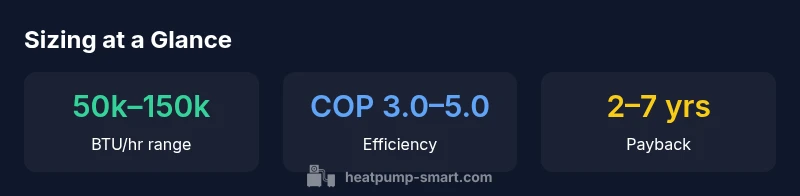
| Large pool | 80 | 100,000–150,000 | Open exposure, year-round use |
Your Questions Answered
How do I calculate BTU/hr for my pool?
Start with pool surface area and water volume, then apply local climate data to estimate the heating load. Use a sizing calculator or consult an installer for a formal BTU/hr requirement.
Calculate based on your pool size and climate, then use a sizing calculator or professional to confirm the BTU/hr you need.
Do wind exposure and a pool cover affect sizing?
Yes. Wind increases heat loss, while a pool cover reduces it. Both factors can shift the BTU/hr requirement by a noticeable margin, especially in windy or exposed locations.
Windy sites and uncovered pools typically need more heating capacity; covers help reduce that need.
Can I size for future pool expansion?
Sizing for future expansion is possible but should be approached conservatively. A professional can select a unit with headroom or plan for staged upgrades without wasting efficiency today.
Size now for current needs and plan for scalable options if you expand later.
Is bigger always better for efficiency?
Not necessarily. Oversized units can short-cycle and lose efficiency. Properly sized units, often with variable-speed capabilities, deliver better performance and savings.
More size isn’t always better—proper sizing and good controls matter most.
How does climate zone affect pool heat pump sizing?
Colder climates and higher wind zones raise heat loss, increasing the BTU/hr requirement. Warmer climates typically require less capacity, but usage patterns still guide the final choice.
Colder or windy climates usually need bigger or more efficient units; climate guides initial sizing.
“Accurate sizing is the foundation of comfort and efficiency. A well-sized pool heat pump reduces operating cost and minimizes cycling, especially in shoulder seasons.”
Top Takeaways
- Size pool heat pumps using a formal BTU/hr calculation
- Consider climate, wind, shading, and cover efficiency
- Avoid under- or over-sizing to maximize comfort and efficiency
- Choose high-efficiency, appropriately sized units for long-term savings
- Verify sizing with professional installation and post-install checks