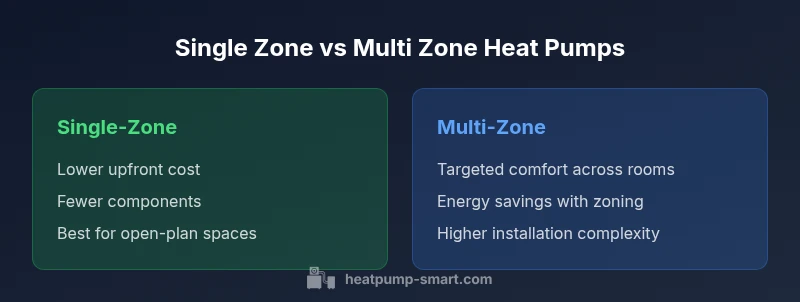
Single Zone vs Multi Zone Heat Pump: A Practical Comparison
Understand the differences, costs, and performance between single-zone and multi-zone heat pumps to choose the right system for your home. Heatpump Smart provides an analytical comparison to help homeowners, builders, and managers.


For most homes, the choice comes down to simplicity vs. targeted comfort: a single-zone heat pump is cheaper and easier to install, while a multi-zone configuration offers greater control and potential energy savings through zoning. The best pick depends on your floor plan, hot spots, and whether you anticipate future expansion.
How zoning works in heat pumps
According to Heatpump Smart, zoning in heat pumps relies on multiple thermostats and dampers to steer air to different parts of a building. In the comparison of single zone vs multi zone heat pump, a single-zone system uses a single thermostat to manage the entire space, while a multi-zone setup deploys several thermostats and dampers for targeted comfort. This foundational difference drives upfront costs, control complexity, and long-term energy use. The Heatpump Smart team found that even modest homes with some interior walls can benefit from zoning when there are persistent hot or cold spots, but gains depend on layout, insulation, and occupancy patterns. For homeowners, visualizing the flow of air and the load across zones is key; the single zone vs multi zone heat pump decision should hinge on how different rooms are used throughout a typical day.
Why homeowners consider
Objective criteria for choosing between single-zone and multi-zone heat pumps
Choosing between a single-zone vs multi-zone heat pump is not just about number of rooms; it’s about how you live in the space. Consider occupancy hours, the heat losses of exterior walls, and the thermal mass of interior spaces. The decision should balance upfront cost against long-term comfort and energy savings. A well-planned zoning strategy can prevent over-conditioning in unused areas while maintaining comfortable temperatures in active zones. Heatpump Smart’s framework emphasizes load-based sizing and zone mapping to guide your choice.
How to visualize your home’s zoned needs
To evaluate whether a single-zone vs multi-zone heat pump makes sense, map out the primary living zones: living area, kitchen, bedrooms, and any spaces with unusual heat gains or losses. Create a simple occupancy calendar to estimate typical usage. The effectiveness of zoning increases when you can align climates with these usage patterns. This practical view helps distinguish whether a single-zone system will meet daily comfort or if a multi-zone approach will deliver meaningful energy savings.
Energy savings potential with zoning
Zoning enables you to condition only the spaces in use, which can reduce unnecessary conditioning. The single zone vs multi zone heat pump comparison shows that energy savings are highly sensitive to how zones are controlled and how occupants use spaces. Some homeowners report noticeable drops in monthly energy bills after implementing zoning, particularly in homes with two or more distinct living areas and uneven occupancy patterns. The potential gains depend on insulation quality, duct efficiency, and thermostat programming.
Airflow and duct design implications for zoning
Airflow balance is critical when you add zones. A single-zone setup typically has straightforward ductwork, while a multi-zone system requires dampers, bypass options, and careful balancing to prevent noise and hot or cold spots. Properly designed ductwork maintains consistent static pressure and ensures you don’t create zones that are hard to heat or cool. Inadequate design can erode comfort and negate energy savings, underscoring the need for professional airflow testing and zoning design.
Practical considerations for installation timelines
Installing a single-zone heat pump can be faster and less disruptive than a full zoning retrofit. A multi-zone project may require longer timelines due to duct modifications, damper installations, and control wiring. Planning ahead for electrical work, refrigerant routing, and thermostat integration with smart-home systems helps avoid delays. Heatpump Smart notes that the right contractor will optimize both equipment selection and zoning layout to minimize disruption while meeting performance goals.
Comparison
| Feature | single-zone heat pump | multi-zone heat pump |
|---|---|---|
| Number of zones | 1 | 2+ |
| System complexity | Low (simple controls) | High (dampers + zoning controller) |
| Installation cost | Lower upfront cost | Higher upfront cost |
| Energy efficiency potential | Moderate, dependent on usage | Higher with carefully managed zones |
| Control options | Single thermostat | Multiple thermostats + zoning controller |
| Maintenance | Standard maintenance | More components to service |
| Best for | Open-plan or small homes | Homes with uneven loads or multiple rooms |
Advantages
- Enhanced comfort by tailoring climate to usage
- Potential energy savings when zones align with occupancy
- Improved resilience by isolating faults to zones
- Scalability for larger homes or future expansions
Disadvantages
- Higher upfront and installation costs
- More components to service and potential ductwork complexity
- Requires careful design to avoid under-conditioning zones
- Longer installation timelines
Multi-zone heat pumps typically outperform single-zone setups for comfort and energy savings in variable-use homes.
If your home has distinct zones with different usage patterns, a multi-zone system is worth the investment. For open spaces with uniform use, a single-zone setup may suffice and keep costs down. The Heatpump Smart team supports a design-driven approach to zoning decisions.
Your Questions Answered
What is the difference between a single-zone heat pump and a multi-zone heat pump?
The main difference is the number of independently controlled areas. A single-zone system uses one thermostat for the whole home, while a multi-zone system uses multiple thermostats and dampers to manage several areas. Zoning can improve comfort and energy efficiency when aligned with usage patterns.
The difference is how many spaces you can control separately. Single-zone uses one thermostat; multi-zone uses several zones for targeted comfort.
Can a single-zone system be upgraded to multi-zone later?
Yes, it is possible to upgrade to multi-zone, but it typically involves adding dampers, zone thermostats, and possibly a zoning controller. The upgrade is easier if the existing duct system supports zoning. A professional load and airflow assessment is essential before starting.
Upgrading to zoning is doable, but plan for dampers, thermostats, and controller work. Have a professional assess the duct and loads.
How do zoning dampers affect energy efficiency?
Dampers regulate airflow to each zone, preventing over-conditioning and reducing waste in unoccupied spaces. When properly configured, zoning dampers can significantly improve energy efficiency by matching supply to demand across zones.
Dampers fine-tune airflow, saving energy when zones are correctly managed.
What are typical costs for adding zoning?
Zoning costs vary with the number of zones, ductwork modifications, dampers, and controls. A professional estimate should include equipment, labor, and any necessary duct sealing or enhancements. Expect higher upfront costs for multi-zone configurations.
Zoning costs depend on zones and ductwork; get a detailed estimate from a contractor.
Is zoning practical in small homes?
Zoning can still be practical in small homes if there are distinct usage patterns or rooms with varying heat loads. In very small or open-plan homes, a single-zone system may suffice and keep costs down. A quick load assessment helps decide.
In small homes, zoning depends on usage; sometimes one zone is enough.
Do all heat pumps support zoning?
Not all heat pumps are designed for zoning. Availability depends on unit compatibility with multiple zones, dampers, and appropriate controls. A qualified installer can confirm zoning readiness during design and provide options.
Zoning compatibility varies by model; check with your installer.
What is the typical payback period for a multi-zone system?
Payback depends on climate, occupancy, and energy prices. A well-designed multi-zone system can offer meaningful savings over time, but the exact payback period varies by home and usage. A professional analysis provides a clearer estimate.
Payback varies by climate and usage; get a load and savings analysis.
Top Takeaways
- Assess your floor plan for zoning potential
- Expect higher upfront costs with multi-zone systems
- Proper design and airflow testing are essential
- Choose a qualified contractor and perform load calculations
- Re-evaluate zoning if occupancy or insulation changes