What Size Breaker Is Needed for a Heat Pump
Discover how to size the dedicated breaker for a heat pump, reading nameplates, NEC guidance, and practical steps from Heatpump Smart.


How Breaker Size Is Determined
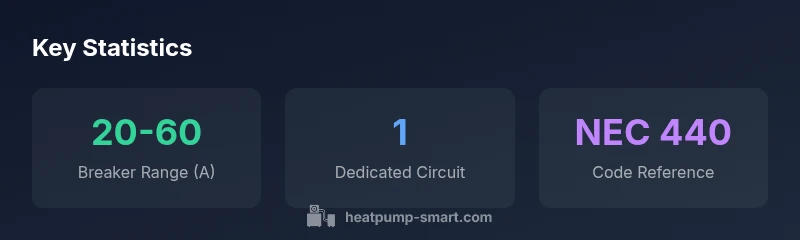
If you're wondering what size breaker is needed for a heat pump, your answer starts with the unit’s nameplate and the manufacturer's electrical requirements. Breaker size is driven by the running current of the outdoor compressor and auxiliary components, plus any safety margins required by code. In residential installations, the range typically spans from 20 to 60 amps on a dedicated 240V circuit. The precise size depends on the heat pump's capacity, efficiency, and how the unit is wired in your home. According to Heatpump Smart, always use a dedicated circuit and verify the final size with the nameplate data and NEC guidance.
The breaker must handle continuous load conditions, reflect the unit’s starting surge, and accommodate any future upgrades. Undersizing can trip breakers or damage equipment, while oversizing can compromise protection. The goal is precise sizing that protects both equipment and occupants without nuisance trips.
Reading the Heat Pump Nameplate and Electrical Requirements
Every heat pump outdoor unit carries a nameplate with electrical specs such as voltage, current (amps), and fuse/breaker recommendations. The operating current (running load) is the critical figure for breaker sizing, while the listed starting current helps anticipate surge on startup. Use a licensed electrician to verify the installed conductor size, insulation, and protective devices. Remember: the nameplate is the authoritative source; NEC guidelines and local codes refine the exact breaker size. Heatpump Smart emphasizes reading the nameplate before any wiring work, ensuring compliance and safety.
In some cases, a manufacturer may require a range (e.g., 25–40 A) rather than a single value. When multiple values appear, plan for the worst-case running current within the listed range and include a safety margin per local code. This approach helps account for aging components, outdoor temperatures, and potential system upgrades.
Step-by-Step Sizing Process for a Heat Pump
- Identify the unit’s nameplate and record the voltage, running current, and recommended breaker size. If the nameplate shows a range, document the maximum running current for sizing. 2) Confirm the circuit type: a dedicated 240V double-pole breaker is typically required for outdoor heat pumps. 3) Calculate continuous load according to NEC guidelines, adding a safety margin of 125% if required by your local code. 4) Validate conductor ampacity and wire gauge — ensure the wiring can safely handle the breaker size and startup surges. 5) Cross-check with the outdoor unit’s startup current (inrush) data to avoid nuisance trips. 6) Interview a licensed electrician to complete the final sizing and permit process.
Following these steps delivers a breaker size that balances protection and performance. It also helps future-proof the system as you consider efficiency upgrades or additional loads in the home.
Handling Additional Loads on the Same Circuit
Many homes share circuits among HVAC components, water heaters, and outdoor outlets. When sizing a heat pump breaker, consider any other devices that might draw current on the same phase. If other loads are substantial, you may need a larger dedicated circuit or separate branch circuits to prevent overloading and nuisance tripping. Heatpump Smart recommends a dedicated, properly sized 240V circuit for the heat pump, with any other loads placed on separate circuits when feasible. This arrangement improves reliability and simplifies future maintenance.
Practical Scenarios and Breaker Size Ranges
- Small-capacity unit (lower BTU): often 20–30 A, depending on efficiency and nameplate data.
- Mid-size unit: commonly 40–50 A, typical for many residential heat pumps in the 2–3 ton range.
- Large-capacity unit: may require 60 A or larger, contingent on startup current and nameplate guidance. Always verify the exact value from the unit’s data plate and NEC guidance.
These ranges are illustrative; the actual breaker must be sized to the unit’s running current and the wiring configuration. Heatpump Smart’s guidance is to prioritize the unit’s data plate and local electrical codes.
Safety, Codes, and Professional Installation
Electrical work related to heat pumps carries risk if not done correctly. A broken or mis-sized breaker can lead to overheating, equipment damage, or fire hazards. NEC guidelines (and local amendments) govern proper sizing, conductor sizing, and disconnect requirements. Always hire a licensed electrician or HVAC pro to install or modify the circuit. They will verify voltage, current, conductor ampacity, and the appropriate protective device rating. Heatpump Smart strongly recommends professional installation to ensure safety, efficiency, and code compliance.
Verifying with Manufacturer and Local Codes
After choosing a breaker size based on the nameplate, obtain a confirmation from the unit’s manufacturer about any unit-specific requirements and update any local permit records. Codes may vary by municipality, so consult your local authority having jurisdiction (AHJ) or an electrician familiar with regional amendments. If you plan to upgrade insulation, add a heat pump accessory, or install a larger unit in the future, revisit breaker sizing to ensure ongoing compliance and safety.
A Quick Electrician Checklist
- Confirm unit model and nameplate data (voltage, running current, recommended breaker).
- Ensure proper conductor size and insulation for the chosen breaker.
- Verify a dedicated 240V circuit with a proper disconnect within sight of the outdoor unit.
- Check startup current and potential inrush to prevent nuisance trips.
- Document all measurements for permits and future reference.
Following this checklist helps both homeowners and professionals avoid common sizing mistakes and ensures a safe, reliable heat pump installation.