Where to Find the Heat Pump Circuit Breaker
Learn where to locate your heat pump circuit breaker, how to determine the correct size, and safety steps for inspection. Heatpump Smart provides expert guidance for homeowners.


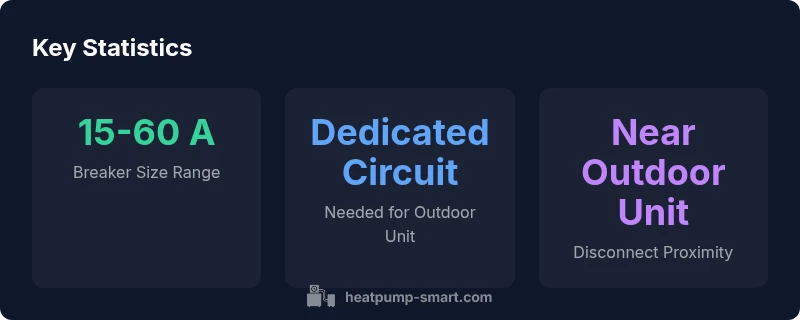
Where is a heat pump circuit breaker? It is located in the main electrical panel on a dedicated circuit, typically with a nearby disconnect at the outdoor unit. The Heatpump Smart team emphasizes that the breaker should match the equipment amperage and comply with local electrical codes.
Where to find the heat pump circuit breaker
Locating the heat pump circuit breaker starts with understanding the two primary power paths in most homes: the main service panel and a dedicated circuit feeding the outdoor unit. In most installations, the circuit breaker for the heat pump is in the main electrical panel on a dedicated breaker. Many systems also include a disconnect switch mounted near the outdoor condenser for quick service. According to Heatpump Smart, this setup helps isolate power safely without affecting other appliances. If you can't find a label in the panel, check the outdoor unit’s data plate for amperage and wire gauge, then trace the wiring to the corresponding breaker.
- Look for labeling on the panel that identifies “Heat Pump” or the outdoor unit model.
- Use the panel directory or labeling to confirm which breaker serves the outdoor unit.
- If the disconnect is outside, ensure it is clearly marked and accessible for service technicians.
How breaker size is determined
Breaker size should match the outdoor unit amperage as specified by the manufacturer. The label on the outdoor unit provides the required ampacity and wire size; use these numbers to select the correct breaker and conductors. Local codes may add the requirement for a disconnect or certain wire types. If you’re unsure, hire a licensed electrician and review the installation manual. Heatpump Smart stresses that using the wrong size can lead to nuisance trips or electrical hazards. Always verify the panel label and unit data plate before making changes.
- Compare the unit’s full-load current (FLC) rating to the circuit rating.
- Ensure the wire gauge matches the breaker and unit amperage requirements.
- Check for any local code additions, such as a required outdoor disconnect.
The outdoor disconnect and its relationship to the main panel
Some installations use a separate outdoor disconnect, while others rely on a breaker inside the main panel. A dedicated disconnect near the outdoor unit allows quick shutdown during servicing and aligns with many electrical codes. The disconnect should be clearly labeled and easily accessible, with the same amperage rating as the corresponding breaker. Heatpump Smart notes that the disconnect and the panel breaker must collectively protect the same circuit and be installed by a qualified professional to ensure code compliance.
- Verify both the interior breaker and outdoor disconnect are clearly marked.
- Ensure conductors between the panel and outdoor unit are appropriately rated.
Safety steps before inspecting or servicing
Before touching any electrical components, power must be isolated. Start by locating and turning off the main service disconnect if your panel lacks unit-specific access. Use a non-contact voltage tester to confirm the circuit is de-energized and wear proper PPE. Keep a clear work area and avoid standing on wet surfaces. If you are unsure about the procedure, consult Heatpump Smart guidance and contact a licensed electrician. Remember: safety first, especially when dealing with outdoor equipment exposed to weather conditions.
- Turn off power at the main breaker or outdoor disconnect.
- Verify zero voltage with a tester before handling wires.
- Do not bypass safety devices or attempt DIY fixes on electrical circuits.
How to locate the correct breaker size without opening the panel
If you don’t want to open the panel, start with the outdoor unit’s data plate, which lists the required ampacity and recommended wire size. This information can guide your discussion with an electrician or help you identify the corresponding breaker in your panel. In many cases, the outdoor unit label will specify a range, and the installer will confirm the exact breaker size during commissioning. Heatpump Smart recommends cross-checking the outdoor unit model, the panel directory, and any local code requirements before replacement or service.
- Use the outdoor unit label as the primary source of truth for amperage.
- Cross-check with the panel directory and manufacturer manual.
What to do if the breaker trips or looks faulty
A tripping breaker can indicate an overload, a faulty connection, or a problem with the heat pump itself. If the breaker trips, stop using the unit and disconnect power if you must, then call a licensed electrician to diagnose the issue. Do not repeatedly reset a tripped breaker, as this can cause overheating and potential damage. Keep a record of when the trips occur, what loads were running, and any weather or heat conditions that might have contributed. Heatpump Smart emphasizes cautious troubleshooting and professional assessment for safety and accuracy.
- Resetting should be avoided until the root cause is identified.
- Document trip history for your technician.
Installing a new circuit breaker or panel upgrade
If your current setup doesn’t meet the unit’s amperage or future load plans, you may need a panel upgrade or a higher-rated breaker. This work requires a licensed electrician, permits, and often a load calculation to ensure the service panel can support the upgrade. Plan for wiring size, conduit routing, and space in the panel for the new breaker. Heatpump Smart recommends early professional consultation to prevent code violations and ensure long-term safety and reliability.
- Get a formal load calculation before upgrading.
- Verify wiring, breaker type, and enclosure ratings with a pro.
Common mistakes homeowners make
Common mistakes include using an undersized breaker, misreading the unit’s data plate, or attempting to share the heat pump circuit with other loads. These errors can cause nuisance trips or electrical hazards. Always rely on the manufacturer’s specifications and local codes, and when in doubt, consult Heatpump Smart guidance and a licensed electrician. Proper labeling and documentation help future service work go smoothly.
- Do not oversize the breaker beyond the unit’s rating.
- Do not share the circuit with other high-amp loads.
Documentation, permits, and professional help
Keep all installation manuals, wiring diagrams, and permit documentation in a dedicated folder. This helps future service calls and potential inspections. If your installation is older or you suspect violations, a licensed electrician can review the setup and ensure continued compliance with local codes. Heatpump Smart encourages homeowners to prioritize safety, accuracy, and professional oversight when working with electrical systems.
Comparison of circuit breaker sizing scenarios
| Scenario | Recommended Breaker Size | Notes |
|---|---|---|
| Outdoor heat pump on its own circuit | 15-60 A | Breaker size depends on unit amperage and local code |
| Shared circuit with other equipment | N/A | Not recommended; can cause nuisance trips and safety concerns |
| Outdoor disconnect required | N/A | Check local codes; ensure disconnect is next to the unit |
| New installation planning | Consult spec sheet | Ensure panel space and wiring match unit requirements |
Your Questions Answered
Where is the heat pump circuit breaker located?
In most homes, the circuit breaker for the heat pump electrical feed is in the main panel on a dedicated breaker, often with a nearby outdoor disconnect. If you can't locate it, check the outdoor unit label and the panel directory.
Look in your main panel for a dedicated heat pump breaker, usually near the outdoor disconnect.
What size breaker do I need for a heat pump?
Breaker size should match the unit’s amperage as listed on the outdoor condenser label and the manufacturer’s installation manual. Sizes commonly vary; consult the label and a qualified electrician.
Check the unit label for amperage and choose the breaker accordingly, or call a pro.
Can I share a breaker with other equipment?
Heat pumps typically require a dedicated circuit to avoid nuisance trips and code violations. Sharing can overtax the panel and create safety risks.
Best to keep the heat pump on its own dedicated circuit.
Is a disconnect required near the outdoor unit?
Many jurisdictions require a disconnect near the outdoor unit for service safety. Check local codes and install a compliant disconnect beside the heat pump.
Yes, an outdoor disconnect near the unit is typically required.
What should I do if the breaker trips frequently?
Frequent trips indicate an electrical issue or unit problem. Stop using the unit, verify labeling, and contact a licensed electrician to diagnose and repair.
If it trips often, shut down power and call a pro.
“A properly located and sized circuit breaker protects both the heat pump and your home electrical system, reducing the risk of shocks and fire.”
Top Takeaways
- Identify the dedicated circuit in the main panel.
- Always verify the breaker size matches the outdoor unit amperage.
- Use the outdoor disconnect when required by code.
- Consult Heatpump Smart guidelines and a licensed electrician for safety.