Why Would a Heat Pump Trip a Breaker? A Troubleshooting Guide
Discover why a heat pump trips a breaker and follow a step-by-step troubleshoot to diagnose overloads, faulty capacitors, and wiring issues—plus safety tips and when to call a pro.


A heat pump trips a breaker most often because of an electrical overload during startup or a failing component such as a capacitor or relay. Quick fix steps: cut power at the main panel, reset the breaker, and check for overload. If it trips again, call a licensed HVAC tech.
Understanding the Problem: Why this happens
According to Heatpump Smart, a breaker trip on a heat pump is typically an electrical issue rather than a failure of the thermostat or control system. Breakers serve as the first line of defense, cutting power when current exceeds what the circuit can safely carry. In residential settings, heat pumps draw a substantial startup inrush current to kick the compressor and fan motors into motion. If the circuit is undersized, shared with other loads, or has deteriorated wiring, that surge can trip the breaker even before the unit begins normal operation. Temperature, humidity, and cycling patterns also influence load—a unit that runs continuously in extreme conditions or during defrost cycles may approach or exceed circuit capacity. The core message for homeowners is simple: identify whether the trip is tied to a specific mode (cooling vs heating) or to a particular time (startup vs running) to narrow down the root cause more quickly.
Common Electrical Causes Behind Breaker Trips
There are several plausible culprits behind a heat pump tripping a breaker. First, a genuine overload on startup is common when the circuit is undersized or the heat pump’s electrical draw is higher than the circuit can handle. Second, a faulty start device—such as a capacitor or contactor in the outdoor unit—can fail to regulate current, causing a surge that trips the breaker. Third, damaged or loose wiring, corroded connections, or a short to ground creates abnormal current paths that trip protective devices. Fourth, a dirty air path or restricted airflow can force the compressor to work harder, increasing current draw indirectly. Finally, a shared or mis-sized circuit may be overworked by other equipment, pushing the total load beyond the breaker’s rating. Heatpump Smart emphasizes inspecting the entire electrical pathway first, then moving toward mechanical components if the problem persists.
Safety First: What You Should and Shouldn't Do
Before touching any electrical components, shut off power at the main panel and the outdoor disconnect. Do not bypass breakers or “jump” a circuit to run the heat pump; this is dangerous and can cause fire or shock hazards. If you’re comfortable, visually inspect for obvious signs of trouble: melted insulation, scorched wiring, or tripped GFCI outlets. Keep children and pets away during inspection. Wear personal protective equipment (PPE) such as gloves and safety glasses. When in doubt, err on the side of caution and contact a licensed HVAC technician. Heatpump Smart’s guidelines prioritize safety and long-term system health over quick fixes.
Diagnostic Flow: Symptoms to Solutions
When a breaker trips, note whether it happens at startup, during defrost, or while running continuously. A startup trip points to inrush current or a start component issue; a running trip may indicate a short, loose connection, or ongoing overload. If the breaker pops only on cooling or heating mode, compare the two load profiles and inspect mode-specific components. Look for signs of wear on the outdoor unit’s contactor, check capacitors for bulging or leakage, and test wiring for continuity and insulation damage. Temperature spikes, ice buildup, or frost patterns on the unit can reveal airflow or refrigerant-related load changes that affect electrical demand. After identifying the symptom, revert to step-by-step checks and document any findings for the technician.
Step-by-Step: Safe Troubleshooting for Homeowners
This article provides a homeowner-friendly approach that emphasizes safety and incremental checks. Start with the simplest checks and avoid working on live circuits. If you uncover damaged wiring, burnt components, or if the breaker trips repeatedly, stop and call a professional. In all cases, keep a log of findings, dates, and any replacements made. A methodical approach reduces guesswork and speeds up a professional diagnosis.
Prevention Tips to Avoid Future Breaker Trips
Regular maintenance is your best defense. Clean or replace air filters to prevent excessive compressor load, ensure adequate airflow around the outdoor unit, and verify that the heat pump has a dedicated, appropriately sized circuit. Schedule an annual professional inspection to test capacitors, contactors, and wiring. Consider upgrading to a higher-capacity breaker if your heat pump’s load has increased due to system upgrades or modifications. Proactive steps can dramatically reduce the chances of unexpected trips and extend the life of your equipment.
When to Call a Pro and What to Expect
If a breaker trips repeatedly or you notice burning smells, sizzling sounds, or melted insulation, stop using the system and call a licensed HVAC technician or electrician. A pro will perform a safe disconnection, verify the proper voltage and amperage, test the capacitor and contactor, inspect wiring, and check refrigerant pressures if needed. Expect a diagnostic visit that includes measuring electrical parameters, confirming circuit sizing, and providing a repair or replacement plan. Proper documentation will help with warranties and future maintenance.
Heatpump Smart's Perspective: Practical, Safe, and Sustainable
From Heatpump Smart’s perspective, breaker trips are a signal to address electrical and mechanical health rather than a standalone heat pump fault. Our team recommends a disciplined diagnostic approach, starting with electrical fundamentals and ending with professional service when needed. By prioritizing safety and system integrity, homeowners can minimize downtime and maximize energy efficiency. The Heatpump Smart team’s verdict is clear: a persistent trip deserves a professional assessment to protect your home and investment.
Steps
Estimated time: 30-60 minutes
- 1
Power down the system
Shut off power at the main panel and the outdoor disconnect. Verify that the circuit is de-energized with a voltage tester before touching any components.
Tip: Lockout/Tagout the circuit to prevent accidental re-energizing. - 2
Check the circuit and breaker
Inspect the breaker for signs of wear and verify it matches the heat pump’s amperage requirements. If the breaker trips during startup, note the exact moment it occurs.
Tip: Take a photo of the panel labeling for reference. - 3
Inspect outdoor unit wiring and connections
Look for loose terminals, damaged insulation, or exposed wires on the outdoor unit. Tighten connections and replace any damaged conductors.
Tip: Do not pull on wires; disconnect by removing terminal screws first. - 4
Test the capacitor and contactor
With power off, test the capacitor for bulges or leakage and inspect the contactor for pitting or burning. Replace if abnormal.
Tip: Capacitors hold a dangerous charge even when unplugged; discharge safely. - 5
Check for shorts or ground faults
Use a multimeter to test for continuity to ground. Look for abnormal resistance that indicates a short.
Tip: If in doubt, avoid further testing and call a pro. - 6
Restore power and test operation
Re-energize the circuit and run the heat pump through a full cycle while monitoring for immediate trips or abnormal noises.
Tip: If the breaker trips again, stop testing and schedule service.
Diagnosis: Breaker trips when heat pump starts or runs
Possible Causes
- highElectrical overload on startup due to compressor inrush or circuit overload
- mediumFaulty or failing capacitor/contactor in the outdoor unit
- mediumWiring damage or loose connections causing short or arcing
- lowUndersized or shared circuit leading to overcurrent
Fixes
- easyPower down the heat pump at the main panel to safely test for overload
- easyCheck the circuit breaker rating against the unit’s requirements and upgrade if undersized
- mediumInspect outdoor unit wiring for damage and tighten connections; replace damaged wiring
- hardTest or replace faulty start components (capacitor/contactor) by a licensed technician
Your Questions Answered
Why does my heat pump trip the breaker only on startup?
Startup trips are typically caused by a high inrush current or a failing start component like a capacitor or contactor. Inspect wiring and ensure the circuit is sized correctly. If it trips again after startup, schedule a professional inspection.
Startup trips are usually from inrush current or a failing start component. Check wiring and circuit size, and call a pro if it happens again.
Can a dirty outdoor coil cause breaker trips?
A dirty coil doesn't directly trip a breaker, but it can cause the heat pump to work harder and draw more current, which may push a marginal circuit over the limit. Clean the coil and ensure proper airflow.
A dirty coil can make the unit work harder and draw more current, potentially tripping a breaker if the circuit is already on the edge.
Is it safe to reset a tripped breaker and restart the unit immediately?
Resetting the breaker can be okay, but you should identify the root cause first. If the breaker trips again after reset, stop and call a professional to avoid repeated damage.
Resetting can be okay, but if it trips again, don’t keep trying—call a pro.
Should I replace the heat pump capacitor myself?
Capacitor replacement involves stored electrical energy and can be dangerous. It’s best handled by a licensed electrician or HVAC technician.
Capacitors store dangerous charges; hire a pro to replace them.
What maintenance can reduce breaker trips?
Keep filters clean, ensure good airflow, inspect wiring annually, and test safety devices during professional inspections to reduce trip risk.
Regular maintenance helps prevent trips and keeps the system running efficiently.
When should I call an electrician?
Call an electrician if you smell burning, see melted insulation, or if the breaker trips repeatedly despite basic checks. A professional can diagnose electrical faults safely.
Call a pro if you smell burning or see damaged wiring, or trips persist.
Watch Video
Top Takeaways
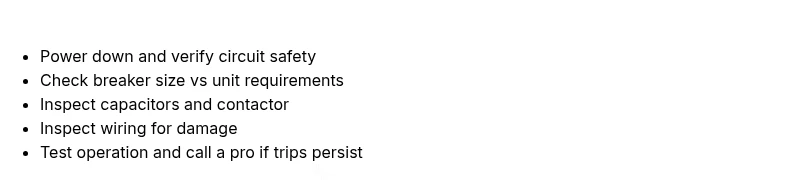
- Check circuit size first to prevent overload.
- Inspect for loose connections and damaged wiring.
- Test capacitors and contactors when applicable.
- Do not ignore repeated trips—seek professional help.
- Schedule regular maintenance to reduce future trips.