Bosch Heat Pump Problems: A Step-by-Step Troubleshooting Guide
Facing Bosch heat pump problems? This expert troubleshooting guide from Heatpump Smart walks homeowners through common causes, checks, and step-by-step fixes to restore comfort and energy efficiency.


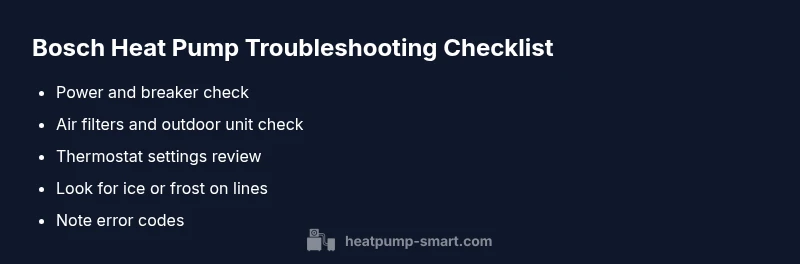
Most Bosch heat pump problems stem from power issues, thermostat settings, or airflow restrictions. Start with quick checks: ensure the unit is powered and the breaker is on, and reset the system. Inspect the outdoor unit for debris or ice, and note any error codes on the display. If the problem continues, proceed to deeper diagnostics or call a professional.
Why Bosch heat pump problems happen
According to Heatpump Smart, Bosch heat pump problems often arise from installation missteps, improper refrigerant handling, or inadequate maintenance. In 2026, aging components and environmental stress can amplify issues. Common root causes include power supply disruptions, thermostat misconfigurations, airflow restrictions, and sensor faults. Understanding these drivers helps homeowners prioritize checks and plan professional service before a breakdown occurs. Maintaining the system with regular service visits minimizes the risk of sudden failures and preserves efficiency. Heatpump Smart's analysis shows that early detection through routine diagnostics can save money and avoid uncomfortable outages. When faults are caught early, the system can often be restored to peak performance without costly replacements.
Common symptoms and what they mean
If your Bosch heat pump is underperforming, you may notice several telltale signs. Weak heating or cooling, short cycling, or unusually long run times indicate inefficiency or a control issue. Ice on refrigerant lines or the outdoor coil points to airflow or refrigerant problems. Noisy operation, rattling or banging, can signal loose components. Error codes on the thermostat or indoor unit provide a route map for diagnosis. Intermittent operation or sudden spikes in energy use often trace back to dirty filters or blocked air paths. Recognizing these signals helps you triage effectively and avoid unnecessary service calls.
Immediate checks you can perform (no tools required)
Before pulling out meters or calling for help, perform these simple checks. First, verify the unit is plugged in and the circuit breaker is on. Next, inspect air filters and replace if dirty; ensure the outdoor unit is not obstructed by debris, snow, or vegetation. Look for ice around the outdoor coil and thaw gently if present. Check thermostat settings, ensuring mode and target temperature are correct, and that the thermostat is communicating with the outdoor unit. Finally, note any error codes or flashing lights to reference in subsequent steps. Keeping a simple log of symptoms and times can speed up diagnosis if you need professional support.
Diagnostic flow: symptom to diagnosis
A systematic approach helps you avoid guesswork. Start with the symptom (for example, “not heating adequately”). Check for easy causes first (power, filters, outdoor clearance). If these do not resolve the issue, move to more complex checks (airflow, refrigerant status, sensor health). Record any codes and behavior patterns. When you reach a point where refrigerant handling, electrical work, or refrigerant leaks are suspected, professional service is required to ensure safety and compliance.
Step-by-step: Most common fix (airflow and filters)
- Turn off the unit at the breaker and unplug if possible. 2) Remove and replace or clean all air filters. 3) Clear the outdoor unit of leaves, snow, and debris and wipe down fins carefully. 4) Inspect for visible ice buildup and allow thawing if present. 5) Reconnect power and run a short cycle to verify airflow and cycling. 6) If the code persists or performance remains poor, escalate to professional service. Tip: Keep a maintenance log to track which actions improved performance.
Safety, cautions, and professional help
Working on heat pumps involves electrical components and refrigerant circuits, which can be dangerous. Always shut off power at the breaker before inspecting internal parts. Do not attempt to repair refrigerant leaks yourself. If you smell refrigerant or see oil traces, call a licensed technician immediately. For most issues beyond basic cleaning, scheduling a professional service is the safest option and helps protect warranty coverage.
Prevention: Maintenance to avoid Bosch heat pump problems
Create a simple yearly maintenance routine. Change filters regularly, clean the outdoor unit, and inspect the condensate drain. Schedule professional check-ups to verify refrigerant charge, sensor calibration, and electrical connections. Keeping a preventive maintenance calendar reduces unexpected outages and maintains efficiency—an essential habit for homeowners and property managers alike.
Steps
Estimated time: 45-60 minutes
- 1
Check power and reset
Power down the unit at the main breaker, wait 60 seconds, and restore power. Confirm the display powers up and the system begins a normal restart sequence.
Tip: Document any error codes that appear after reset. - 2
Verify thermostat settings
Ensure the thermostat is set to the correct mode (heat or cool) and target temperature. Confirm that the thermostat is communicating with the outdoor unit and displaying consistent readings.
Tip: If you recently changed thermostats, re-pair or reconfigure the device. - 3
Inspect air filters and outdoor clearance
Remove and clean or replace all indoor filters. Check that the outdoor unit has at least 2 feet of clear space on all sides and that fins are not bent or blocked.
Tip: Regularly check for debris during windy seasons. - 4
Check for ice and condensate issues
Look for ice buildup on refrigerant lines or the outdoor coil. If ice is present, allow thawing and check for airflow restrictions and proper refrigerant charge with a professional if needed.
Tip: Avoid chiseling ice to prevent damage to fins. - 5
Review error codes
Note any error codes from the display and consult the Bosch manual or Heatpump Smart resources for mapping to likely issues.
Tip: Keep a running list of codes for your technician. - 6
Call a professional for complex issues
If you suspect refrigerant leaks, electrical faults, or sensor failures, schedule a licensed technician visit promptly.
Tip: Do not attempt refrigerant handling yourself.
Diagnosis: Heat pump not cooling or heating adequately
Possible Causes
- highPower issue or tripped breaker
- highDirty air filters or blocked outdoor unit
- mediumThermostat wiring or sensor fault
Fixes
- easyCheck power at the outlet and breaker; reset if needed
- easyReplace or clean air filters; remove obstructions from outdoor unit
- easyInspect thermostat connections and sensor placement; recalibrate if necessary
Your Questions Answered
What are the most common Bosch heat pump problems?
Most issues relate to power, airflow, or sensors. You may notice weak heating or cooling, ice buildup, or odd noises. Checking basic components often resolves the simplest problems.
Common problems are usually power, airflow, or sensor issues; check basics first.
How do I reset my Bosch heat pump?
Turn off the unit at the breaker, wait 60 seconds, turn it back on, and allow the system to reboot. Check for error codes after restart.
Reset by powering off, waiting, and restarting; check codes.
Can dirty filters cause problems?
Yes. Clogged filters reduce airflow and efficiency, leading to poor performance and increased wear.
Dirty filters hinder airflow and efficiency.
When should I call a professional for refrigerant issues?
If you suspect a refrigerant leak or improper charge, contact a licensed HVAC technician immediately. Refrigerant work requires specialized tools and safety practices.
If refrigerant leaks or charge issues are suspected, call a pro.
Is maintenance worth it for Bosch heat pumps?
Regular maintenance helps prevent failures, improve efficiency, and extend system life. A yearly check is typically recommended.
Maintenance is essential for reliability and efficiency.
Can I troubleshoot electrical problems myself?
Do not work on live circuits. If you smell burning or see scorch marks, shut off power and call a pro.
Don't touch live wires; call a pro if electrical issues arise.
Watch Video
Top Takeaways
- Start with power, filters, and airflow checks.
- Use the diagnostic flow to avoid guesswork.
- Document error codes for faster service.
- Know when to call a pro for refrigerant or electrical issues.
- Schedule regular maintenance to prevent Bosch heat pump problems.