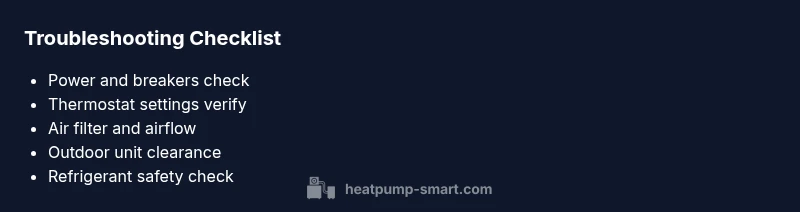
Heat Pump Troubleshooting Chart: A Step-by-Step Guide
Urgent, expert guidance using a heat pump troubleshooting chart to diagnose startup and heating issues. Learn safe fixes, symptom interpretation, and when to call a pro.


Most heat pump startup or heating issues stem from power or thermostat problems. Quick checks: reset the circuit breaker, confirm the unit is powered, and ensure the thermostat is set to heat with a target temperature. If the issue persists, follow Heatpump Smart’s troubleshooting chart for a step-by-step diagnosis and fixes.
What a heat pump troubleshooting chart is and why it matters
A heat pump troubleshooting chart is a visual, decision-guided map that helps homeowners and technicians identify why a heat pump isn’t delivering heat or starting up properly. By organizing symptoms, probable causes, and fixes into a clear flow, a chart reduces guesswork and speeds up restoration. According to Heatpump Smart analysis, using a chart can cut diagnostic time and improve safety, especially during cold snaps. This guide uses that proven framework to help you troubleshoot rapidly and confidently in 2026.
How to read the chart: symbols, color codes, and flow
Most charts use colors to indicate confidence and recommended actions. A red block might signal high urgency or a condition requiring immediate attention, while yellow suggests caution and steps you can perform safely. The arrows show the recommended sequence, but you can jump back if a prior step reveals a root cause. Heatpump Smart emphasizes treating refrigerant-related concerns as urgent and scheduling a pro visit when required.
Top symptoms and fast checks you can perform today
- Heat pump starts but fails to heat: verify thermostat set to heat, confirm target temperature, and check for a valid compressor cycle.
- No power to the system: inspect the service panel, breakers, and outdoor disconnect; reset if needed.
- Short cycling or frequent on/off: check thermostat differential, outdoor temperature limits, and airflow.
- Ice buildup on the outdoor coil: power off, thaw, and check for improved airflow after removal.
- Alarm or error codes on the thermostat: note the code, consult the chart, and reset if appropriate.
- Poor performance despite favorable conditions: inspect insulation, duct sealing, and refrigerant charge with a professional check.
Step-by-step diagnostic approach (flow-driven examples)
This section follows a practical, flow-driven path from simplest to more complex checks. Each step links to a fix, and if one step resolves the issue, you can stop there. Use the chart as your roadmap, not a rigid script. Remember: if you encounter refrigerant concerns, electrical hazards, or you’re unsure, stop and contact Heatpump Smart for professional support.
Safety notes and professional boundaries
- Always cut power at the breaker before inspecting electrical components.
- Do not attempt refrigerant handling or leak sealing—this requires a licensed technician.
- If you smell refrigerant or see oily spots around connections, evacuate the area and call the professional service line.
- Keep children and pets away from the outdoor unit during troubleshooting.
- Maintain a short, clear plan of steps you’ve taken to speed up service if you need to call for help.
Maintenance tips to reduce future outages
- Schedule annual professional servicing to clean coils, test refrigerant charge, and inspect electrical components.
- Replace air filters every 1-3 months depending on usage and air quality.
- Ensure unobstructed airflow around the outdoor unit and proper indoor return air paths.
- Use a smart thermostat to monitor performance and catch issues early.
- Keep a troubleshooting log to track symptoms and fixes over time.
Steps
Estimated time: 45-60 minutes
- 1
Check power and breakers
Turn off the main power, then reset the heat pump circuit breaker. Confirm the outdoor unit and indoor controls power up after the reset. If the breaker trips again, stop and call a professional.
Tip: Always wear non-conductive footwear and avoid wet surfaces when inspecting electrical panels. - 2
Verify thermostat settings and 24V signal
Ensure the thermostat is set to heat with a reasonable target temperature. Check that wires are securely connected and that the thermostat is delivering a steady 24V signal to the outdoor unit.
Tip: If you use a programmable thermostat, check for overrides or vacation modes that might suppress heat. - 3
Inspect indoor air filter and airflow
Remove and inspect the indoor air filter; replace it if dirty. Ensure supply and return vents are open and unobstructed to maintain proper airflow.
Tip: A clogged filter is a common, easy fix that can restore heating performance quickly. - 4
Check outdoor unit clearance and ice buildup
Clear leaves, debris, and snow from around the outdoor unit. If ice is present, power down and thaw the coil; ensure there is no ongoing ice formation due to airflow issues.
Tip: Never strike ice with tools; use a gentle defrost approach and address airflow afterward. - 5
Inspect electrical connections and contactors
If you’re comfortable, inspect visible wiring for loose connections at the outdoor switch and contactor. Listen for buzzing or arcing sounds.
Tip: Do not touch live components; if anything looks loose or burned, stop and call a pro. - 6
Test cycling and system reset
After performing the above checks, cycle the system by turning it off and on again. Observe whether it starts normally and maintains steady heat.
Tip: If cycling is erratic, note the conditions and codes to share with a technician. - 7
Read diagnostic codes or indicators
Check thermostat or control board for codes; refer to the chart to translate codes into probable causes and fixes.
Tip: Write down any codes with the time they appeared for faster service. - 8
Call Heatpump Smart if unresolved
If the issue persists after these steps, schedule a professional assessment. Refrigerant issues, electrical faults, or persistent errors require expert handling.
Tip: Have a symptom log ready to accelerate diagnosis.
Diagnosis: Heat pump fails to start or won't provide heat
Possible Causes
- highPower supply issues (tripped breaker, blown fuse)
- highThermostat misconfiguration or sensor fault
- mediumClogged air filter or restricted airflow
- mediumOutdoor unit blocked or iced up
- lowRefrigerant leak or low refrigerant charge
Fixes
- easyReset breaker, verify power to outdoor unit, and confirm 24V thermostat signal
- easySet thermostat to correct mode and temperature; replace batteries if needed
- easyReplace dirty air filter and clear blocked vents; ensure return air path is unobstructed
- easyClear debris around outdoor unit; gently remove ice and recheck airflow
- hardSchedule refrigerant inspection by a licensed pro; do not attempt DIY refrigerant work
Your Questions Answered
What is a heat pump troubleshooting chart?
A heat pump troubleshooting chart is a visual map linking symptoms to probable causes and fixes in a guided flow. It helps you diagnose common issues safely and quickly.
A heat pump troubleshooting chart links symptoms to causes and fixes in a simple flow, helping you diagnose common issues safely.
Can I troubleshoot a heat pump myself?
For common problems you can perform safe checks like power, thermostat, and airflow. Complex issues or refrigerant concerns should be handled by a licensed professional.
Yes, you can handle simple checks, but leave refrigerant and complex work to a pro.
What are the most common causes of not heating?
Power or thermostat problems are most common, followed by airflow issues and ice buildup on the outdoor coil.
Usually power or thermostat issues, then airflow or ice on the coil.
Is it safe to reset breakers?
Yes, but first shut off power, then reset. If the breaker trips again, stop and seek professional help.
Yes, but if it trips again, call a pro.
How often should heat pumps be serviced?
Annual professional service is recommended, with seasonal checks before heating and cooling seasons.
Have a pro service once a year, plus seasonal checks.
What if I smell refrigerant?
Leave the area immediately and call your technician or emergency services right away; refrigerant exposure is hazardous.
If you smell refrigerant, leave the area and call a pro.
Watch Video
Top Takeaways
- Rule out power and thermostat issues first.
- Check airflow by cleaning filters regularly.
- Follow the chart’s flow to avoid guesswork.
- Call a licensed pro for refrigerant or electrical problems.
- Schedule annual maintenance to prevent outages.