Common Problems with Heat Pumps: Troubleshooting Guide
Diagnose and fix common heat pump problems quickly. This urgent, step-by-step guide helps homeowners, builders, and property managers troubleshoot issues and restore energy-saving comfort.


According to Heatpump Smart, the most common problems with heat pumps include reduced heating, short cycling, icing on the outdoor coil, strange noises, and higher energy bills. Quick fixes you can try now: check thermostat settings, replace the air filter, ensure the outdoor unit is free of debris, and reset the system. If issues persist, contact a licensed technician for a thorough inspection and preventive maintenance.
Common problems with heat pumps: what homeowners notice
Heat pumps are designed for reliability, but over time they can show signs of wear or improper setup. The phrase "common problems with heat pumps" covers a range of symptoms—from diminished heating performance to unusual sounds or frost buildup. According to Heatpump Smart, most issues stem from simple, addressable causes like airflow restrictions, dirty filters, or thermostat misreads. This section helps you understand what to look for and why these problems occur, so you can act quickly to minimize discomfort and energy waste. By recognizing patterns early, you can prevent minor faults from becoming costly repairs. Keep an eye on temperature consistency, note any delays in heating cycles, and document when you notice changes in energy use. Regular maintenance reduces the likelihood of repeated breakdowns and keeps your system running efficiently.
Warning signs that your heat pump needs attention
- Inconsistent temperatures between rooms
- Short cycling (frequent on/off cycling)
- Frost or ice forming on the outdoor coil
- Unusual grinding, squealing, or thumping sounds
- Higher than normal energy bills without a clear reason
These symptoms often point to common problems with heat pumps, such as airflow restrictions, refrigerant charge issues, or sensor malfunctions. Early diagnosis helps you avoid unnecessary charges from emergency repairs. Remember, some issues require professional servicing, especially refrigerant-related leaks or electrical faults. Heatpump Smart emphasizes proactive maintenance as the best defense against escalating problems.
Quick checks you can do before calling a pro
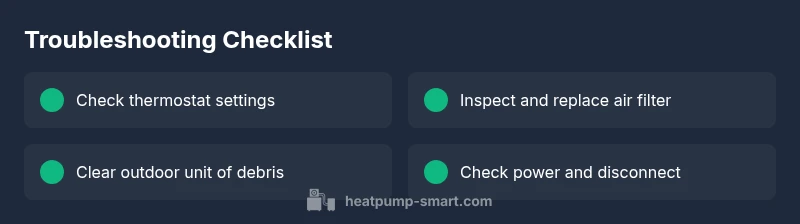
Before you escalate to a service call, run through a short checklist to rule out simple culprits. Start with the easy fixes that often resolve heat pump issues:
- Verify thermostat settings (heat mode, correct temperature, and fan setting).
- Inspect and replace the air filter if dirty or clogged.
- Ensure the outdoor unit is clear of leaves, snow, and debris with at least 2 feet of clearance on all sides.
- Confirm the power supply and circuit breakers are on and the outdoor disconnect is in the proper position.
- Listen for unusual noises when the unit starts up; note when they occur (during defrost cycles or normal operation).
If these steps don’t restore proper function, proceed to the diagnostic flow and consider professional help. Regular maintenance is essential to keep common problems with heat pumps from reoccurring.
Diagnostic flow: symptom → likely causes → fixes
A structured way to troubleshoot heat pump problems starts with identifying the symptom, listing likely causes, and applying targeted fixes. This approach minimizes wasted time and reduces the risk of unsafe DIY repairs. Use the flow below as a decision tree to guide your next steps. If at any point you feel unsure, contact a licensed technician to avoid safety risks or refrigerant handling errors. Heatpump Smart recommends documenting symptoms and fixes to track system health over time.
Fixes for the top causes: airflow, filters, and outdoor unit
Airflow problems are among the most common culprits for heat pump underperformance. Start by inspecting filters, ducts, and outdoor coil access. Dirty filters reduce airflow and heat transfer efficiency, causing the system to work harder and waste energy. Clean or replace filters every 1–3 months depending on use. Check outdoor fins for damage and clear debris. If the outdoor coil is iced over, allow it to thaw naturally and ensure proper defrost cycle operation. For blocked or restricted airflow, reseal ductwork and address any leaks. These fixes address many of the common problems with heat pumps without requiring specialized equipment.
Electrical and thermostat considerations
Electrical issues and thermostat misconfigurations can masquerade as heat pump faults. If the breaker trips or the disconnect switch is off, the unit won’t operate correctly. Make sure the thermostat is calibrated, communicating with the system, and not stuck on a wrong temperature setting or a faulty sensor. If you recently installed a new thermostat, verify compatibility with your heat pump model. Electrical faults and sensor issues may require a licensed technician to safely service wiring, control boards, or the refrigerant loop. Regular checkups ensure electrical integrity and sensor accuracy, reducing false alarms and performance dips.
Refrigerant issues and when to call a pro
Low refrigerant charge or leaks are among the more dangerous and costly problems with heat pumps. Unlike simple filter or airflow fixes, refrigerant work requires specialized training and certification. Signs of a refrigerant problem include persistent reduced heating performance, icing on the outdoor coil despite proper defrost cycles, and hissing sounds near the outdoor unit. If you suspect a leak, do not attempt to seal or add refrigerant yourself. Contact a licensed HVAC professional immediately to diagnose the leak, perform a pressure test, and recover or recharge refrigerant as needed.
Seasonal care and preventive maintenance to avoid problems
Seasonal changes expose heat pumps to different stresses. In winter, ensure outside components are clear of snow and ice; in summer, clean the outdoor coil to maintain efficiency. Schedule annual maintenance to check refrigerant charge, electrical connections, sensor calibration, and airflow. Simple habits, like changing filters on schedule and inspecting ducts for blockages, can greatly extend the life of your heat pump and reduce the likelihood of encountering common problems with heat pumps. Heatpump Smart recommends a proactive maintenance plan tailored to your climate and system.
Safety first: when to call professionals and maintenance scheduling
Never attempt high-voltage work or refrigerant handling yourself. If you feel unsure about any step, or if the problem involves electrical components, refrigerant leaks, or unusual noises near the outdoor unit, contact a licensed HVAC technician immediately. For ongoing issues, partner with a contractor to set up a preventive maintenance schedule, including seasonal inspections, filter changes, and performance testing. A structured maintenance plan helps you stay ahead of problems with heat pumps and sustain energy efficiency year-round.
Steps
Estimated time: 40-60 minutes
- 1
Power down the outdoor unit
Switch off power at the outdoor disconnect and at the main breaker to ensure safe work. This prevents electrical shock and compressor damage while inspecting the system.
Tip: Always verify voltage with a multimeter before touching wires. - 2
Inspect the outdoor condenser coil
Look for dirt, leaves, or ice buildup on the condenser coil. Debris blocks heat transfer and reduces efficiency, causing longer run times and icing issues.
Tip: Use a soft brush or low-pressure water to clean; never use high pressure. - 3
Clear debris and restore airflow
Remove nearby vegetation, snow, or objects that hinder airflow around the unit. Adequate clearance is essential for proper heat exchange and defrost cycles.
Tip: Maintain at least 2 feet of clearance on all sides. - 4
Check and replace the air filter inside
A clogged filter reduces airflow and strains the blower, leading to inefficient heating and higher energy use.
Tip: Replace with the correct MERV rating as recommended by the manufacturer. - 5
Verify thermostat communication
Ensure the thermostat is in heat mode, communicating with the heat pump, and not displaying an error code. Recalibrate if necessary.
Tip: If a smart thermostat loses connection, re-pair it to the HVAC system. - 6
Power up and test operation
Restore power and run a test cycle to verify proper heating operation and cycle length. Listen for abnormal sounds or frequent cycling.
Tip: Record temperatures at supply vent to confirm expected performance.
Diagnosis: Heat pump won't heat or blows cold air
Possible Causes
- highThermostat setting or sensor misreadings
- highDirty air filters or restricted airflow
- mediumOutdoor unit blocked by debris or snow
- lowRefrigerant leak or low charge
- mediumElectrical supply or breaker issues
Fixes
- easyVerify thermostat is set to heat and the temperature is correct; recalibrate or replace faulty sensor if needed
- easyReplace air filter and clear any obstructions to ensure proper airflow
- easyClear debris around outdoor unit; remove snow and ensure 2-3 ft clearance
- hardIf refrigerant leak is suspected, call a licensed tech; refrigerant handling requires certification
- easyCheck electrical breakers and outdoor disconnect; reset as needed
Your Questions Answered
What are the most common problems with heat pumps?
The most common problems include reduced heating performance, short cycling, iced outdoor coils, unusual noises, and rising energy bills. Many are caused by airflow issues, dirty filters, incorrect thermostat settings, or sensor faults. Regular maintenance helps prevent these issues.
Common heat pump problems include poor heating, short cycling, and iced coils. Most come from airflow or thermostat issues, and regular maintenance helps prevent them.
Can dirty filters affect heat pump performance?
Yes. Dirty or clogged filters reduce airflow, forcing the system to work harder and lowering efficiency. Replacing filters regularly can restore performance and prevent other issues.
Dirty filters reduce airflow and efficiency, so replace them regularly.
Why does my heat pump frost up in winter?
Frost or ice on the outdoor coil can occur during defrost cycles or due to air leaks and low refrigerant. If icing persists, a technician should inspect for proper defrost function and refrigerant integrity.
Frost on the outdoor coil can mean defrost issues or refrigerant problems; call a pro if it continues.
When should I call a professional for heat pump issues?
Call a professional if simple checks don’t restore performance, if you suspect refrigerant leaks, or if there are electrical concerns. A qualified technician can diagnose, recover or recharge refrigerant, and ensure safe operation.
Call a professional if basic checks don’t fix it or you suspect leaks or electrical faults.
Is it possible for a heat pump to run without refrigerant?
No. A heat pump cannot operate correctly without refrigerant. A leak or low charge requires a licensed technician to locate the leak and restore proper refrigerant levels.
Running without refrigerant isn’t possible; leaks require a licensed tech to repair and recharge.
Should I replace my thermostat if it’s outdated?
Old thermostats can misread temperatures or fail to communicate with the heat pump. Upgrading to a compatible, well-calibrated thermostat can improve performance and energy savings.
An outdated thermostat can cause misreadings; upgrading often improves performance.
Watch Video
Top Takeaways
- Identify the symptom first, then test simple causes.
- Regular maintenance prevents many common problems with heat pumps.
- Prioritize airflow and thermostat checks before calling a pro.
- Call a licensed technician for refrigerant or electrical concerns.