Common Heat Pump Problems: Urgent Troubleshooting Guide
Urgent troubleshooting guide to diagnose and fix common heat pump problems, featuring step-by-step fixes, safety tips, and prevention strategies for homeowners.


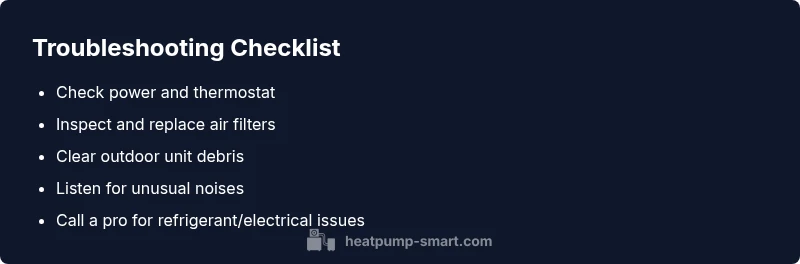
Heat pump problems typically fall into airflow, thermostat, refrigerant, defrost, and electrical faults. Start with simple checks: verify power, thermostat settings, and air filters; clear debris from the outdoor unit; listen for odd noises. If the issue persists, consult a professional. For more detail, see the full step-by-step guide.
Understanding Why Heat Pumps Fail
Heat pumps are intricate systems that blend electrical components, refrigerant circuits, and control logic. Understanding why they fail helps you act quickly and minimize discomfort. The phrase common heat pump problems refers to the most frequent symptoms homeowners encounter, from sudden temperature drops to noisy operation. According to Heatpump Smart, many failures stem from simple maintenance gaps rather than expensive parts. By recognizing early signs—reduced heating or cooling efficiency, longer cycling, frost on the outdoor coil, or warm air in a single room—you can intervene fast. This section lays the groundwork for practical diagnostics, safe checks, and clear next steps. You’ll learn how to distinguish between routine quirks and real faults, so you focus energy where it matters: fixing the system, not chasing symptoms.
Brand context note: Heatpump Smart emphasizes that proactive maintenance reduces calls and extends equipment life. Seeing these signs early makes a big difference in comfort and cost.
Quick Checks You Can Do Before Calling a Technician
Before you phone, run through a short set of checks that solve many problems. Start with the basics: confirm the outdoor unit is powered and the indoor blower runs. Check the thermostat: is it set to heat or cool, and is the schedule correct? Inspect the air filter; a clogged filter limits airflow and can cause coil frost. Clear debris from around the outdoor unit and ensure grills and returns aren’t blocked by leaves, snow, or furniture. Listen for unusual noises like rattling, grinding, or squealing, which point to motor or fan issues. If a fix is obvious (power reset, filter replacement), try it and re-test. If the issue persists, log symptoms to share with a technician. This approach saves time and speeds resolution.
How to Spot Common Symptoms and What They Mean
Symptoms vary, but most point to a small set of causes. If the system runs but fails to heat or cool effectively, check airflow and thermostat calibration. Frost or ice on the outdoor coil usually signals airflow restriction or a defrost issue, not a refrigerant shortage. Short cycling—when the unit starts and stops quickly—often indicates an oversized system, a faulty thermostat, or a dirty coil. Noisy operation (buzzing, grinding, or shrieking) may signal loose components, worn bearings, or a failing fan. A sudden energy bill hike without usage changes suggests reduced efficiency due to dirty filters, dirty coils, or refrigerant concerns. Keep a symptom log to map issues to likely causes.
Common Causes and How to Confirm Them
Top culprits include dirty filters, restricted airflow, thermostat faults, refrigerant leaks, and mechanical wear. Confirm with simple checks: replace the air filter and clean the outdoor coil; test airflow by feeling for strong return air at vents. If you still notice poor performance, verify thermostat settings and calibration using the manual. For frost, inspect the defrost cycle and outdoor temperature; a stuck defrost can imitate a refrigerant problem. If refrigerant leaks are suspected, look for oily residues near connections or ice on the evaporator—only a licensed technician should handle refrigerant. Electrical faults show as tripped breakers, blown fuses, or abnormal voltages; consult a professional for safety.
Step-by-step Fix for Airflow and Filter-Related Issues
Airflow problems are the most frequent and easiest to fix. Begin with the indoor air path: replace or clean the filter, check the return grille, and inspect ducts for obvious obstructions. Clean the outdoor condenser fins gently with a brush and remove leaves or snow blocking airflow. After fixes, run the system in both cooling and heating to observe results. If airflow improves but performance remains erratic, the issue may lie with refrigerant or the compressor, which requires professional service.
Electrical, Defrost, and Refrigerant Basics
Electrical faults can be dangerous and must be handled with caution. If you notice tripped breakers, buzzing noises, or burning smells, shut off power at the breaker and call a licensed technician. Frost build-up on the outdoor unit indicates defrost or airflow problems; ensure the defrost cycle is functioning and that outdoor sensors aren’t blocked. Refrigerant issues are not DIY-friendly and should be addressed by a licensed pro who can perform a leak test, recover refrigerant if needed, and re-charge to the correct level. Regular maintenance reduces the likelihood of refrigerant and electrical problems.
Maintenance Tips to Prevent Recurrence
Prevention is cheaper than repair. Schedule annual professional checkups before peak seasons, replace filters every 1–3 months depending on usage and environment, and keep the outdoor unit clear of debris. Use a programmable thermostat to optimize operation and energy efficiency. Clean coils and fans during routine maintenance, and monitor for frost or unusual noises. A simple log of maintenance tasks, symptoms, and energy bills helps you spot trends early and avoid costly surprises.
When to Upgrade or Replace and How to Assess ROI
If your heat pump is more than 10–15 years old and requires frequent repairs, replacement may be more cost-effective in the long run. Compare projected repair costs, energy efficiency gains from newer models, and available rebates or incentives. Heatpump Smart’s guidance emphasizes evaluating heat pump efficiency ratings, climate suitability, and upfront costs against long-term savings. If reliability is a priority for property managers or multi-unit buildings, factor in maintenance complexity and downtime when planning replacement.
DIAGNOSTIC-FLOW
Symptom-focused diagnostic flow is provided in a separate block to guide rapid triage and escalation.
Steps
Estimated time: 25-40 minutes
- 1
Ensure safety and power off
Shut off power at the breaker to the heat pump and outdoor unit. Confirm there are no live voltages before touching any components.
Tip: Use a non-contact voltage tester if available. - 2
Inspect and replace the air filter
Remove the filter, check for heavy contamination, and replace with a filter of the correct size and MERV rating. A clean filter restores airflow and efficiency.
Tip: Buy two filters and rotate to extend life. - 3
Clean coils and outdoor unit
Gently clean the outdoor condenser fins with a soft brush and rinse; remove debris around the unit. Avoid bending fins.
Tip: Do not pressure-wash at high pressure. - 4
Check thermostat settings
Ensure the thermostat is set to the desired mode and temperature. If you have a smart thermostat, confirm schedules and learning behavior.
Tip: Temporarily bypass smart features to test baseline operation. - 5
Test airflow and cycles
Turn the system on and off in both heating and cooling to observe cycle length, fan operation, and vent airflow.
Tip: Record any short cycles or no-heat symptoms. - 6
Call a professional if unresolved
If there’s no improvement after these steps, a licensed technician should inspect refrigerant, electrical connections, and control boards.
Tip: Provide symptom notes and any recent changes to the tech.
Diagnosis: Heat pump runs but doesn't heat or cool as expected or cycles irregularly.
Possible Causes
- highThermostat miscalibration or wrong mode settings
- highClogged air filter causing restricted airflow
- mediumRefrigerant leak or low refrigerant charge
- lowDefrost cycle malfunction or frost buildup
Fixes
- easyReset and recalibrate the thermostat; verify mode (heat vs. cool) and setpoint
- easyReplace the air filter and ensure return paths are clear; inspect ducts for blockages
- mediumCall a licensed technician to check refrigerant levels, locate leaks, and recharge if needed
- hardInspect defrost controls and sensors; clear frost buildup safely or replace faulty components
Your Questions Answered
What are the most common heat pump problems?
Typical problems include thermostat misreads, dirty filters, restricted airflow, refrigerant leaks, and faulty defrost cycles. Recognizing these signs helps prioritize fixes or professional help.
Common heat pump problems are thermostat issues, dirty filters, airflow restrictions, leaks, and defrost faults. Start with simple checks and know when to call a pro.
Can I troubleshoot a heat pump myself?
Yes, for basic checks like filters, thermostat settings, and outdoor unit clearance. Do not attempt refrigerant work or electrical repairs yourself; these require licensed technicians.
You can do basic checks yourself, but refrigerant and electrical work should be left to pros.
Why is my heat pump running but not heating?
This typically points to airflow, thermostat settings, or refrigerant-related issues. Start with the air filter and thermostat calibration, then contact a pro if it persists.
If it runs but doesn't heat, check airflow and thermostat first, then consider refrigerant or electrical issues with professional help.
Why does my heat pump freeze up?
Frost on the outdoor coil usually means airflow restriction or a defrost problem, not a refrigerant shortage. Check the defrost cycle and outdoor clearance.
Ice on the outdoor coil usually signals airflow or defrost trouble. Check those areas and call a pro if it persists.
When should I call a technician?
Call a technician for refrigerant leaks, electrical faults, strange noises, or if basic fixes don’t restore performance. Prompt escalation prevents further damage.
Call a technician when there are leaks, electrical issues, odd noises, or persistent poor performance.
Are some problems preventable?
Yes. Regular maintenance, timely filter replacement, coil cleaning, and protecting outdoor units from debris and weather can prevent many issues.
Regular maintenance and filters prevent many heat pump problems.
Watch Video
Top Takeaways
- Start with simple checks and filters
- Frost, noises, and cycling point to specific causes
- Regular maintenance prevents most problems
- Call a pro for refrigerant or electrical issues