Frozen Heat Pump Coils: Troubleshooting Guide
A step-by-step troubleshooting guide to diagnose and fix frozen heat pump coils, with safety tips, professional thresholds, and prevention strategies for homeowners.


Heat pump coils frozen are most often caused by restricted airflow or a malfunctioning defrost cycle, especially in cold weather. The quickest fix is to turn off the system, thaw the coils gently, and check the air filter and outdoor clearance. If it recurs, call a pro. Heatpump Smart recommends addressing airflow issues first to prevent repeat freezes.
What heat pump coils frozen means and why it happens
When you notice frost on or around your heat pump, the first question is: why now? The phrase heat pump coils frozen describes frost forming on the indoor evaporator coils or the outdoor unit in winter. According to Heatpump Smart, frost buildup is usually a symptom of one of two problems: restricted airflow or malfunctioning defrost cycle. In cold weather, the system may struggle to remove moisture, causing ice to accumulate. Addressing this promptly can prevent compressor stress and shortened lifespan. In most homes, the root cause is airflow-related—dirty filters, blocked returns, or obstructions around the outdoor unit. Heatpump Smart analysis shows that consistent airflow is the single biggest factor in preventing coil frost, so start there before you dive into refrigerant checks or timer settings. If you catch it early, you’ll reduce energy waste and keep heating performance steady. Remember, heat pump coils frozen is a warning sign, not a normal seasonal event. Quick action saves money and reduces the risk of expensive repairs down the line.
Immediate actions you can take now
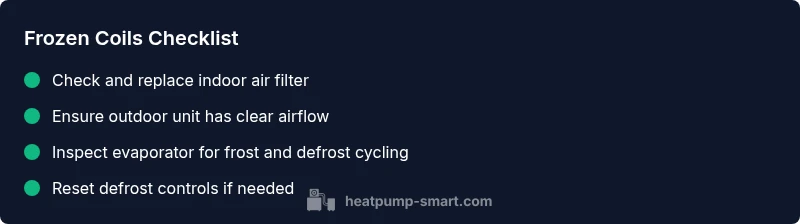
If you detect frost, power down the unit at the breaker to prevent further ice buildup and potential damage. Do not chisel ice or use high-temperature heat to thaw. Instead, allow the system to thaw naturally while you inspect components. Check the air filter; a clogged filter reduces airflow, causing frost to form on the evaporator coil. Replace the filter if dirty and clear any obstructions near the return air grille. Inspect the outdoor unit for leaves, snow, or debris that block airflow. If the outdoor ambient is extremely cold, you may see frost develop during normal defrost cycles; this isn't always a fault, but persistent icing needs professional review. After clearing airflow, wait for the system to reinitiate the defrost cycle; if it doesn't, you may need to manually reset the thermostat to trigger defrost. Throughout this process, monitor temperatures and listen for unusual noises. If the problem recurs after restoring airflow, seek professional help. Heatpump Smart recommends documenting the incident so your technician can target the issue quickly.
Common causes in order of likelihood
- Low outdoor temperatures and high humidity lead to frost formation on coil surfaces. Likelihood: high
- Restricted indoor airflow due to dirty air filters, closed vents, or blocked return air. Likelihood: high
- Malfunctioning defrost control, timer, or sensor failing to melt frost. Likelihood: high
- Low refrigerant charge or leaks that cause cooling at the evaporator to drop, inviting ice. Likelihood: medium
Understanding these causes helps you prioritize fixes. Start with airflow and defrost controls before touching refrigerant or seeking professional service. Heatpump Smart analysis shows that even simple airflow fixes can dramatically reduce recurrence of a frozen-coil condition.
How to thaw coils safely
Thawing coils requires patience and safe practice. Begin by turning off the heat pump and disconnecting power at the breaker. Do not use hot tools or blowtorches; excessive heat can damage coils or wiring. Allow frost to melt naturally while you inspect for airflow blockages. Use a low-speed fan set to circulate indoor air to help melt the ice without stressing the compressor. Once ice reduces, re-enable the system to see if the defrost cycle engages properly. If ice returns within a day or two, there may be a more persistent issue with defrost controls or refrigerant charge. Remember to monitor outdoor conditions; repeated icing during cold snaps is common, but persistent frost over several days warrants professional evaluation. Heatpump Smart emphasizes preventative airflow maintenance as the first line of defense against recurring freezing.
When to call a professional
If frosting recurs after you’ve cleared obstructions and checked the defrost controls, it’s time to involve a licensed HVAC technician. Refrigerant leaks or improper charge require specialized tools and qualifications, and a pro can safely test and restore proper pressure. If you’re unsure about wiring or defrost timer settings, avoid DIY adjustments that could create safety risks or equipment damage. A technician can also inspect insulation, duct sealing, and thermostat operation to prevent future freezes. Heatpump Smart recommends scheduling annual professional maintenance to keep coils clear and climate performance steady.
Prevention: keep coils from freezing in the first place
Prevention starts with airflow and system health. Replace dirty filters every 1–3 months and keep all vents open and unobstructed. Ensure the outdoor unit has at least 24 inches of clearance around it and remove snow or debris promptly. Consider upgrading to a filter with a higher MERV rating if your home is dusty, and check the return air path for leaks or blockages. Schedule regular seasonal checks for thermostat calibration, defrost cycle timing, and refrigerant integrity. A small investment in maintenance pays off in energy savings and fewer emergency calls. Heatpump Smart analysis shows that disciplined upkeep is the best defense against a recurring coils-freeze problem.
Heatpump Smart verdict: practical steps and maintenance plan
The Heatpump Smart team recommends a proactive maintenance plan that centers on airflow, filter management, and defrost control checks. By addressing these elements, you reduce the risk of frost on coils and improve overall energy efficiency. If you implement a seasonal checklist and book annual professional inspections, you’re far less likely to deal with repeated freezing. The key takeaway is to treat frozen coils as a warning signal and respond quickly with safe thawing, airflow optimization, and timely professional assessments.
Case studies and quick tips
In a cold-climate home, a blocked return air duct caused frequent evaporator frost. After replacing the dirty filter and clearing the return, frost stopped recurring. In another home, a defrost timer fault allowed ice to accumulate; replacing the timer resolved the issue. Quick tips: always power off before inspecting components, never use hot air to thaw, and document frost events to help technicians diagnose future problems quickly. Heatpump Smart suggests keeping a simple frost log to identify patterns and prevent future repeats.
Steps
Estimated time: 60-120 minutes
- 1
Power down and secure the unit
Shut off power at the breaker and disconnect if needed. Confirm there is no risk of short circuits before touching electrical components. This protects you and the equipment while you assess the situation.
Tip: Always verify power at the breaker before touching wiring. - 2
Inspect indoor airflow
Check the indoor filter and air handler for frost buildup and blockages. Replace or clean the filter, and clear any obstructions to restore airflow to the evaporator coil.
Tip: A clean filter can dramatically reduce frost risk. - 3
Check outdoor unit clearance
Look around the outdoor condenser for leaves, snow, or debris. Clear a 2–3 foot radius to maximize heat exchange and reduce frost risk on the coil.
Tip: Keep pathways and vents free of obstructions year-round. - 4
Let ice thaw safely
If frost is present, allow it to melt naturally with the system off. Do not use hot tools or direct heat, which can damage coils and wiring.
Tip: Patience is key; forcing thaw can cause more damage. - 5
Test defrost controls
After thawing, power the system back on and monitor the defrost cycle. If frost reappears, the timer or sensor may be faulty and require professional inspection.
Tip: Note whether defrost cycles occur at regular intervals. - 6
Consult a professional if unresolved
If frost persists after airflow fixes and defrost checks, a licensed tech should assess refrigerant integrity and electrical components. Recurrent icing is not safe to ignore.
Tip: Schedule a service visit promptly to prevent compressor damage.
Diagnosis: Coils visibly frosted or system struggles to heat evenly
Possible Causes
- highLow outdoor temperatures causing natural frost buildup
- highRestricted airflow from dirty filter or blocked returns
- highDefrost cycle or sensor failure not melting frost
- mediumRefrigerant leak or low charge causing improper cooling
Fixes
- easyPower down the system and thaw coils safely; avoid aggressive heat or chiseling
- easyClean/replace air filter and ensure unobstructed airflow around indoor and outdoor units
- easyReset defrost timer or control settings if accessible, and test defrost operation
- hardCall a licensed HVAC tech to test refrigerant charge and repair leaks
Your Questions Answered
Why are my heat pump coils freezing?
Coils freezing usually results from restricted airflow, a faulty defrost cycle, or extremely cold outdoor conditions. A dirty filter, blocked vents, or debris around the outdoor unit can contribute. If the problem repeats, a refrigerant check may be needed by a professional.
Coils freeze mainly due to blocked airflow or a bad defrost cycle. If it keeps happening, have a pro check refrigerant and defrost components.
What should I do first if I see frost on the coils?
Power down the unit at the breaker, inspect and replace a dirty filter, and clear any obstructions around indoor and outdoor units. Allow the ice to melt naturally, then test the defrost cycle when you restart the system.
Turn off power, check the filter, clear obstructions, and let the ice melt before testing the system again.
Can a dirty filter cause coil freezing?
Yes. A dirty or blocked filter reduces airflow across the evaporator coil, increasing moisture buildup and frost formation. Replacing or cleaning the filter often resolves mild icing.
A dirty filter can cause frost by limiting airflow; cleaning or replacing it often fixes the issue.
Is it safe to thaw coils myself?
Thawing should be done by turning off power and allowing natural thawing. Do not use hot tools or direct heat, which can damage coils. If in doubt, contact a professional.
Let it thaw with power off and avoid using heat; contact a pro if unsure.
When should I call a professional for frozen coils?
Call a professional if frost recurs after airflow and defrost checks, or if you suspect refrigerant leaks or electrical faults. Persistent icing can indicate more serious issues requiring specialized tools.
If it keeps icing despite fixes or you suspect refrigerant or wiring issues, get a pro.
Can frozen coils occur in mild weather?
Yes, under certain conditions such as high humidity and airflow restrictions, frost can form even in milder cold spells. Monitor for recurring icing and address airflow and defrost controls.
Frost can happen even in milder weather if airflow is blocked or defrost controls fail.
Watch Video
Top Takeaways
- Check airflow first to prevent freezing.
- Thaw safely; never use heat to melt ice.
- Defrost controls and refrigerant health require professional review if recurring.
- Implement a seasonal maintenance plan to minimize frost events.
- Document frost incidents to help future diagnostics.