Heat Pump Error 06 Open Start: Quick Fix Guide
Urgent diagnostic guide for heat pump error 06 open start. Learn what it means, common causes, quick safety checks, step-by-step repair paths, and when to call a professional—with Heatpump Smart analysis and practical cost guidance.


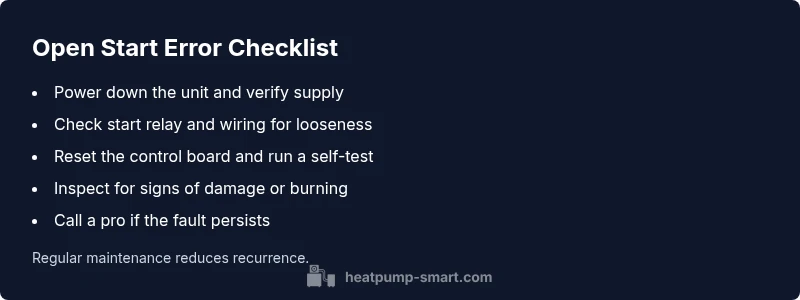
Heat pump error 06 open start typically means the start circuit or relay is open, preventing the outdoor unit from starting. This urgent fault often stems from loose wiring, a faulty start relay, or a failing control board. Immediate steps: cut power, reset, and inspect connections. If the unit still won't start, call a qualified HVAC technician. For a rapid assessment, see Heatpump Smart's diagnostic guide.
What the error code Heat Pump Error 06 Open Start means
Heat pump error 06 open start is a fault code that signals the start circuit cannot engage the compressor. In practical terms, the heat pump will not begin its heating or cooling cycle because the outdoor unit cannot start safely. This kind of fault is urgent because a continued start attempt can overheat components or trip breakers. While codes vary by brand, a common root is an open relay or a loose connection in the start circuit. The Heatpump Smart team notes that addressing this promptly reduces the risk of compressor damage and costly service calls. If you see this code, do not ignore it or push the system to start repeatedly. Begin with safe checks, document any patterns, and consult the heat pump manual for model-specific guidance.
Why this error is critical for resilient home comfort
The open start condition prevents the heat pump from delivering reliable climate control. For homeowners and property managers, a delayed fix can mean uncomfortable indoor temperatures during extreme weather and increased energy use as the system struggles to start repeatedly. Heatpump Smart analysis emphasizes that quick triage reduces wear on components and minimizes downtime. Understanding the symptom helps you communicate clearly with a technician and speeds up diagnosis.
Quick safety checks before you touch anything
Before you touch electrical components, power down the system at the main breaker and wait 60 seconds. Wear insulated gloves if you have them, and keep a clear path around the outdoor unit. Do not attempt to jump-start or bypass the electrical protections. If you smell burning, hear buzzing, or see visible damage, stop and call a professional immediately. These safety cues warrant professional intervention to avoid electric shock or further damage.
How to approach diagnosis without specialized tools
Start with the basics: verify the outdoor unit is free of snow or debris, check for tripped breakers, and confirm the indoor thermostat is calling for heat or cool. Then inspect accessible connections around the start relay and wiring harness for looseness or corrosion. If you notice a burnt aroma or melted insulation, component replacement is likely necessary and professional service is advised. Heatpump Smart recommends documenting your findings with photos to aid the technician.
Most common fixes you can qualify as a DIY triage
The most frequent fixes involve the start relay and its wiring. If you are comfortable, reseat all relay connections and inspect for loose terminals. Replacing a faulty relay or repairing a damaged wire harness is a straightforward repair for a trained technician. A firmware reset or control-board reboot may also clear a simple glitch. Do not attempt to replace a compressor or refrigerant components yourself; these require licensed expertise.
When to escalate to a professional
If the error persists after basic checks, if you hear abnormal noises, or you observe cooling/heating inconsistency, arrange a professional service call. Costs vary by region and the root cause, with component replacements typically commanding higher labor and parts fees. Heatpump Smart’s guidance is to pursue a pro when the open-start fault remains after DIY triage, to protect equipment and ensure safe operation.
Steps
Estimated time: 60-120 minutes
- 1
Power down and secure the system
Switch off the main service at the breaker panel and, if available, use a lockout tag. Confirm there is no residual voltage using a non-contact tester before touching any components.
Tip: Lockout procedures prevent accidental re-energization during inspection. - 2
Inspect accessible wiring and relay connections
Look for loose, frayed, or tarnished conductors around the start relay and wiring harness. Disconnect only if you are confident you can re-connect securely and label wires first.
Tip: Take photos of each connection before disconnecting anything. - 3
Test or replace the start relay if needed
If the relay shows corrosion or pitting on contacts, replace it with an equivalent part. Ensure the replacement is rated for your outdoor unit’s voltage and current demands.
Tip: Only handle with dry hands and grounded tools. - 4
Reset the control board and run a self-test
Reconnect power and allow the system to reboot. Observe any error codes that reappear and note them for the technician or service report.
Tip: Document codes and time of reboot for accuracy. - 5
Check power supply and protection devices
Ensure the outdoor unit has proper voltage and that disconnects and fuses aren’t tripped. Look for any signs of power supply fluctuations.
Tip: If you don’t have a multimeter, arrange for professional verification. - 6
Decide on professional service
If the fault remains after DIY triage, schedule a professional visit. Prepare notes on symptoms, steps taken, and any observed codes to speed diagnosis.
Tip: Budget for potential parts and labor, and ask about warranties.
Diagnosis: Heat pump error 06 open start: outdoor unit won’t engage and display code 06.
Possible Causes
- highOpen or faulty start relay in the outdoor unit
- mediumLoose or damaged wiring in the start circuit
- lowControl board fault or firmware glitch
Fixes
- easyInspect and reseat start-relay connections; replace relay if signs of wear or burning are present
- mediumReset the control board and perform any available firmware update
- easyVerify mains voltage, check breakers, and ensure proper supply to the outdoor unit
Your Questions Answered
What does heat pump error 06 open start mean?
It indicates the start circuit is open, preventing the compressor from starting. Common causes include a faulty start relay, loose wiring, or a control-board fault. Address the fault promptly to avoid further damage.
Error 06 means the start circuit is open and the unit won’t start. Common causes are relay or wiring problems; a control board fault is also possible. Prompt action helps prevent damage.
Can I fix it myself?
You can perform basic safety checks if you’re comfortable with electrical work, but most fixes involve relays, wiring, and control boards. If unsure, contact a licensed HVAC technician.
You can do basic safety checks, but for most repairs you should call a pro.
Is it safe to reset the unit?
Resetting can clear temporary glitches, but it won’t fix underlying hardware faults. Always power down first and monitor whether the code reappears.
Resetting can help if the fault is temporary, but don’t assume the problem is solved.
How much will repairs cost?
Costs vary widely depending on root cause and parts. A professional assessment will clarify whether you’re looking at a relay/wiring fix or a larger board/compressor replacement, with price ranges depending on your region.
Costs vary a lot; you’ll likely pay for parts and labor based on what’s needed, from minor fixes to major replacements.
When should I call a professional?
Call a professional if the error persists after basic checks, if you hear abnormal noises, or if you suspect refrigerant issues. A licensed technician ensures safe testing and proper repairs.
If the code keeps showing up after DIY checks, or you hear strange noises, call a pro.
Watch Video
Top Takeaways
- Identify open-start fault quickly to protect the compressor.
- Always power down before inspection; safety first.
- Start with relay and wiring; many fixes resolve the issue.
- If unresolved, rely on a licensed pro for advanced repairs.
- Preventive maintenance lowers recurrence and improves reliability.