Heat Pump Not Turning On: A Practical Troubleshooting Guide
Heat pump not turning on? This urgent troubleshooting guide helps identify common causes, quick fixes, and when to call a pro, with Heatpump Smart insights.


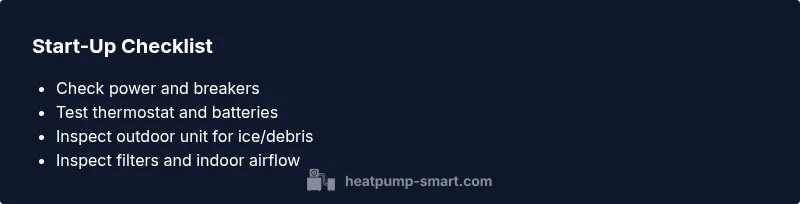
Most often, a heat pump won’t turn on because of a simple power issue, a slightly misconfigured thermostat, or a tripped safety switch. Start with the basics: confirm the breaker is on and the outdoor unit has power, verify thermostat settings and batteries, and check for ice build-up on the outdoor coil. If these don’t resolve it, contact Heatpump Smart for guidance.
Common Reasons a Heat Pump Won't Start
According to Heatpump Smart, most startup issues with a heat pump not turning on come down to power, thermostat, or safety interlocks. Start with a calm, safety-first mindset and work through a short, logical checklist before calling a technician. This section expands on the most likely causes and how to verify each one safely in a home or managed property.
Quick, Safe Checks You Can Do Now
Begin with the simplest explanations first. Check that the main breaker or disconnect switch feeding the heat pump is ON and that any external fuses are intact. If the unit has a dedicated outdoor shutoff, confirm it is in the ON position. Then, inspect for obvious obstructions to airflow around the outdoor unit. Safety note: always power down the system before touching wiring or electrical components. These checks cover the majority of early-start issues and can save time and expense.
Thermostat and Controls: Are They Communicating?
Thermostats control when the heat pump wakes up. A dead or misconfigured thermostat, or a loose C-wire, can prevent the system from turning on even when power is available. Replace batteries if the thermostat is battery powered, re-sync smart thermostats, and verify that the display shows a current date/time and correct mode (heat or cool). If the thermostat is part of a home automation system, ensure it has a reliable hub connection and that the outdoor unit is authorized to run by the control app.
Outdoor Unit: Ice, Debris, and Airflow
Ice buildup on the outdoor coil or blocked airflow can trigger protection sensors that prevent starting. Clear light frost using a plastic scraper if present, and remove leaves, grass, or snow around the unit to guarantee at least a few feet of clearance. Ensure routine seasonal maintenance is performed to avoid recurring blockages. Poor airflow can cause the system to stall and will often show as a start failure.
Electrical and Safety Interlocks: Breakers, Fuses, and Disconnects
A tripped breaker or blown fuse in the outdoor circuit is a common culprit. Check both the main panel and any localized disconnects near the heat pump. If the unit has a contactor or capacitor, signs of wear or a buzzing contactor can prevent startup. Do not replace electrical components unless you’re confident in your skills; malfunctioning parts can pose serious safety risks.
Indoor Air Pathways and Filters: Airflow Matters
A clogged filter or a blocked indoor air pathway can cause the system to shut down to protect itself. Inspect and replace indoor air filters if dirty. Ensure that the blower inside the air handler is operating when the thermostat signals heat. Poor indoor airflow can mask other start issues and lead to repeated cycling failures.
When to Call a Pro: Safety and Warranty Considerations
If power, thermostat, and basic airflow checks don’t restore startup, professional help is warranted. A licensed technician can safely test refrigerant pressures, inspect the control board, and verify the integrity of electrical connections and safety switches. Many warranties require professional servicing for issues related to cooling or heating startup to remain valid.
Preventive Maintenance to Reduce Start Failures
Regular seasonal checks reduce the likelihood of a heat pump not turning on at critical moments. Schedule professional inspections, replace filters every 1–3 months depending on usage, and keep debris clear from the outdoor unit. Consider a maintenance plan that includes thermostat calibration and refrigerant checks to sustain performance over time.
Steps
Estimated time: 60-90 minutes
- 1
Check power supply and breakers
Start by confirming the main breaker is ON and that the outdoor disconnect is not tripped. Listen for any buzzing sounds from relays. If you reset a breaker, wait a few minutes for the system to re-initialize.
Tip: If you reset a breaker, label it and avoid reloading power to other devices unintentionally. - 2
Test and reset the thermostat
Inspect thermostat settings to ensure it is set to the correct mode (heat or cool) and that the display shows current date/time. Replace batteries if needed and re-sync with a smart thermostat. A simple reboot can clear communication glitches.
Tip: For smart thermostats, check the app’s status and ensure it’s allowed to command the outdoor unit. - 3
Inspect the outdoor unit for ice or debris
Look for ice on the condenser coils and clear away any leaves, snow, or dirt around the unit. Ensure a clear radius of airflow (at least 2–3 feet). Do not tap the coils; gentle brushing is safer than probing.
Tip: If ice is present, gently remove it with a plastic scraper and allow time for the unit to warm up before testing again. - 4
Check indoor filters and air pathway
A dirty filter or restricted ductwork can trigger safety features that prevent startup. Replace dirty filters and inspect the air handler to ensure the blower is running when the thermostat calls for heat.
Tip: Keep a routine replacement schedule to maintain steady airflow. - 5
Inspect safety interlocks and electrical connections
Check that access panels are securely in place; loose panels can trigger safety interlocks. Inspect visible wiring for obvious damage and ensure connections are snug.
Tip: Only handle electrical components if you feel confident; loose wiring can pose shock hazards. - 6
Test the outdoor contactor and fuses
If you have access to the outdoor disconnect box, verify the contactor is engaging when power is supplied. Look for signs of wear or scorching; replace parts only if you’re qualified.
Tip: Contactors and fuses can wear out gradually and may not show obvious signs until failure. - 7
Attempt a controlled system reset
Power down the unit for a minute, then restore power and command a warm-up cycle from the thermostat. This avoids repeating a startup fault and helps confirm if the issue was a temporary fault.
Tip: Avoid turning power on/off repeatedly; give the system a moment to initialize. - 8
Decide whether professional help is needed
If the heat pump still won’t start after these steps, a licensed technician should diagnose electrical, refrigerant, or control-board issues. Document what you’ve tested to speed up service.
Tip: Keep warranty and service records handy when scheduling a visit.
Diagnosis: Heat pump won't turn on
Possible Causes
- highTripped circuit breaker or blown fuse
- highThermostat miscommunication or dead batteries
- mediumOutdoor unit iced over or blocked by debris
- mediumSafety switch or contactor failed
Fixes
- easyReset the breaker and verify power at the outdoor unit
- easyReplace thermostat batteries and re-sync with the heat pump
- easyClear ice/debris from the outdoor unit and ensure airflow
- mediumCheck contactors/fuses on the control board; if uncertain, call a pro
Your Questions Answered
What is the first thing I should check if my heat pump won't start?
Begin with power: verify the main breaker is ON and that the outdoor unit has power. Then, inspect the thermostat settings and batteries. These basics solve most startup issues quickly.
First check the power and thermostat settings; these cover most startup problems.
Why won’t my thermostat communicate with the outside unit?
Thermostat-sync issues happen when batteries are dead, C-wire is loose, or the thermostat’s app loses connection. Reconnect or replace batteries and re-synchronize with the unit.
Thermostat communication problems are common; re-sync and replace batteries if needed.
Can a blown fuse cause a heat pump not turning on?
Yes. A blown fuse or tripped breaker can cut power to the entire system and prevent startup. Check both the main panel and the outdoor disconnect.
A blown fuse can stop the system from starting; check fuses and breakers.
Is ice on the outdoor unit always a sign of a problem?
Ice can indicate defrost issues or airflow problems; light ice may be normal in cold weather but persistent ice warrants a closer look at outdoor airflow and defrost controls.
Outdoor ice can point to airflow or defrost problems; monitor and address if it persists.
When should I call a professional for a heat pump startup issue?
If basic checks don’t restore startup, or you’re uncomfortable with electrical components, call a licensed technician. They can safely diagnose refrigerant, electrical, and control issues.
Call a pro if the simple checks don’t help or if you’re unsure about electrical components.
Will a startup failure affect backup heat sources like a furnace or electric resistance heat?
Startup issues with the heat pump don’t always affect backup heat, but a fault in the heat pump can reduce overall household comfort. A technician can assess interactions and ensure safe operation.
Backup heat safety depends on the system; have a pro check interactions between heat pump and backup heat.
Watch Video
Top Takeaways
- Start with power and thermostat checks first
- Ice or debris around the outdoor unit is a frequent starter cause
- Indoor airflow and dirty filters can mask startup issues
- If unresolved, call a licensed technician promptly