Heat Pump Going Off on High Pressure: Troubleshooting Guide
Learn how to diagnose and fix a heat pump that trips due to high pressure. Step-by-step fixes, safety notes, and prevention tips for homeowners, builders, and managers.


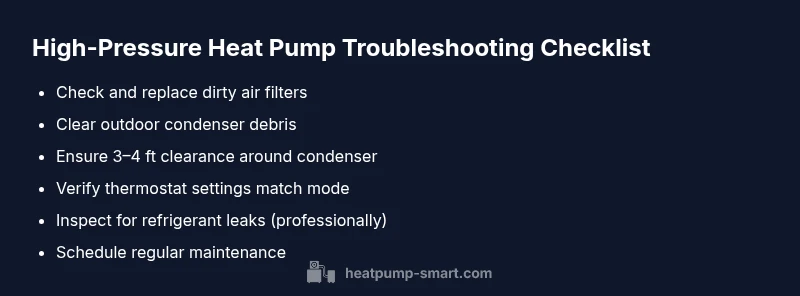
Most heat pumps going off on high pressure are triggered by airflow or refrigerant-related issues. Quick fixes: 1) inspect and replace dirty air filters; 2) clear leaves and debris from the outdoor unit and ensure 3–4 feet of clearance; 3) verify thermostat settings and reset the system. If the fault repeats, call a licensed HVAC technician.
Understanding High-Pressure Shutdowns
High-pressure shutdowns happen when the refrigerant pressure in the condenser climbs too high. This triggers an internal safety switch that stops the outdoor unit to protect the compressor from damage. When the heat pump trips on high pressure, you may notice the outdoor fan still runs while the indoor fan stops or you may see a fault code on the thermostat. At hot days, or after long periods of operation, the system can get stressed. The underlying cause is often a combination of airflow and refrigerant conditions. According to Heatpump Smart, maintaining airflow and proper refrigerant charge is key to avoiding high-pressure trips. Start by ensuring the outdoor coil is clear of leaves and that the air intake isn't blocked. Inside the home, check that return air pathways are open and that the air filter is clean. If the unit was serviced recently, ensure the refrigerant lines were not disturbed and that the service gap is sealed. Quick checks performed early can prevent a full shutdown and costly emergency visits.
Common Causes to Check First
There are several common reasons why a heat pump will trip on high pressure. Start with airflow and coil cleanliness, then inspect refrigerant-related issues and outdoor conditions:
- Airflow restriction: a dirty air filter, blocked return grille, or obstructed outdoor coil reduces heat transfer and increases head pressure.
- Refrigerant charge issues: an overcharged or undercharged system, or small leaks, can push pressure out of safe limits.
- Outdoor conditions: on extremely hot days or in poorly ventilated spaces, head pressure can rise quickly.
- Faulty pressure switch or expansion device: wear or contamination can cause incorrect readings and premature shutdowns.
- Thermostat or control wiring issues: miscommunication between components can trigger cycling that looks like a pressure fault.
If you spot obvious airflow problems, correct them before moving on. If you see warning codes on the thermostat, document them for the technician.
Step-By-Step Quick Fixes You Can Try
- Power off and reset: switch off the outdoor unit at the disconnect and wait 60 seconds, then turn it back on to reset fault codes.
- Clean or replace air filter: a clogged filter is a frequent cause of pressure issues; replace if dirty and run the system with clear air.
- Clear the outdoor unit: remove leaves, grass, and debris; ensure 3–4 feet of clearance around the condenser.
- Check airflow paths: ensure supply and return ducts aren’t blocked by furniture, rugs, or closed vents.
- Inspect thermostat settings: confirm cooling/heating mode, proper temperature, and that a correct setpoint is used.
- Observe refrigerant and service access: if the high pressure keeps returning, do not attempt to recharge refrigerant yourself—this requires a licensed pro. If these steps don’t resolve the issue, contact a technician promptly for a refrigerant check and system diagnosis.
Safety Prompts and Immediate Actions
High-pressure faults involve high temperatures and pressurized refrigerant. Do not open refrigerant lines or attempt to discharge refrigerant. If you hear a hissing sound, notice frost near lines, or smell refrigerant, shut the system off at the thermostat and disconnect switch and call a licensed HVAC technician immediately. Keep children and pets away from the outdoor unit while troubleshooting. Always wear eye protection and gloves when inspecting components that may be hot.
Prevention and Maintenance to Avoid High-Pressure Trips
Preventive care is the best defense against high-pressure trips. Schedule regular maintenance with an HVAC professional, ideally twice a year. Heatpump Smart recommends these habits: replace air filters every 1–3 months, clean the outdoor coil annually, and verify that refrigerant lines and insulation are intact after any service. During extreme heat or humidity, consider a temporary reduction in load and ensure the unit has adequate ventilation around the outdoor condenser.
Final Thoughts and Safety Reminders
A heat pump shutting down due to high pressure is a signal that something isn’t right with airflow, refrigerant, or controls. Address obvious airflow and thermostat issues first, but don’t delay professional service if the issue recurs. By following proactive maintenance, you can reduce nuisance trips and extend the life of the system. Heatpump Smart’s guidance emphasizes safety, proper airflow, and timely service as the keys to reliable operation.
Steps
Estimated time: 60-90 minutes
- 1
Power down and reset safely
Turn off the outdoor unit at the disconnect switch and at the thermostat. Wait 60 seconds, then restore power and monitor for fault codes. This resets minor glitches that can trigger pressure-related trips.
Tip: Document any fault codes shown on the thermostat. - 2
Inspect and replace air filtration
Remove the indoor air filter, inspect for dirt, and replace if soiled. A clean filter improves airflow and reduces head pressure stress on the system.
Tip: Use the manufacturer-recommended filter type and size. - 3
Clear the outdoor condenser area
Remove leaves, grass, and other debris from around the condenser. Ensure at least 3–4 feet of clear space for proper airflow.
Tip: Gently rinse fins with a soft brush if needed. - 4
Check return air paths and ductwork
Ensure all supply and return vents are open and unblocked. Blocked ducts can increase system workload and head pressure.
Tip: Avoid placing large furniture in front of vents. - 5
Review thermostat settings and controls
Confirm the unit is in the correct mode (cooling or heating) and that the setpoint is reasonable for current conditions.
Tip: A misconfigured thermostat can mimic a pressure fault. - 6
Call in a professional for refrigerant checks
If high pressure persists after airflow and control checks, a licensed HVAC tech should inspect refrigerant charge and test for leaks.
Tip: Refrigerant work requires licensed handling and proper safety protocols.
Diagnosis: Heat pump goes off on high-pressure fault
Possible Causes
- highAirflow restriction due to dirty filter or blocked outdoor coil
- mediumRefrigerant charge issue (overcharged or undercharged)
- lowOutdoor temperature causing high head pressure
- lowFaulty pressure switch or expansion device
Fixes
- easyClean or replace air filter; clear debris from outdoor unit; ensure 3–4 ft of clearance
- mediumCheck for refrigerant leaks and verify charge with a professional; do not DIY refrigerant work
- easyEnsure thermostat is accurately calibrated and wired correctly
- easyIf high pressure persists after airflow fixes, shut system off and call a licensed HVAC tech
Your Questions Answered
What does 'high pressure' mean on a heat pump?
High pressure means the refrigerant pressure in the condenser is above safe limits, triggering a safety shutoff. It’s usually caused by airflow problems, refrigerant issues, or extreme outdoor temperatures. If it persists, schedule professional service.
High pressure means the refrigerant pressure is too high in the condenser, which triggers the system’s safety shutoff.
Is a high-pressure fault dangerous?
Yes. High pressure can damage components and lead to refrigerant leaks. Treat it as a serious fault and use caution until inspected by a professional.
Yes, it can be dangerous—shut down safely and call a professional.
Can I fix high-pressure trips myself?
You can handle basic airflow and thermostat checks, but refrigerant work and major electrical issues require a licensed technician. Don’t attempt refrigerant recharge.
Some steps you can do, but refrigerant work should be left to a pro.
What should I check first if the high-pressure light comes on?
Check airflow (filter and outdoor coil), inspect the thermostat/mode, and look for obvious blockages. If the fault persists, contact a professional for a refrigerant and control diagnostic.
Check airflow and thermostat first; if unresolved, call a pro.
How can preventive maintenance help?
Regular filter changes, coil cleaning, and annual tune-ups significantly reduce the likelihood of high-pressure trips and extend system life.
Regular maintenance lowers risk of high-pressure trips.
Watch Video
Top Takeaways
- Start with airflow and filters to reduce risk
- Don’t attempt refrigerant work yourself—call a pro
- Keep a maintenance log for trend tracking
- Proactive maintenance minimizes high-pressure trips