Heat Pump Cuts On and Off: Practical Troubleshooting
Discover why your heat pump cuts on and off and how to fix it fast. This expert guide covers common causes, quick fixes, safety tips, and when to call a professional for lasting comfort in 2026.


Most likely, your heat pump cuts on and off due to restricted airflow, a dirty air filter, or thermostat miscalibration. Start with simple checks: replace or clean the air filter, clear debris from the outdoor unit, and verify the thermostat is set correctly and communicating with the system. If cycling continues, turn off power and call a pro.
Understanding the heat pump on-off cycling problem
When a heat pump that should run smoothly instead keeps starting and stopping, homeowners often interpret it as a mysterious fault. In practical terms, cycling — the pattern of turning on and off — is a symptom, not a diagnosis. The causes can range from simple, easily fixed issues like a clogged air filter or miscalibrated thermostat to more complex ones such as refrigerant charges or faulty controls. In Heatpump Smart's experience, addressing cycling quickly protects comfort and energy efficiency, especially in 2026 when smart controls are common. In this guide, we’ll walk through a diagnostic path, safe checks you can perform, and clear indications you should involve a professional.
The goal is to restore steady operation without wasteful short cycling, which can stress components and raise energy bills. Throughout, remember that safety matters: starting with the lowest-risk fixes will often resolve the issue and preserve equipment longevity. A steady on/off pattern should be treated as a warning sign, not a nuisance.
Common causes of cycling
There are several frequent culprits behind heat pump cuts on and off. First, airflow restrictions, such as a dirty air filter or blocked return and supply vents, can fool the system into thinking it needs to restart soon. Second, thermostat issues—miscalibration, incorrect wiring, or a failing sensor—can trigger improper cycling. Third, outdoor conditions play a role: debris, snow, or ice around the condenser can hamper heat transfer and cause rapid cycling.
Less common but important possibilities include low refrigerant charge due to a leak, a failing reversing valve in heat pump modes, or a malfunctioning control board. Each cause has a different fix path, and the order of investigation should prioritize the easiest, safest checks first. A precise diagnosis avoids unnecessary repairs and ensures your heat pump runs efficiently all season.
Safety considerations and when to call a pro
Working with heat pumps involves electricity and refrigerant systems. If you notice burnt smells, ice buildup that won’t melt, leaking refrigerant, or if you must power down the unit at the breaker to prevent cycling, stop and call a licensed HVAC technician. Even when the fix seems simple, refrigerant work and electrical troubleshooting are hazardous without proper training. For homeowners, the safest approach is to perform basic checks—air filters, outdoor unit clearance, thermostat settings—and defer refrigerant diagnostics or compressor issues to a professional. In many regions, ongoing issues with cycling can be a sign of a refrigerant leak or a control fault that requires specialized tools and certification.
Quick checks you can perform safely
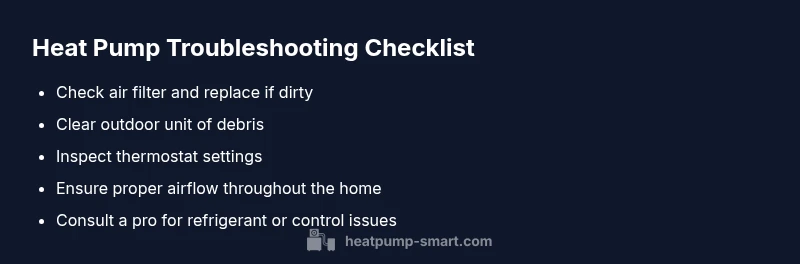
- Turn off the indoor and outdoor power at the breaker before inspecting components. Safety first.
- Inspect and replace the air filter if dirty; a clogged filter reduces airflow and confuses the thermostat.
- Clear debris around the outdoor unit and ensure at least 2 feet of clearance on all sides. Gently hose off any dirt from the condenser fins.
- Confirm the thermostat is set to the correct mode (heat or cool) and that the fan is set to auto with a reasonable temperature differential.
- Listen for unusual noises or vibrations when the unit starts; these can indicate loose panels or fan problems that affect cycling.
Thermostat and control settings: getting it right
A misconfigured thermostat is a frequent cause of heat pump cycling. Verify the following: the thermostat is wired correctly, the batteries are fresh, and the software is up to date if it is a smart thermostat. Check that the setpoint is not changing inadvertently due to schedule programs or adaptive learning features. If you notice the heat pump cycles more at certain times of day or with specific weather patterns, the issue might be related to outdoor temperature affecting efficiency. In some cases, recalibrating the thermostat or replacing a faulty sensor resolves the problem.
Airflow, filtration, and indoor ventilation influence
Indoor air quality and airflow play a crucial role in stable heat pump operation. A dirty filter, closed dampers, or undersized return ducts can starve the system of air, prompting short cycles. Regularly replacing the air filter with an appropriate MERV-rated model keeps airflow steady and reduces the likelihood of cycling. Check for blocked supply registers in rooms that push heat or cool into the house, especially if recent renovations changed room use. A well-balanced air distribution system helps the heat pump maintain a steady cycle, delivering consistent comfort and energy savings.
Outdoor unit care and defrost cycles
Outdoor conditions can severely impact cycling. Snow, ice, leaves, or lawn debris can restrict airflow and trigger short cycling. Clear snow around the unit and remove any obstructions from the top and sides. In winter, heat pumps periodically enter defrost mode to prevent frost buildup on the outdoor coil; this is normal, but persistent defrost cycling beyond a few minutes indicates a potential sensor or control issue. If defrost cycles become excessive or unusually long, it warrants a professional inspection to ensure proper refrigerant charge and valve operation.
Maintenance plan to prevent future cycling
Establish a regular maintenance routine to prevent heat pump cycling. Schedule seasonal checkups with an HVAC professional and keep a simple log of service dates. Replace air filters every 1-3 months depending on usage and indoor environment. Inspect outdoor coils for dirt and debris after heavy winds or pollen seasons. A proactive maintenance plan catches small issues before they become cycling problems, preserving efficiency and comfort year-round.
Steps
Estimated time: 60-90 minutes
- 1
Power down for safety
Switch off power at the main breaker for both indoor and outdoor units. Confirm there is no power to the system before touching any components.
Tip: Taking a minute to ensure power is off prevents electrical shock and equipment damage. - 2
Inspect and clean/replace the air filter
Remove and inspect the air filter. If dust or debris is visible, replace with a filter of the correct size and MERV rating. Reinstall securely and run the system briefly to observe behavior.
Tip: A clean filter can dramatically improve airflow and reduce cycling within minutes. - 3
Check outdoor unit clearance
Look for leaves, snow, or debris around the condenser. Clear a 2-3 foot radius and gently rinse the fins with a hose if needed. Ensure nothing blocks airflow from the top and sides.
Tip: Keep vegetation trimmed back year-round for better performance. - 4
Verify thermostat operation
Confirm the thermostat shows a stable setpoint and that the control wiring matches the system. If you have a smart thermostat, test manual vs. programmed modes to see if cycling persists.
Tip: If in doubt, temporarily bypass the smart features to test basic operation. - 5
Observe cycling after the quick checks
Restore power and monitor for several cycles. Note any changes in cycle length or frequency. If cycling stops after filters and airflow fixes, the issue was airflow-related.
Tip: Keep a brief log of cycle times to share with a technician if needed. - 6
Call a professional if it persists
If the heat pump continues to cut on and off despite the above, contact a licensed HVAC technician. Persistent cycling can indicate refrigerant or control issues that require specialized tools.
Tip: Provide your observation notes and any recent changes to help the technician diagnose faster.
Diagnosis: Heat pump keeps turning on and off frequently
Possible Causes
- highRestricted airflow due to dirty air filter or blocked vents
- mediumThermostat miscalibration or wiring issue
- mediumOutdoor unit obstructed by debris or snow
- lowLow refrigerant pressure or refrigerant leak
- lowDefective control board or faulty compressor
Fixes
- easyClean or replace air filter; ensure return vents are clear for proper airflow
- easyCheck thermostat settings and wiring; recalibrate or replace thermostat if needed
- easyClear debris around the outdoor unit; ensure 2-3 feet of clearance and clean fins
- mediumHave a licensed tech check refrigerant charge and leak integrity
- hardInspect control board and compressor for faults; replace if defective
Your Questions Answered
Why does my heat pump keep cycling on and off?
Cycling is usually caused by airflow problems, thermostat issues, or outdoor obstructions. It can also indicate refrigerant or control faults if the simple fixes don’t help. Start with airflow and thermostat checks, then involve a pro if cycling continues.
Cycling is often due to airflow, thermostat, or outdoor obstructions. Start with airflow and thermostat checks, and call a pro if it persists.
Can an old air filter cause cycling?
Yes. A clogged air filter reduces airflow and can trigger the heat pump to restart frequently. Replacing the filter is a quick, safe first step that can solve many cycling issues.
A dirty filter can cause cycling. Replacing it is a quick fix.
Is it safe to operate the system while troubleshooting?
Operate only after turning power back on and following safety steps. If you notice sharp smells, noise, or frost, shut down and call a professional.
Only operate after safety checks; call a pro if you notice any alarming signs.
When should I replace the thermostat?
Replace the thermostat if it is old, unresponsive, or incompatible with your heat pump’s control system. A modern, properly wired thermostat can resolve many cycling problems.
If the thermostat is old or unresponsive, consider replacing it.
Can low refrigerant cause cycling?
Low refrigerant can cause inefficient operation and cycling, but it requires a professional to repair. Do not attempt to seal or add refrigerant yourself.
Low refrigerant needs a pro to fix.
How often should I schedule heat pump maintenance?
Aim for at least one professional tune-up per year, plus regular at-home checks like filter replacement and outdoor unit cleaning.
Have yearly professional tune-ups and do home checks monthly.
Watch Video
Top Takeaways
- Inspect and optimize airflow first
- Verify thermostat accuracy and settings
- Clear outdoor clearance and clean coils if needed
- Schedule professional checks for refrigerant or control issues
- Prevent cycling with a proactive maintenance plan