Heat Pump Too Hot: Urgent Troubleshooting Guide for Homeowners
Discover fast, safe steps to diagnose and fix a heat pump that’s running hot. This urgent guide covers quick DIY checks, when to call a pro, and prevention tips from Heatpump Smart.


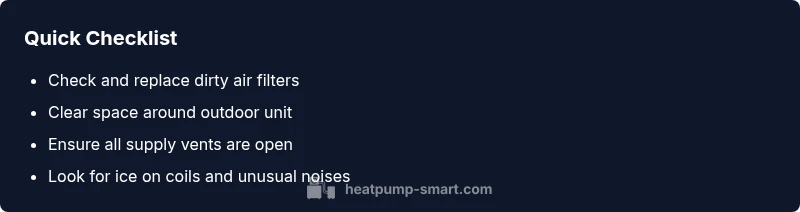
According to Heatpump Smart, the most common reason a heat pump feels too hot is restricted airflow or a refrigerant-related issue. Start with quick checks: clean or replace filters, clear debris around the outdoor unit, and ensure supply vents are open. If the unit remains hot after these basics, shut it down and contact a licensed technician immediately.
Why Heat Pump Too Hot Happens
Heat pump overheating is usually not a mysterious fault, but a signal that something in the airflow or refrigerant loop is off. According to Heatpump Smart, the most common causes are restricted airflow and refrigerant-related issues. When airflow is blocked or inadequate, the system struggles to transfer heat efficiently, causing the indoor coil to work harder and the surface temperature to rise. Refrigerant problems, whether a low charge or a leak, can also force the system to compress more aggressively to reach the setpoint, generating excessive heat. Homeowners who notice a hot return air or a warm outdoor unit should act quickly: shut down the affected zone if comfortable, and perform safe checks before calling a professional. This is a moment where rapid diagnosis can prevent compressor damage and expensive repairs.
In many homes, overheating isn’t a mystery; it’s a symptom of age, dirty components, or improper sizing. A heat pump that’s too hot may be trying to operate in a climate it isn’t well-suited for, or it might be cycling irregularly due to thermostat quirks. Regular maintenance, including filtration and coil cleaning, reduces overheating risk and extends system life. The Heatpump Smart team emphasizes that prevention is cheaper than urgent repairs.
Quick Home Checks You Can Do Safely
Before you call for service, run through a short, safe checklist. Start with air filtration: dirty filters restrict airflow and make the system work harder, so replace or wash reusable filters and check for a proper seal. Next, inspect the outdoor condenser for obstructions—leaves, grass, dirt, or snow can impede heat rejection. Clear a minimum perimeter of 2–3 feet around the unit and ensure the coils are unobstructed. Verify that all supply vents inside the home are open and not blocked by furniture. Finally, confirm the thermostat is set to the correct mode and temperature; a mis-set thermostat can cause the unit to short-cycle and feel excessively hot. If you notice ice on the indoor coil or unusual noises, stop operation and proceed with caution; ice often indicates airflow or refrigerant problems.
How Components Contribute to Overheating
Airflow is the first line of defense. If the filter is clogged or ductwork leaks air, the system can’t move heat efficiently, leading to higher coil temperatures and a hot surface. The outdoor unit also plays a critical role: debris, bent fins, or reduced airflow around the condenser can cause the system to overheat as it tries to reject heat. Vents that are closed or blocked reduce the air path, forcing the blower to push more air through a smaller channel. Refrigerant issues are more serious: low refrigerant charge or leaks reduce cooling capacity and can push the system into an overworked state, increasing temperatures inside the unit. Thermostat miscalibration and wiring faults can cause improper cycling, making the heat pump overheat in some cycles and underperform in others. Heat pumps are sophisticated devices, and understanding the balance of airflow, refrigerant, and controls is key to diagnosing overheating. Heatpump Smart analysis shows that consistent maintenance and correct airflow management dramatically reduce overheating risk.
Diagnostic Flow: Symptom to Solution (Overview)
Understanding a heat pump that runs hot requires mapping symptoms to likely causes. Start with basic signs: is the outside unit hot to touch, is there warm air at the registers, is there ice on the coils, and are there unusual sounds or odors? From there, consider the top causes and prioritize fixes that are easy and safe. If the simple steps don’t restore normal temperatures, the problem may require refrigerant service or electrical inspection, which must be done by a licensed professional. This section lays out a practical flow: identify the symptom, review possible causes, and apply a sequence of fixes in order of ease and safety, escalating to professional help when needed. Heatpump Smart’s guidance emphasizes safety first and prevention through regular maintenance.
Step-by-Step: Most Common Fixes (Airflow & Filters)
- Power down safely and inspect for obvious hazards. Shut off power to the heat pump at the thermostat and the corresponding breaker if accessible. Do not bypass safety switches or open electrical panels while powered.
- Inspect and replace filters. Remove dirty filters and replace with a clean unit that matches the system’s MERV rating. Clean reusable filters if applicable and re-seat securely.
- Clear indoor and outdoor airflow paths. Ensure return vents are unobstructed in living spaces and that the outdoor condenser has a clear buffer of several feet. Clear debris, trim nearby plants, and remove any objects blocking airflow.
- Check for ice on coils. If you see frost or ice on the evaporator coil, allow it to thaw and schedule a coil cleaning and refrigerant check if it recurs. A defrost cycle should occur automatically in freezing conditions, but repeated icing signals airflow or refrigerant issues.
- Verify thermostat settings and cycling. Confirm the thermostat is in the correct mode (cooling or heating) and that setpoints are reasonable for the season. Avoid aggressive setpoints; rapid cycling can overwork the system and generate heat.
- Test for normal operation after basic fixes. Restore power and observe whether warm air persists at the registers and whether the outdoor unit’s fan runs smoothly. If temperatures remain high, move to professional assessment for refrigerant and electrical checks. Pro tip: document any symptoms and timing to share with your technician.
Safety, Warnings, and Professional Help
Overheating heat pumps can pose electrical and refrigerant hazards. If you notice buzzing noises, burning smells, refrigerant hissing, or if the unit smells hot or smoky, evacuate the area and call emergency services if needed. Do not attempt to handle refrigerant lines or open sealed compartments. If basic maintenance fails to restore normal temperature, schedule service with a licensed HVAC professional as soon as possible. Regular maintenance, including annual coil cleaning and refrigerant checks, prevents overheating and extends system life. Heatpump Smart stresses that safe operation always takes priority over speed of repair.
Prevention: Keeping Your Heat Pump Cool All Year
Prevention is cheaper than urgent repair. Create a simple maintenance routine: check filters monthly and at the change of seasons, inspect the outdoor unit for debris weekly during peak growth periods, and confirm the thermostat is calibrated correctly twice a year. Schedule professional inspections annually to catch refrigerant leaks, coil dirtying, or fan issues before they cause overheating. A well-maintained system operates more efficiently and avoids the risk of hot operation. The Heatpump Smart team recommends documenting maintenance tasks and keeping a log for quick diagnostics during peak usage seasons.
Steps
Estimated time: 60-90 minutes
- 1
Power down safely and inspect hazards
Turn off the heat pump at the thermostat and switch off the corresponding circuit breaker if accessible. Do not touch electrical components while powered. Verify the area is safe before proceeding with any checks.
Tip: If you’re not comfortable with electrical safety, skip to step 5 and call a professional. - 2
Inspect and replace air filters
Remove the filter to inspect for visible dirt or clogging. Replace disposable filters or clean reusable ones according to manufacturer instructions. A clean filter dramatically improves airflow and reduces heat buildup.
Tip: Keep a spare set on hand for quick replacements. - 3
Clear indoors and outdoors airflow paths
Ensure return vents are free from obstructions and outdoor clearance around the condenser is at least 2–3 feet. Remove debris, trim vegetation, and verify ducts aren’t kinked or blocked.
Tip: Poor airflow is the most common overheating cause. - 4
Check for ice and coil condition
Look at the evaporator coil for frost or ice. If present, turn the system off to thaw and schedule coil cleaning; repeated icing indicates airflow or refrigerant issues needing professional care.
Tip: Avoid manually scraping ice to prevent damage. - 5
Verify thermostat settings and mode
Confirm the thermostat is in the correct mode (cooling/heating) and that the setpoint is reasonable for the season. Incorrect settings can cause overworking and heat buildup.
Tip: Avoid abrupt temperature swings; gradual adjustments work best. - 6
Plan for professional refrigerant/electrical checks
If basics don’t restore normal temperatures, arrange service for refrigerant charge, leaks, and electrical controls. Only a licensed tech should handle refrigerants and wired components.
Tip: Provide technicians with symptom timing and any unusual noises.
Diagnosis: Heat pump feels excessively hot during operation
Possible Causes
- highRestricted airflow due to dirty filters or closed vents
- highOutdoor condenser blocked or debris around unit
- mediumLow refrigerant charge or refrigerant issue
- lowElectrical or control fault causing improper cycling
Fixes
- easyClean/replace air filters; open all supply vents; ensure outdoor unit has clear space
- easyClear perimeter around outdoor unit; remove leaves/debris
- easyCheck thermostat settings and cycling; correct if mis-set
- hardSchedule refrigerant check and repair if needed
Your Questions Answered
Why is my heat pump running hot even when the thermostat is set correctly?
Thermostat miscalibration or incorrect mode can cause the unit to run longer or harder, producing more heat. Verify the mode and setpoint match the current season and the room’s needs. If corrected settings don’t fix the issue, proceed with basic checks and call a pro if needed.
If the thermostat is set correctly but the heat pump still gets hot, it may be miscalibrated or in the wrong mode. Double-check settings and then try the simple checks; if it continues, contact a professional.
Can airflow issues cause a heat pump to overheat?
Yes. Blocked filters or ducts, and outdoor obstructions reduce heat transfer efficiency, causing the system to work harder and overheat. Regularly cleaning filters and ensuring clear airflow around the outdoor unit helps prevent this.
Airflow problems are a common overheating cause. Keep filters clean and outdoor space clear to stop overheating.
Is it safe to run a heat pump that is hot?
Running a heat pump when it’s hot isn’t safe if you notice burning smells, loud buzzing, or visible damage. Shut down the system and call a licensed HVAC professional to diagnose and repair.
If you smell burning or hear unusual noises, shut it down and call a pro right away.
What maintenance can prevent overheating?
Regular filter changes, coil cleaning, outdoor unit clearance, and annual professional inspections keep your heat pump running efficiently and prevent overheating.
Regular maintenance keeps overheating at bay and extends your system’s life.
Do defrost cycles cause heat pumps to feel hot?
Defrost cycles can cause brief temperature fluctuations, but persistent heat is usually a sign of airflow or refrigerant issues and should be inspected if it occurs often.
Defrost cycles may heat the system briefly, but persistent heat usually means an underlying problem.
When should I call a professional for a hot heat pump?
Call a professional if basic checks don’t restore normal temperatures, if you notice ice on coils, refrigerant leaks, buzzing noises, or burning smells. Quick professional help prevents compressor damage and safety hazards.
If basic checks don’t fix it, or you notice ice, leaks, or smells, contact a licensed HVAC technician.
Watch Video
Top Takeaways
- Start with safe, simple checks (filters, airflow)
- Clear the outdoor unit and ensure vents are open
- If heat persists, call a licensed professional
- Maintain annual servicing to prevent overheating