Heat Pump Knocking Sound: Troubleshooting Guide
Learn how to diagnose and fix a heat pump knocking sound. A complete, step-by-step guide for homeowners, with safety tips, diagnostics, and when to call a pro.


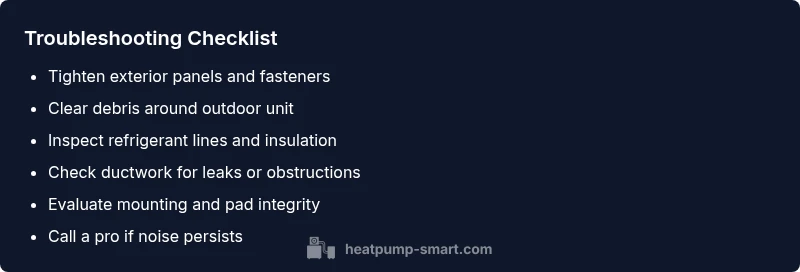
Most heat pump knocking sounds come from loose panels, expanding refrigerant lines, or mounting hardware that has shifted. Start by turning off power at the breaker and inspecting the outdoor unit for loose fasteners, debris, and obvious damage. If the noise persists after tightening panels and clearing obstructions, contact a qualified HVAC technician.
Common causes of heat pump knocking
If you're hearing a heat pump knocking sound, there are several common culprits. These noises are rarely dangerous, but they usually indicate something mechanical or structural is out of balance. According to Heatpump Smart analysis, the most frequent issues are loose or damaged cabinet panels, fasteners that have worked loose over time, and mounting hardware that has shifted due to vibrations. Debris like leaves or ice can also rattle inside the outdoor unit and transfer noise to the cabinet. In many cases, the fix is straightforward: tighten visible screws, clean out debris, and resecure the unit to its pad or wall brackets. If the noise persists after addressing these basics, it’s time to look deeper into the refrigerant lines, fan assemblies, and electrical components. The goal is to identify whether the noise arises from a simple mechanical issue or a component that requires professional service. Safety first: never ignore unusual sounds that repeat after a simple fix.
Safety first: what to do before you touch anything
Before you begin inspecting any part of the system, shut off power at the main breaker and lock it out if possible. Do not work on the unit while it is energized. If you smell burning or see sparking, evacuate and call emergency services or a licensed technician. Personal protective equipment like gloves and eye protection help, and keep children and pets away from the work area. Document the noises you hear (timing, frequency) to provide to a technician. Many knocking sounds originate from the outdoor unit; be cautious around sharp metal edges, fan blades, and electrical wiring. If your HVAC system is still under warranty, check the manual to know what you can safely inspect on your own. Heatpump Smart recommends treating loud noises as a warning sign rather than a curiosity, because unresolved issues can lead to higher energy costs, reduced efficiency, and eventual equipment failure.
Inspect exterior components
Begin with a visual scan of the outdoor unit. Look for loose screws or mounting brackets, missing screws, or panels that sit oddly against the cabinet. Remove any large debris around the unit and ensure it sits on a solid, level pad. Gently press on the panels to feel for any loose sections. A rattling or clicking sound is often caused by fasteners vibrating loose or panels rubbing lightly against one another. If you find a loose screw, tighten it carefully using the correct screwdriver size. Take note of any parts that look bent or damaged, and list them for a service visit if the noise returns. Keeping the area around the unit clear also helps airflow and reduces noise transfer to the home.
Examine refrigerant lines and cabinet panels
Rattling or knocking can originate from refrigerant lines rubbing against the cabinet or other components. Check insulated lines for loose clamps or wear where they contact the cabinet. Ensure insulation is intact and re-secure with appropriate ties if needed. Do not bend or kink copper lines; if a line is rubbing, a trained technician should reposition and insulate it properly. Inspect cabinet panels for gaps or misalignment that could allow a panel to strike a moving part during operation. Small misalignments are common after maintenance or severe weather; realigning panels and resecuring clamps often quiets the noise. If the lines appear iced or frozen, turn the system off and wait for defrost before inspection, as ice can mask the true source of the noise.
Ductwork, bends, and airflow issues
Noise can be transferred from the outdoor unit to the indoor space via ductwork. Check for loose or disconnected duct sections, especially where ducts bend or change direction. A blocked or constricted air path can cause the blower motor to work harder and create banging or thudding noises. Replace or clean dirty air filters, and ensure supply and return vents aren’t obstructed by furniture or drapes. If ducts rub against joists or metal framing, secure them with appropriate hangers or straps. Remember that poor airflow also reduces efficiency, so addressing duct issues improves comfort as well as quiet operation.
When metal expands and contracts: the thermal expansion explanation
Metals expand and contract with temperature changes. A heat pump’s metal cabinets and refrigerant lines can click or pop as they heat up and cool down, especially on cold mornings or after a defrost cycle. This thermal movement is normal, but when it’s audible as a knock, you may be dealing with a tight fit between moving parts. Ensure there is enough clearance around the outdoor cabinet to avoid contact with nearby walls or obstacles. If expansion noises persist, a professional can check mounting clearance and install soft grommets or spacers to reduce metal-to-metal contact.
Electrical and control issues that can sound like knocking
Sometimes what sounds like a mechanical knock is an electrical issue: a relay, contactor, or relay coil could produce a clunk or buzz that resembles knocking. Inspect the outdoor service disconnect and visible wiring for signs of damage or loose connections. Loose terminals can vibrate and create intermittent noises that mimic a knock. If you notice burning smells, melted insulation, or scorch marks, shut down the system and call a licensed technician immediately. If the wiring appears intact, but the noise continues, arrange a professional inspection to test the control board, contactors, and safety switches.
How to decide if you should DIY or call a pro
For many homeowners, the simplest fixes—tightening screws, clearing debris, and replacing a dirty air filter—are safe to tackle. If the noise persists after these steps, if you hear grinding, squealing, or a consistent banging, or if you suspect refrigerant issues, it’s time to call a pro. Refrigerant handling requires licensing, and compressor or mounting inspections demand specialized tools. Even when DIY is possible, schedule a diagnostic visit with a qualified HVAC technician if you’re uncertain. Heatpump Smart recommends erring on the side of safety and efficiency: unresolved issues can lead to higher energy costs and potential warranty concerns.
Preventive maintenance to avoid future knocking
Establish a seasonal maintenance routine that includes cleaning the outdoor unit, checking fasteners, inspecting refrigerant lines, and replacing filters regularly. Keep the area around the unit clear of debris and ensure proper clearance from walls and landscaping. Schedule professional tune-ups at least once per year to catch wear before it becomes a problem. Small preventative steps—tightening screws after a storm, resealing and insulating lines, and ensuring ductwork is intact—can prevent most knocking sounds and preserve efficiency. Heatpump Smart’s recommended maintenance schedule helps homeowners stay on track and reduce surprising noises over time.
Steps
Estimated time: 60-90 minutes
- 1
Power down and secure the area
Shut off power at the main breaker and lock it out if possible. Verify the unit is de-energized before touching any components. Gather a flashlight and a basic toolkit for inspection. Safety first keeps you and your equipment safe.
Tip: Always verify at the breaker with a non-contact tester before touching wires. - 2
Inspect outdoor cabinet and fasteners
Visually inspect screws, bolts, and brackets on the outdoor cabinet. Tighten any loose fasteners with the correct screwdriver or socket. Look for bent panels or loose clamps and address them as needed.
Tip: Use a torque screwdriver if available to avoid overtightening. - 3
Clear debris and re-seat panels
Clear leaves, ice, and dirt around the unit. Reseat any panels that look misaligned and ensure they sit flush with the cabinet. Listen for changes in noise after each small adjustment.
Tip: Don’t use excessive force on plastic panels; if a panel won’t seat, consider replacement. - 4
Check refrigerant lines and insulation
Inspect insulated lines for secure clamps and signs of rubbing near the cabinet. Re-secure insulation and ensure lines do not contact metal edges. Do not bend lines sharply; consult a pro if you suspect leaks.
Tip: Keep the line insulation intact to prevent heat loss and noise transfer. - 5
Assess mounting and pad integrity
Ensure the outdoor unit sits evenly on a solid pad or mounting brackets. Check that it remains level and that there is adequate clearance from walls and fencing. Address any wobble by releveling or adding shims as needed.
Tip: Do not adjust the unit while the system is running. - 6
Evaluate airflow and duct connections
Inspect nearby air ducts for loose joints or obstructions. Replace dirty filters and ensure supply vents aren’t blocked. Proper airflow reduces noise and improves efficiency.
Tip: Replace filters every 1-3 months depending on usage and environment. - 7
Test defrost cycle and electrical controls
Run a brief defrost cycle if accessible and listen for new sounds. Inspect contactors and wiring for signs of wear. If you hear burning smells or see sparks, power down immediately and call a technician.
Tip: Record any unusual electrical odors or smells for the technician. - 8
Make a repair decision based on findings
If simple fixes resolve the noise, monitor system performance for a few days. If the sound remains or new noises appear, arrange a professional diagnostic. Avoid DIY fixes that involve refrigerant or critical bearings.
Tip: Document the fixes you tried to help the technician diagnose faster. - 9
Schedule annual maintenance
Plan a yearly professional check-up to catch wear early. A proactive service can prevent most knocking sounds and extend the life of your heat pump.
Tip: Set reminders for seasonal maintenance to stay on track.
Diagnosis: Heat pump knocking sound during operation
Possible Causes
- highLoose exterior cabinet screws/panels
- highRattling refrigerant lines or line insulation
- mediumImproperly secured outdoor unit or mounting hardware
- lowFan motor or compressor mounting wear
Fixes
- easyTighten loose screws and panels on the outdoor unit; remove debris
- easyInspect refrigerant lines for movement and re-secure insulation; ensure lines aren't rubbing cabinet
- mediumReposition and securely mount the outdoor unit to the pad or wall brackets
- hardIf the noise persists, schedule professional service to check the compressor mount and fan assembly
Your Questions Answered
What are the most common causes of a heat pump knocking sound?
Common causes include loose cabinet panels, rattling refrigerant lines, and improper mounting of the outdoor unit. Start with the simplest checks like tightening screws and clearing debris before moving to more complex parts.
Most knocks come from loose panels or moving lines. Start with basic tightening and cleaning, then call a pro if it continues.
Should I turn off the heat pump if it sounds off?
Yes. If you hear unusual noises, switch off at the breaker to prevent further damage and wait for a quick inspection. If the noise is accompanied by burning smells or smoke, evacuate and call emergency services.
Turn it off at the breaker and inspect safely, or call a pro if you smell burning.
Is a knocking noise dangerous for the system?
Knocking isn’t always dangerous, but it can indicate settings or components under stress. If ignored, it can reduce efficiency or lead to larger failures. Prompt inspection reduces risk and cost.
Not always dangerous, but it can lead to bigger problems if ignored.
When should I call a professional?
Call a professional if tightening panels and clearing debris doesn’t stop the sound, if you hear grinding or see signs of refrigerant issues, or if you’re unsure about electrical components.
If simple fixes don’t work or you suspect refrigerant or electrical issues, call a pro.
Can ductwork cause knocking noises in a heat pump?
Yes. Improperly connected or obstructed ducts can amplify or transmit noises from the outdoor unit. Inspect for loose joints and clear obstructions, then consider professional duct sealing.
Ducts can transmit noise; check joints and obstructions, and seal if needed.
Can a refrigerant leak cause knocking sounds?
Refrigerant leaks can cause various noises and are a serious issue. If you suspect a leak, stop the system and contact a licensed HVAC technician to diagnose refrigerant pressure and safety.
Leaking refrigerant is serious—shut down and call a pro.
Watch Video
Top Takeaways
- Tighten and clean first; most noises come from simple fixes.
- Check refrigerant lines and mounting if noise persists.
- Call a pro for compressor mounts or leaks.
- Maintain annual maintenance to prevent future knocking.