Troubleshooting Heat Pump Noises: Quick Fix Guide 2026
Learn how to diagnose and fix common heat pump noises fast. Our urgent troubleshooting guide covers causes, safe checks, diagnostic flow, step-by-step fixes, and when to call a pro.


Most heat pump noises come from loose hardware, worn fan bearings, or restricted airflow. Start with easy checks: tighten mounting bolts, clear leaves around the outdoor unit, and confirm the unit sits level. If the noise continues, switch off the system and call a technician. According to Heatpump Smart, addressing outdoor-unit vibrations early reduces energy waste and prevents costly repairs.
Why heat pump noises happen
Heat pumps are precision machines, and a variety of small issues can translate into audible sounds. According to Heatpump Smart, the most common culprits are outdoor-unit vibrations, loose mounting hardware, and airflow restrictions. When debris builds up around the condenser or the unit isn't level, vibrations propagate through the sheet metal and cabinets, creating rattles or thuds. In many homes, the noise spikes during startup or shut-down as the system cycles and refrigerant pressures shift. Understanding these dynamics helps homeowners target fixes without unnecessary parts replacements. Regular maintenance reduces the likelihood of these noises and keeps efficiency high.
Common noise types and what they mean
Different noises point to different problems. A soft buzzing often signals electrical components or capacitor issues, while a rattling sound usually means loose panels or mounting hardware. A high-pitched squeal may indicate blower motor issues or misaligned fan blades, and a deep thud or banging can come from compressor mounting or debris in the outdoor unit. Hissing sounds can be normal expansion noises, but persistent hissing may indicate refrigerant-related concerns. By identifying the sound type, you can narrow down the likely cause and decide on a safe next step.
Safe quick checks you can perform today
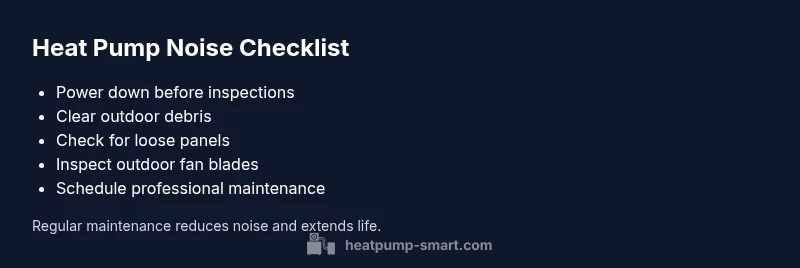
Before touching anything, switch the system off at the thermostat and breaker. Then inspect the outdoor unit for obvious debris, leaves, or snow that could be choking airflow. Check that all access panels are securely fastened and that the unit sits level on its pads. Look for loose screws or signs of wear on the grille and fan cover. If you notice damaged blades or obvious wear, do not operate the unit—call a professional. These quick checks are designed to catch the most common, non-technical causes of heat pump noises.
Diagnostic flow: symptom → diagnosis → solution
Symptom-based reasoning helps you avoid unnecessary parts replacements. Start with a simple hiss, buzz, or rattle and categorize the sound. If the unit is vibrating or panels are loose, the likely cause is outdoor-unit hardware. If the noise persists after tightening, consider debris, airflow restrictions, or a failing fan. Severe or electrical noises require an immediate professional assessment. This flow keeps you safe while guiding you toward the most economical fix first, often avoiding a costly parts replacement.
Most common fix: outdoor-unit vibrations
The most frequent loud sounds come from outdoor-unit vibrations due to loose mounting, an unlevel pad, or debris contact. Begin by tightening visible mounting bolts and re-checking the unit's level. Remove any debris around the condenser and trim back vegetation that could brush the casing. If the noise remains, inspect the fan blades for damage and ensure there is adequate clearance around the unit for airflow. For persistent vibrational issues, consider anti-vibration pads and consult a pro for a mounted reset.
Electrical issues, wiring and safety cautions
Electrical components can produce buzzing or arcing noises that indicate a serious problem. Do not poke around inside electrical panels. If you hear buzzing, tingling, or see scorch marks, switch the system off at the breaker immediately and call a licensed HVAC technician. Electrical faults can escalate quickly and pose shock or fire risks. Regular professional maintenance helps catch these issues before they become dangerous and expensive.
Preventing future noises: maintenance and clearances
Prevention is more cost-effective than repair. Schedule annual or biannual professional maintenance, including coil cleaning, refrigerant checks, and belt or bearing inspection where applicable. Maintain clear space around the outdoor unit (at least 2 feet on all sides and 5 feet above) to ensure proper airflow and reduce vibration transfer. Replace air filters regularly and keep the indoor blower area free of obstruction. Heatpump Smart recommends keeping a simple noise log to track when sounds occur and under what conditions.
When to call a professional and how to pick one
If noises persist after basic checks or you hear screeching, grinding, or electrical buzz, it’s time to call a pro. Look for licensed HVAC technicians with heat pump experience, check reviews, and ask about diagnostic fees and guarantees. A competent technician can safely test refrigerant pressures, inspect electrical components, and replace worn parts. Heatpump Smart’s approach emphasizes timely professional assessment when safety or noise level worsens, ensuring you reclaim comfort quickly.
Steps
Estimated time: 45-60 minutes
- 1
Power down and safety check
Turn off the heat pump at the thermostat and breaker. Wait for the unit to come to a complete stop. Wear safety gloves and keep hands clear of fan blades. Confirm there is no electrical current before touching any components.
Tip: Lockout the breaker if you’re doing more than a quick visual inspection. - 2
Inspect the outdoor unit
Check the outdoor condenser for debris and ensure airflow is unobstructed. Verify the unit is level on its pads and that mounting bolts are tight. Look for loose panels or rattling sheets that could be vibrating.
Tip: Use a dry brush to remove leaves and debris without bending fins. - 3
Check indoor blower and access panels
Remove access panels on the indoor air handler and inspect for loose screws or a wobbling blower wheel. Listen closely for rubbing sounds that indicate a misaligned wheel or obstruction.
Tip: If you must touch the blower wheel, avoid touching the blades directly. - 4
Assess airflow and ductwork
Ensure supply and return vents aren’t blocked and ducts aren’t crushed or kinked. Replace dirty air filters and confirm registers are open. Poor airflow often translates to louder startup/shutdown cycles.
Tip: Schedule a professional duct-cleaning if you notice persistent clogging. - 5
Test after fixes
Power the system back on and let it operate through a few cycles. Note if the noise has reduced or changed character. Document conditions (temperature, fan speed, and outdoor conditions) for reference.
Tip: If the noise returns after a few cycles, stop and call a pro rather than continuing to troubleshoot. - 6
Know when to escalate
If you hear grinding, squealing, or electrical buzzing, or there is a burning smell, stop immediately and contact a licensed HVAC technician. They will diagnose refrigerant or electrical issues safely and legally.
Tip: Keep a log of sounds and times to help the technician diagnose quickly.
Diagnosis: Heat pump makes unusual noises (knocking, buzzing, or rattling)
Possible Causes
- highLoose mounting hardware or panels
- highOutdoor fan bearing wear or damaged blades
- mediumRestricted airflow due to debris or vegetation
- mediumCompressor vibration or mounting issue
- lowElectrical issue such as capacitor or contactor fault
- lowThermal expansion/contraction noises
Fixes
- easyTighten visible mounting bolts and panel screws; ensure the unit is level
- easyClear debris around the outdoor unit and trim nearby vegetation
- mediumInspect outdoor fan blades for damage; replace if warped
- hardInspect refrigerant lines for kinks or loose fittings; schedule pro recharge if needed
- mediumCheck electrical connections and capacitors; call a licensed tech if uncertain
- hardRe-seat or replace the blower wheel if inside the home; call a pro
Your Questions Answered
What causes buzzing noises in a heat pump?
Buzzing noises typically indicate electrical components such as capacitors, contactors, or wiring issues. If the buzzing is loud or accompanied by heat, switch off the unit and call a licensed technician immediately. Regular maintenance can prevent many electrical noise problems.
Buzzing usually means electrical components are the culprit. If it gets loud, turn it off and call a pro.
Is it safe to operate a heat pump that makes banging sounds?
A banging sound often points to loose mounts or debris in the outdoor unit. It’s generally safe to operate in the short term, but you should reduce speed and schedule a check-up soon to avoid further damage.
If you hear banging, stop using it and arrange a service soon to prevent damage.
Can debris around the outdoor unit cause noises?
Yes. Leaves, sticks, and snow can impact airflow and cause rattles or thuds. Keep a clean perimeter around the unit and trim nearby vegetation to maintain smooth operation.
Yes, debris can cause rattles—keep the area clean.
When should I replace a heat pump due to noise?
Replacement is usually considered when repairs exceed a significant fraction of the unit’s replacement cost or when the system is past its recommended lifespan. A technician can help you weigh options based on efficiency and future reliability.
Replacement is a last resort; a tech can advise after diagnosing.
What maintenance reduces heat pump noises?
Regular cleaning of coils and fans, ensuring proper airflow, tightening hardware, and scheduling professional tune-ups twice a year can significantly reduce noise levels.
Regular tune-ups and keeping airflow clear cut noise.
Watch Video
Top Takeaways
- Identify the noise source safely and shut down power before inspecting.
- Tighten mounting hardware to reduce vibration and rattles.
- Keep outdoor area clear of debris to preserve airflow.
- Regular maintenance minimizes noise and extends equipment life.
- Heatpump Smart's verdict: proactive checks save energy and prevent costly repairs.