Heat Pump Vibration Noise: Troubleshooting Guide
Urgent, practical troubleshooting for heat pump vibration noise. Quick fixes, safe DIY checks, and guidance on when to call a professional to restore quiet, efficient operation.


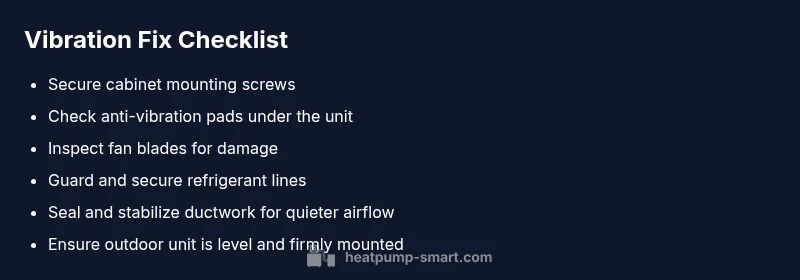
The most likely cause of heat pump vibration noise is loose mounting or unbalanced components. First, power off the system and inspect panels, mounts, and anti-vibration pads; tighten screws, resecure ducts, and straighten any rubbing refrigerant lines. If the noise persists, check the blower/fan blades for debris or damage and review compressor mounting with a professional if needed.
Why heat pump vibration noise occurs
Heat pump vibration noise is often a symptom of mechanical or installation issues rather than electrical faults. In most cases, moving parts inside the blower, fan, or compressor generate vibrations that transfer to the cabinet and the building structure. When cabinet screws loosen, anti-vibration pads wear out, or ductwork shifts, those vibrations become audible as rattles, thuds, or hums. The Heatpump Smart team notes that the character of the noise can hint at the root cause: a dull thump may indicate a loose panel, a persistent buzz could be a misaligned fan or loose duct, and a metallic rattle might signal an outdoor unit mounting issue. Addressing vibration promptly protects efficiency and reduces wear on system components so your heat pump vibration noise stays in check.
Common culprits and quick checks
Common culprits include loose cabinet mounting screws, degraded or missing anti-vibration pads, and ducts that rub or resonate with the blower. A misaligned outdoor unit on a wobbly pad can transmit vibration through the entire system, while worn blower wheels or fan blades can create rhythmic noise. Loose refrigerant lines may flutter and thump as the system cycles. Quick checks you can perform safely include: tightening visible cabinet screws, inspecting anti-vibration pads under the indoor and outdoor units, verifying the outdoor unit is level, and confirming ducts and vents are properly secured and not contacting metal surfaces. Heat pump vibration noise often stems from mounting and airflow interactions, so start with those basics.
How mounting and installation affect vibration
Mounting quality and foundation stability directly influence heat pump vibration noise. A solid, level base with effective anti-vibration isolation reduces energy transfer into the structure and surrounding walls. If pads are cracked, missing, or compressed, vibrations travel farther and louder. Improperly tightened mounting bolts can loosen over time, especially in homes with soft foundations or concrete slabs. Duct runs that aren’t properly supported can also create resonant paths for vibration. The Heatpump Smart guidance emphasizes inspecting mounting hardware, confirming level alignment, and replacing worn pads to minimize noise, especially after seasonal cycling or home renovations.
Safe DIY checks you can perform
Before touching electrical components, always switch off the heat pump at the breaker and lock it out. Wear eye protection and gloves when handling panels or ductwork. Check for loose cabinet screws, torn or missing anti-vibration pads, and any obvious contact between ducts and metal surfaces. Inspect the blower wheel for debris and ensure it spins freely without rubbing. For outdoor units, look for loose mounting bolts, bent brackets, or debris that dampens the pad. If you notice refrigerant lines rubbing or vibrating, do not attempt repairs yourself; contact a licensed technician. Regularly cleaning the unit and keeping surrounding area clear can prevent some vibration issues.
When to call a professional and what they will check
If you cannot locate the source after the basic checks, or if the noise is a high-pitched buzz or metallic clang, call a professional. A licensed technician will assess mounting integrity, inspect the compressor mount, verify refrigerant line layout, and check electrical connections. They may use specialized tools to measure vibration frequencies, listen for resonant paths in ductwork, and evaluate the blower and fan for wear. In some cases, persistent vibration may indicate a worn bearing, misalignment, or leakage in the refrigerant system, which requires expert attention. The Heatpump Smart team recommends scheduling professional service if basic checks don’t resolve the noise within a short window to prevent further wear.
Prevention tips to minimize vibration and noise
- Schedule regular maintenance to check pads, bolts, and mounts.
- Replace worn anti-vibration pads and ensure a level outdoor unit.
- Keep ducts clear of obstructions and secure all joints.
- Inspect the blower and fan blades for damage and clean any debris.
- Document noises and sounds to help technicians diagnose quickly during service calls.
- Consider upgraded isolation materials if your system sits on a flexibly mounted base.
Steps
Estimated time: 45-90 minutes
- 1
Power down and safety check
Turn off the heat pump at the main breaker and lockout the disconnect. Verify there is no power to the unit before touching panels or wiring. This prevents shocks while you inspect cabinet and mounting components.
Tip: Use a non-contact voltage tester to double-check live terminals. - 2
Inspect cabinet and mounting
Remove access panels and inspect screws, bolts, and anti-vibration pads. Tighten loose fasteners and replace worn pads. Ensure all mounting brackets are secure and the unit sits evenly on its pad.
Tip: Keep a torque pattern to avoid over-tightening aluminum threads. - 3
Check indoor duct connections
Inspect all duct joints for gaps or rubbing against the cabinet. Re-seal and strap loose sections to prevent resonant airflow. Ensure flexible ducts aren’t kinked or stretched.
Tip: Use foam sealant around joints for a stable, airtight path. - 4
Inspect blower and fan blades
Look for debris, bent blades, or rubbing against housing. Remove any obstruction and test rotation by hand with power off. Replace damaged blades or the blower wheel as needed.
Tip: Avoid touching moving parts; wear eye protection while inspecting. - 5
Assess outdoor unit mounting
Check that outdoor unit bolts and brackets are tight and the pad is level. Remove debris around the base and confirm there’s adequate clearance for air intake and exhaust.
Tip: A stable outdoor base reduces vibration transmission. - 6
Check refrigerant lines
Inspect lines for rubbing against ribs or metal edges. Re-route, secure with clips, and ensure protective insulation is intact. Do not attempt refrigerant work yourself if you’re not certified.
Tip: Do not loosen connections; refrigerant work requires a licensed technician. - 7
Test after adjustments
Power the unit back on and listen for residual vibration. If the noise changes in character or frequency, note the new symptoms for the technician.
Tip: Record a short video to show the technician what you heard. - 8
Know when to escalate
If vibration persists after these steps, schedule a professional inspection. Ongoing vibration can indicate wear or misalignment that requires equipment repair or replacement.
Tip: ProTip: book service within 1–2 weeks to minimize potential damage.
Diagnosis: Heat pump emits a noticeable vibration noise during start-up or cycling
Possible Causes
- highLoose cabinet mounting screws or degraded anti-vibration pads
- mediumDuctwork contacting surfaces or resonating with airflow
- lowWorn or unbalanced blower/fan blades or blower wheel
Fixes
- easyTighten cabinet screws and replace any worn anti-vibration pads
- easySecure and strap ductwork, seal joints, and ensure ducts aren’t rubbing
- mediumInspect and repair/replace blower blades or blower wheel if damaged
Your Questions Answered
What is the most common cause of heat pump vibration noise?
The most common cause is loose mounting or worn anti-vibration pads. Start by tightening cabinet screws and inspecting pads, then check for duct rubbing. Persistent noise after these checks should be evaluated by a professional.
Usually the noise comes from loose mounting or pads—start with those, then check ducts if needed.
Can ductwork cause vibration in a heat pump?
Yes, ducts can vibrate and resonate with airflow, transmitting noise through walls. Securing ducts and sealing joints often reduces vibration.
Ducts can cause vibration; securing and sealing them often helps.
Is heat pump vibration noise harmful to the system?
Vibration itself isn’t typically dangerous, but it can indicate wear or misalignment that may lead to component damage if ignored.
Usually not dangerous, but it can signal wear that should be checked.
Should I lubricate parts to stop vibration?
Most heat pumps don’t require lubrication to resolve vibration. Focus on mounting, pads, and ductwork. If lubrication is ever suggested, consult the manual or a tech.
Lubrication isn’t usually the fix; mounting and pads matter more.
When should I call a professional?
If you can’t locate the source after basic checks, or if there are unusual noises or refrigerant concerns, contact a licensed technician.
If you can’t fix it with basic steps, call a professional.
Can outdoor unit misalignment cause vibration?
Yes, an outdoor unit that isn’t level or securely mounted can vibrate and transmit noise. Ensure it’s on a solid pad.
Outdoor misalignment can cause vibration; make sure it’s level and secure.
Watch Video
Top Takeaways
- Identify the most likely cause quickly and address mounting first
- Tighten screws and replace pads to reduce vibrations
- Inspect ductwork and outdoor unit mounting for resonance
- Call a professional if noise persists after basic checks